Top 5 Industrial Sewing Machine Problems and How to Fix Them
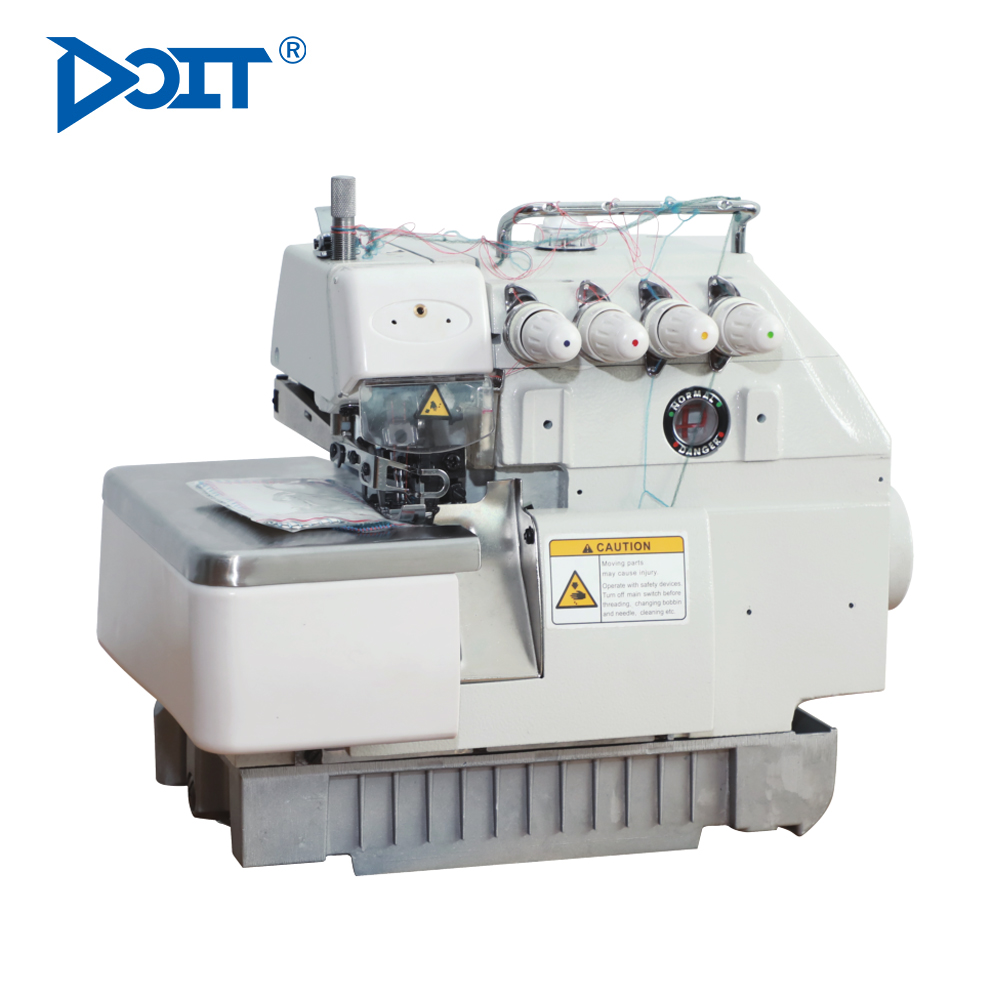
Top 5 Industrial Sewing Machine Problems and How to Fix Them
Even the best industrial machines run into trouble. Needle breakage, thread shredding and stitch skipping are the three faults that account for most unplanned downtime on a garment line — and nearly all of them are cheaper to prevent than to fix.
Here is what each one actually looks like, what causes it, what to do in the first two minutes, and when to stop and call a technician.
1. Why Is My Machine Skipping Stitches?
The needle goes down, but the upper thread does not get caught by the hook, and the seam has gaps.
Likely causes, in the order worth checking:
- The needle. Blunt, bent, or not fully seated in the clamp. This is the most common cause by a wide margin, and it is a 30-second fix.
- Needle and thread mismatched. The rule of thumb is that thread diameter should be about 40% of the needle blade diameter — not of the eye. Too thick and the thread jams in the groove and shreds; too thin and it piles up in the groove, the loop forms too small for the hook to catch, and you get skips anyway. Both directions cause the same fault.
- Wrong needle system for the machine. More on this below — it puts the eye at the wrong height for the hook.
- Throat plate hole too large. SCHMETZ publishes the aperture by needle size (Nm 80 → 1.40 mm, Nm 90 → 1.60 mm, Nm 100 → 1.60 mm, Nm 110 → 2.00 mm). An oversized hole lets the fabric get pushed into it, and the loop never forms properly.
- Hook and needle timing. Knocked out by a crash, or drifted with long-term wear.
- Hook damage. A blunt or chipped hook will not pick up the loop reliably.
- Insufficient presser foot pressure. The material arches up with the needle instead of staying flat, and the loop is lost.
Fast fix: fit a new needle first — correct system, correct size, fully inserted, flat side facing the right way. Rethread the machine completely. Check that the throat plate aperture matches the needle size. If it still skips, the hook and timing are a technician’s job: the clearance between the hook point and the needle is set in hundredths of a millimetre, and there is no gauge in a sewing room that will measure 0.05 mm.
One hard rule: a hook with a burr or a chip in its thread path is replaced, not polished. Polishing changes the geometry and leaves compound in the very place the thread runs.
2. Why Do Needles Keep Breaking?
The needle snaps — and it can take the hook, the needle plate and the garment with it.
Likely causes:
- Operator error. Pulling the fabric instead of letting the feed dogs move it. The needle gets bent sideways and struck.
- Needle too fine for the material. #11 (Nm 75) on heavy denim cross-seams is a classic: SCHMETZ’s denim guidance puts heavy or stone-washed work at Nm 120–140, not Nm 75.
- Not seated properly. Needle not pushed fully up into the clamp, or the clamp screw not tightened.
- Lint-packed feed. Fabric does not feed smoothly and the needle is loaded sideways.
- Hitting something. A pin, a previous broken needle tip, or the edge of the needle plate.
Fast fix: stop, and get every fragment out — a broken tip left in the feed or the hook area will cause the next failure. Fit a new needle of the right size, clean the feed dogs, and then check the needle plate and the hook for damage. If the needle hit either one, assume the timing needs checking before the machine goes back on the line.
3. Why Does My Stitch Have Loops or Puckers?
Get the diagnosis right first, because the two symptoms look similar and the fixes are opposite:
- Loops of the top (needle) thread on the underside → upper tension is too loose.
- Loops of the bobbin thread pulled up onto the top → upper tension is too tight, or the bobbin tension is too loose.
- Puckering is usually too much tension overall, or too much presser foot pressure on a light fabric.
Likely causes:
- Threading error. The upper thread has slipped out of a tension disc or missed the take-up lever, so there is effectively zero tension on top.
- Wrong setting for the fabric and thread.
- Lint in the bobbin case, so the bobbin thread does not run smoothly.
Fast fix: rethread from scratch with the presser foot up (that is what opens the tension discs so the thread seats properly). Check the bobbin is wound evenly and inserted the right way round — the rule is that it should unwind against the direction the hook turns, but confirm against your own manual. Wipe the bobbin area with a lint-free cloth.
Two notes on numbers. Industrial lockstitch tension runs about 190–220 mN, roughly 19–22 gf; the wider working range is 200–300 mN (20–31 gf). A sewing room cannot measure millinewtons, so if you need a number, use gram-force. And the drop test is a rough check, not a calibration — if you want a real figure, use a tension gauge. SCHMETZ’s standing advice is to run tension as low as the seam will still allow.
4. Why Does My Thread Keep Shredding or Snapping?
Likely causes:
- A burr or a dull point on the needle. Run your fingernail down the point; a damaged one catches.
- Needle and thread mismatched — the same 40%-of-blade rule as above, this time showing up as friction and shredding.
- Tension set too tight for the thread weight.
- Dirty or rusty tension discs, giving inconsistent drag.
- Old or brittle thread.
- Needle heat. Above roughly 200 °C (392 °F) the needle starts melting synthetic thread and the melted residue clogs the eye and the groove.
Fast fix: inspect and replace the needle — it is the cheapest part on the machine and the most common culprit. Rethread the whole machine. Clean between the tension discs with a small stiff card; never a needle or a screwdriver, which will scratch them. If the problem is heat, the answer is slower speed and a check on the cooling air — be aware that a Teflon-type coating (SCHMETZ BLUKOLD) stops melted residue from sticking, but it does not lower the needle temperature.
5. Why Is the Machine Jammed and Won’t Turn?
The handwheel is stuck and the head will not cycle.
Likely causes:
- A thread nest — a tangle of upper thread wound into the hook area.
- Sewing with the presser foot raised, so the top tension never engages and the bobbin thread balls up underneath.
- A foreign object in the feed — usually a piece of a broken needle or a pin.
Fast fix: switch the machine off at the mains, not just off the pedal. Then:
- Turn the handwheel only in the machine’s normal direction of rotation, toward you. Never force it backwards — that is how a stuck machine turns into a re-timing job and a damaged hook.
- If it will not move, stop forcing it. Take the needle plate off, remove the bobbin case, and cut the tangle out.
- Clear every fragment. Check the hook and the needle plate for damage.
- Put it back together and expect to have the timing checked — a jam of this kind usually means the hook and needle have been struck.
The Daily Checklist That Prevents Most of These
The five faults above share the same causes. This is the routine that removes them:
Needles — change them on a clock, not on symptom.
- General work: every 6–8 hours of actual sewing.
- Denim and leather: every 4–6 hours. SCHMETZ’s denim guidance is stricter still, at 3–4 hours.
- Pick the point for the material: ballpoint for knits, and for general wovens a sharp point is the usual rule — but on denim, use a light ball point (SCHMETZ SES) or a medium ball point (SUK). A sharp point cuts the warp and weft and weakens the seam you just sewed.
- And pick the system for the machine. Confirm it in writing for the exact model you run, then stock needles by that system.
Lint — brush and vacuum first.
- Every shift: brush the feed dogs, the hook area and under the needle plate.
- Compressed air only after the covers are off, aimed away from the oil paths, with eye protection. Air does not remove lint so much as relocate it.
- The needle plate comes off when you clear a nest, or on the weekly/monthly service — not as a daily ritual.
Lubrication — know which type you have before you pick up the oil can.
- Automatic oil pan and pump: check the sight glass between HIGH and LOW. Top up the pan. Add oil nowhere else.
- Semi-dry head: the head is dry by design. Only the hook is oiled. Oiling the head on this type is how you get oil-stained fabric.
- Manual oiling: one drop per oil point per shift, plus the hook reservoir.
- Use only a non-detergent white mineral oil — the "non-detergent" part is the point, because additive packages oxidise into varnish and sludge. Match the grade to the machine: the faster the machine, the lighter the oil (ISO VG 7/10/15 is the usual band; Juki’s own New Defrix No.1 is 7.3 cSt for high-speed light load, No.2 is 31.5 cSt for high-speed heavy load). Over-oiling is its own defect — it runs down the needle bar and onto the fabric.
Feed and pressure. Set presser foot pressure for the material. On sticky or coated materials such as vinyl, a Teflon or roller foot changes the whole job.
And always diagnose in this order: needle → tension → clean → bobbin case → timing. Change the needle first every single time. It is the cheapest part on the machine and it is the cause more often than everything else combined.
Where to Start If You Are Buying
Most of what stops a line is preventable at the purchase stage, not the service stage. Two things are worth specifying:
A needle system that is stocked near you. Our lockstitch heads run on DB×1 (the same system as the Juki DDL-8700 class, and the most widely stocked industrial needle system in the world); our overlocks run on DC×27. 135×17 / DP×17 belongs to compound-feed and walking-foot machines — it is a different system and the two are not interchangeable. Put the system for your exact model in writing and buy needles by that system.
A drive that removes the wear parts. The DT 8800-D4 is a direct-drive servo machine: the servo is what cuts energy use by 60–70% against a clutch motor, and the direct drive is what removes the belt and the clutch assembly. Those are two different savings, and you want both. The DT 5550 is the straightforward workhorse for a line that just needs to run.
Every machine we ship is built under an ISO 9001 certified quality system and carries CE conformity. For oil, use a proper non-detergent white mineral oil such as DOIT DT-35, matched to the machine’s speed — and check the lubrication type above before you pour anything anywhere.
The Bottom Line
Skipped stitches, broken needles, shredded thread, bad tension and jams are five faults with four shared causes: a worn needle, the wrong needle, a dirty hook area, and oil in the wrong place. Three of those are fixed before the machine is switched on in the morning.
Fix the routine and you fix most of the downtime. Then buy machines whose needle system your market actually stocks, and whose drive has fewer parts left to wear.
Ready to keep your production line moving? Contact DOIT Group for a consultation on the right low-maintenance machine for your operation.
📩 Email: sales6@chinadoit.cn 🌐 Website: doitsewingmachine.com
What Is the Most Trouble‑Free Sewing Machine?
Is Learning to Sew Hard? The Honest Truth for Beginners