"What Am I Doing Wrong With Tension?" — A Sewist's Cry for Help
"What Am I Doing Wrong With Tension?" — A Sewist's Cry for Help
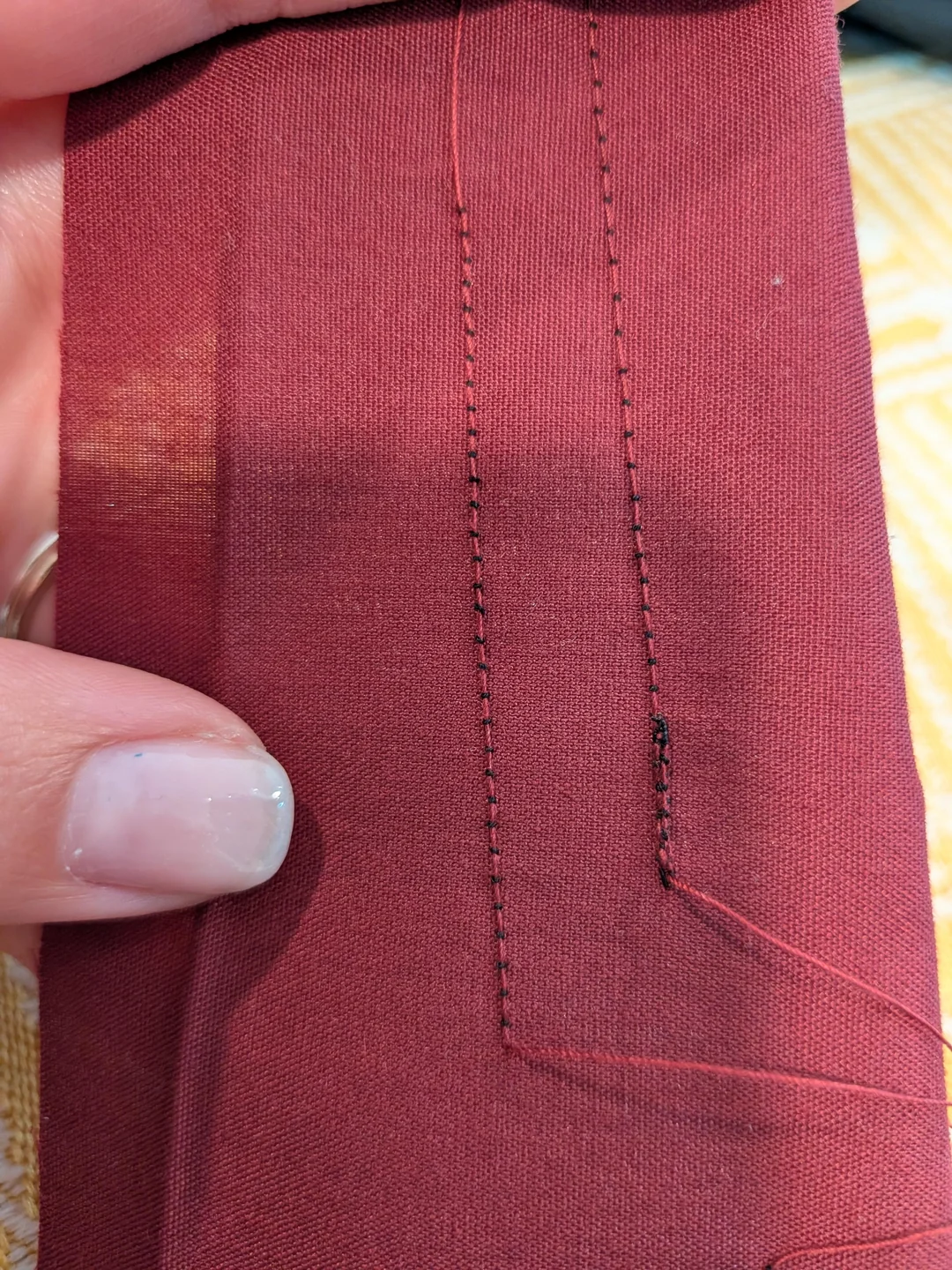
A Reddit user recently posted a desperate plea in r/sewhelp that many of us can relate to: "What am I doing wrong with tension? Lately, I can't figure out the right settings for my projects. The pictures show how the bobbin always shows through the front, and there's loose stitches on the back".
They tried every stitch length and tension combination possible, but the closest they could get was keeping tension on one extreme and length on the other—"regardless of the fabric thickness". Worse still, the problem appeared on both of their machines, a Singer Simple and a Singer Heavy Duty.
They had both machines serviced, but "the problem returns almost immediately". After 10 years of sewing experience, they felt like they were "going crazy".
If this sounds familiar, you're not alone. Tension problems are one of the most common—and most frustrating—issues in sewing. Here's what you need to know to fix them, and when it might be time to consider an upgrade.
1. Why Is Tension So Hard to Get Right?
The Reddit user's experience is a classic tension nightmare: bobbin thread showing on top, loose stitches underneath, and no combination of settings seems to work.
The problem often starts with the simplest thing: threading. When the upper thread is not correctly placed in the tension mechanism, the tension dial becomes useless. A single missed guide or a thread that's not fully seated between the tension discs can cause hours of frustration.
What to check first:
-
Completely unthread and rethread the machine from scratch
-
Ensure the thread is correctly placed in the tension mechanism
-
Make sure the presser foot is raised when threading (this opens the tension discs so the thread can seat properly)
-
Check that the bobbin is inserted correctly and unwinds in the right direction
The Reddit user's mistake: They tried every combination of settings but may have missed the fundamental step of rethreading correctly. As one guide notes, "unthread and rethread your machine" and "make sure that you follow the correct thread path".
2. Needle and Thread: The Overlooked Culprits
The Reddit user tried adjusting tension and stitch length, but what about their needle and thread?
Needle issues:
-
A bent or blunt needle can cause tension problems regardless of your settings
-
The wrong needle size for the fabric will create inconsistent stitch formation
-
A needle that's not fully inserted or facing the wrong direction affects thread flow
Thread issues:
-
Old or low-quality thread can break or stretch unevenly
-
Thread that's too thick or too thin for the needle eye creates friction
-
Dust and lint between tension discs can cause inconsistent tension
What to check:
-
Replace the needle with a fresh one of the correct size for your fabric
-
Use good-quality thread appropriate for your machine and fabric
-
Clean between the tension discs with a thin piece of card or folded paper
3. The Bobbin: The Hidden Half of the Tension Equation
The Reddit user saw "the bobbin always shows through the front"—a classic sign that bobbin tension is too loose relative to the upper thread.
Bobbin tension problems:
-
Bobbin wound unevenly or too full
-
Lint or debris in the bobbin case
-
Bobbin inserted incorrectly
-
Bobbin case tension spring worn or damaged
-
A burr on the bobbin case that snags the thread
What to check:
-
Remove the bobbin case and clean it thoroughly
-
Check that the bobbin unwinds in the correct direction
-
Ensure the bobbin is wound evenly and not overfilled
-
Test bobbin tension using the "drop test" (the bobbin case should descend about 3-4 inches when held by the thread)
4. Is It the Machine or the Operator?
The Reddit user's machines were serviced, but "the problem returns almost immediately". This suggests one of two things: either the service didn't address the root cause, or there's a fundamental issue with how the machines are being used.
Machine-related issues:
-
Timing is off (requires professional adjustment)
-
Tension mechanism is worn or damaged
-
Hook or bobbin case has burrs that snag thread
Operator-related issues:
-
Incorrect threading (the most common cause of tension problems)
-
Using the wrong needle or thread for the fabric
-
Sewing too fast for the material
-
Not cleaning lint regularly
The reality: As one troubleshooting guide notes, "this can happen when the upper thread is not correctly placed in the tension mechanism during the threading process". If you're not threading correctly, no amount of tension adjustment will fix the problem.
5. When Is It Time to Stop Fighting and Upgrade?
The Reddit user has been sewing for 10 years and is using a Singer Simple and a Singer Heavy Duty. These are entry-level and mid-range home machines. While they work for occasional use, they can struggle with consistency—especially as they age.
Signs it's time to upgrade:
-
Tension problems persist even after professional servicing
-
You're spending more time troubleshooting than sewing
-
Your machine can't handle the fabrics you want to use
-
You're starting a business or sewing regularly
-
You want consistent, professional-quality stitches every time
The DOIT difference: DOIT Group manufactures industrial sewing machines built for consistent performance. With direct-drive servo motors, all-metal construction, and precision engineering, DOIT machines deliver reliable stitch quality that home machines simply can't match.
6. DOIT Group: Industrial Machines That Eliminate Tension Headaches
DOIT Group has over 15 years of experience in producing and exporting garment equipment, with more than 95% of products exported abroad. Their machines are built for factories and serious sewists who demand consistent, reliable performance.
Why DOIT machines prevent tension problems:
-
Precision engineering: Consistent thread paths and tension mechanisms
-
All-metal construction: No plastic parts to wear or shift out of alignment
-
Direct-drive servo motors: Smooth, consistent power delivery
-
Standard parts: Easy to find replacement needles, bobbins, and accessories
-
Strict quality control: Every machine inspected before shipment
7. Featured Product: DOIT DT 8800-D4 Direct Drive Lockstitch
The DT 8800-D4 is a direct-drive computerized high-speed single-needle lockstitch industrial sewing machine with an auto-trimmer.
Key specifications:
-
Direct drive for smooth, quiet operation
-
Automatic thread trimming
-
High-speed performance for production efficiency
-
Computerized control for consistent stitch quality
Why it solves tension problems: Computerized control maintains consistent tension across different fabrics and speeds, eliminating the guesswork that frustrates home machine users.
8. Featured Product: DOIT DT 5550 High-Speed Lockstitch
The DT 5550 is a high-speed single-needle lockstitch industrial sewing machine—a workhorse for general garment construction.
Key features:
-
High-speed performance for production efficiency
-
Reliable stitch quality across various fabrics
-
Industrial-grade durability
-
Standard parts for easy maintenance
Why it solves tension problems: Industrial-grade construction ensures consistent thread paths and tension, reducing the variability that causes tension issues on home machines.
9. Featured Product: DOIT DT 840-4AT Overlock Machine
The DT 840-4AT is a direct-drive four-thread overlock sewing machine with an auto-trimmer.
Key features:
-
Four-thread overlock for professional edge finishing
-
Automatic thread trimming for efficiency
-
Direct drive for smooth operation
Why it solves tension problems: Overlock machines have different tension dynamics than lockstitch machines. The DT 840-4AT's precision engineering ensures consistent thread flow across all four threads.
10. The Bottom Line: Stop Fighting Tension, Start Sewing
The Reddit user's frustration is real and relatable: "I feel like I'm going crazy, am I forgetting something?". After 10 years of sewing, they deserve a machine that works consistently—not one that requires constant adjustment and professional servicing.
Tension problems are almost always fixable. Start with the basics: rethread correctly, replace the needle, clean the bobbin case, and check your thread quality. But if you find yourself constantly fighting your machine—like the Reddit user who had both machines serviced and still had problems—it might be time to consider an upgrade.
DOIT Group's industrial sewing machines are built for consistent, reliable performance. With precision engineering, all-metal construction, and a 96.3% customer satisfaction rate, DOIT machines eliminate the guesswork and frustration that plague home machines. Whether you're a serious sewist or a garment factory owner, DOIT has a machine that will help you stop fighting tension and start creating.
Ready to stop fighting tension and start sewing with confidence? Explore DOIT Group's full range of industrial sewing machines at doitsewingmachine.com.
📩 Email: sales6@chinadoit.cn
🌐 Website: doitsewingmachine.com
"How Can I Fix This Jeans?" — A Beginner‘s Guide to Repairing Denim
From Hand-Sewing Patches to Machine Precision: A Complete Guide