3-Thread vs 4-Thread vs 5-Thread Serger: A Technical Comparison for Professional Buyers
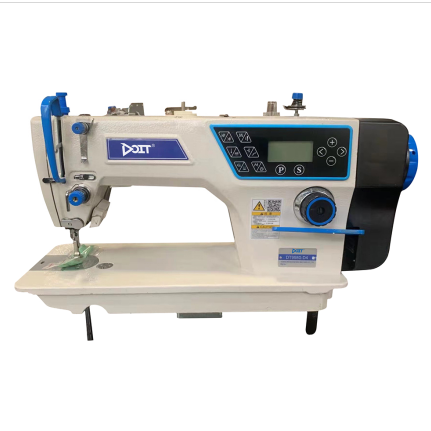
For professional buyers in the garment industry, understanding the technical differences between 3-thread, 4-thread, and 5-thread sergers is essential for making the right equipment investment. Each configuration serves distinct production purposes, and the wrong choice can lead to quality issues, production bottlenecks, or unnecessary capital expenditure. This article breaks down the technical specifications, stitch formation, fabric compatibility, seam strength, industrial applications, and buying recommendations for each serger type.
What are the technical definitions of thread count, needle configuration, and looper setup?
Unlike a conventional sewing machine that uses a single needle and bobbin, an overlocker uses 3, 4, or 5 threads from spools, passing through loopers above and below the fabric to create the characteristic wrapped-edge appearance.
3-Thread Serger
A 3-thread serger uses one needle and two loopers (an upper looper and a lower looper). The single needle can be positioned on the left for a wide stitch or on the right for a narrow stitch and rolled hem. This is the most basic overlock configuration, designed primarily for edge finishing rather than seam construction.
4-Thread Serger
A 4-thread serger uses two needles and two loopers. Both needles are threaded, and both loopers carry thread, creating a wider, more durable seam than the 3-thread configuration. The 4-thread seam has a safety stitch running down the middle of the overcast, providing extra security.
5-Thread Serger
A 5-thread serger uses three needles and two loopers. This configuration combines a 3-thread overlock edge finish with a 2-thread chain stitch seam—essentially two operations in one. The result is what is known as a "true safety stitch," which eliminates the need to reinforce the seam with a conventional sewing machine.
In real-world sewing, the thread count also affects fabric feed, stitch elasticity, and edge bulk. A 3‑thread overlock is best for lightweight knits, rolled hems on napkins, or decorative finishes—it creates a narrow, flexible edge. The 4‑thread version is the go‑to for most ready‑to‑wear garments (T‑shirts, dresses, activewear), offering a good balance of strength and stretch without excessive weight. The 5‑thread safety stitch is indispensable for high‑stress areas like crotch seams, shoulder seams, and heavy outerwear—it replaces both overlocking and straight stitching in one pass. Also, remember that differential feed (available on many sergers) can be tuned to prevent wavy or puckered seams, regardless of thread configuration.
How do the threads interlock during stitch formation?
The stitch formation differs significantly across the three configurations, affecting both the appearance and structural integrity of the seam.
3-Thread Stitch Formation
In a 3-thread overlock, the needle thread interlaces with both the upper and lower looper threads at the stitching line. The looper threads intertwine at the fabric edge, while the needle thread creates a straight line of stitching on the right side and appears as dots on the wrong side. With balanced tension, the looper threads lock or cross at the fabric edge, creating a clean, flexible finish that works well on knits.
4-Thread Stitch Formation
A 4-thread overlock uses two needle threads and two looper threads. The upper and lower looper threads interlock at the fabric edge, while the two needle threads create parallel lines of stitching. The result is a wider, stronger seam with a safety stitch running down the middle. This configuration provides a "very secure" seam for most sewing applications.
5-Thread Stitch Formation
The 5-thread safety stitch is a combination of a 2-thread chain stitch and a 3-thread overlock stitch. The 3-thread overlock finishes the fabric edge, while the 2-thread chain stitch creates a parallel seam line that provides exceptional strength. This dual-stitch formation is what makes the 5-thread serger the strongest option among the three configurations.
Supplementary addition (place after your 5‑thread description):
Beyond the stitch pattern itself, the actual seam performance depends heavily on tension tuning and stitch length settings. A 3‑thread overlock can mimic a narrow rolled hem when the upper looper tension is increased and the lower looper is reduced, making it ideal for delicate fabrics. The 4‑thread configuration offers the widest tuning range—you can tighten the safety stitch for extra hold or loosen it for better stretch recovery in activewear. For the 5‑thread safety stitch, the chain‑stitch component requires a slightly longer stitch length than the overlock portion to avoid puckering; otherwise, the seam may gather, especially on lightweight materials. Also, differential feed ratios (typically 0.7 to 2.0) allow you to compensate for fabric stretch or compression, regardless of how many threads you use. In practice, a well‑balanced tension and correct feed setting often matter more than the thread count alone for achieving a flat, durable seam.
Which materials does each configuration handle best in terms of fabric compatibility?
3-Thread Serger: Lightweight and Stretch Fabrics
The 3-thread overlock is ideal for lightweight materials where bulk must be minimized. It works well for edge-finishing most wovens and for seaming knits that don't require maximum seam strength. The single-needle configuration provides good stretch, making it suitable for light to medium-weight knits where a less bulky seam is desired. However, the 3-thread seam is not as strong as its 4- or 5-thread counterparts.
4-Thread Serger: Versatile All-Rounder
The 4-thread overlock is the most common and versatile configuration, suitable for both woven and knit fabrics. It provides a strong, flexible seam ideal for general garment construction on medium-weight fabrics. For knit fabrics like jersey, interlock, and activewear blends, the 4-thread overlock with stretch needles and differential feed delivers professional results. It is also effective for securing woven fabrics together.
5-Thread Serger: Heavy and Demanding Fabrics
The 5-thread safety stitch is designed for woven fabrics ranging from fine to heavy weight. It is particularly suitable for demanding applications where seam failure is not an option. Heavy fabrics require 4-thread or 5-thread options for extra security. The 5-thread configuration provides a durable seam that can withstand significant stress.
Additional practical notes on fabric matching:
In real‑world use, the 3‑thread overlock excels on sheer silks, voile, and lightweight jersey—but you'll need to reduce both looper tensions and use a fine (size 70/10) needle to avoid perforation. For the 4‑thread all‑rounder, switching to a ball‑point needle (size 80/12) prevents skipped stitches on knits, while a sharp needle (90/14) works better for dense wovens like poplin or denim. The 5‑thread safety stitch, though ideal for heavy fabrics, can also handle medium‑weight wovens if you shorten the chain‑stitch length and increase the differential feed ratio (e.g., 1.2–1.5) to prevent edge curling. Remember that fiber content matters more than weight alone—slippery fabrics (nylon, polyester) often require higher looper tension and slower speed to maintain consistent loops, regardless of thread count.
What are the comparative metrics for seam strength across different configurations?
3-Thread: Lowest Strength, Highest Stretch
The 3-thread overlock provides the least seam strength among the three configurations. While it offers good stretch capabilities, a 4-thread seam delivers a wider and stronger seam. The 3-thread configuration is best suited for applications where seam strength is not a critical concern.
4-Thread: Stronger and Wider
The 4-thread overlock provides a significantly stronger seam than the 3-thread version. In comparison to the commonly used 3-thread overlocked seam, the 4-thread overlocked seam proves to be a simpler yet highly effective method for securing fabric together. The 4-thread seam is "very secure for most sewing" and delivers a wider, stronger seam with extra stability.
5-Thread: Maximum Strength
The 5-thread double chain stitch is a stronger seam than the 3- or 4-thread overcast. Because the 5-thread overlock combines a chain stitch with a finishing stitch over the edge, it functions as a safety stitch that prevents seams from pulling apart. This makes it the configuration of choice for high-stress applications and demanding woven fabrics.
Beyond theoretical ratings, actual seam strength depends heavily on stitch density and tension. A dense 3‑thread seam (e.g., 14 SPI) can sometimes match a loose 4‑thread seam in pull tests, while the 3‑thread offers superior elongation (30‑40%)—ideal for swimwear and active knits. The 5‑thread safety stitch delivers 2‑3× the break force of a 4‑thread but with minimal stretch, making it perfect for high‑stress wovens like denim and outerwear. Also, increasing upper looper tension on a 4‑thread can boost strength by roughly 15% at the cost of reduced elasticity. So, choose 3‑thread for stretch, 4‑thread for balanced all‑purpose use, and 5‑thread for ultimate security—but always fine‑tune tension and stitch length to your specific fabric.
What garment types and production scenarios apply to each industrial configuration?
3-Thread Serger Applications
-
Edge-finishing lightweight woven fabrics
-
Seaming knit garments where bulk is a concern
-
Rolled hem finishes on scarves, napkins, and lightweight garments
-
Decorative flatlock stitching
4-Thread Serger Applications
-
General garment construction for t-shirts, casualwear, and knit garments
-
Seaming medium-weight woven and knit fabrics
-
Professional edge finishing for activewear and apparel
-
General seams and edge finishing in industrial production
5-Thread Serger Applications
-
High-stress seams in activewear, jeans outseams, and workwear
-
Seaming and overlocking woven fabrics in one step
-
Garment construction where maximum seam strength is required
-
Industrial production of durable woven garments
Which sewing machine configuration is recommended for each type of factory?
For Factories Producing Lightweight Knits and Edge Finishing
A 3-thread serger is sufficient if your primary production involves lightweight knits, edge finishing, and applications where seam strength is not critical. This configuration offers the lowest capital cost and thread consumption.
For Most General Garment Production
A 4-thread serger is the most practical and versatile choice for the majority of garment factories. It handles most fabrics, provides strong seams, and delivers the efficiency required for high-volume production. Choose 3- or 4-thread machines for general seams and edge finishing.
For High-Stress and Demanding Applications
A 5-thread serger is recommended for factories producing activewear, jeans, workwear, or any garment where seams are subject to high strain. While the machine and thread consumption costs are higher, the 5-thread safety stitch provides the maximum seam strength required for these demanding applications.
For professional buyers, the choice between 3-thread, 4-thread, and 5-thread sergers ultimately depends on fabric types, production volume, and seam strength requirements. Evaluate your production needs carefully, test on actual materials, and select the configuration that delivers the optimal balance of quality, efficiency, and cost.
Explore DOIT Group's industrial overlock solutions at Single needle lockstitch sewing machine industrial stratght stitching machines Manufacturer – DOIT SEWING MACHINE. For product inquiries, pricing, or technical consultation, contact:
📩 Email: sales6@chinadoit.cn
🌐 Website: www.doitsewingmachine.com
What Is the Average Cost to Service a Sewing Machine?
Are Old Sewing Machines Worth Money?