What to Know Before Buying a Sewing Machine? A Complete Guide for Garment Businesses and Home Users

Choosing the right sewing machine is one of the most important decisions for anyone planning to sew — whether you‘re starting a home-based tailoring business, outfitting a small garment factory, or simply looking for a reliable machine for personal projects. Make the wrong choice, and you’ll face constant thread breaks, skipped stitches, fabric damage, and costly downtime. Make the right choice, and you will have a dependable partner for years of smooth, productive sewing.
This guide walks you through everything you need to know before buying — from understanding the difference between home and industrial machines to evaluating suppliers, calculating total costs, and avoiding common mistakes. And if you are a garment factory looking for reliable, high-performance equipment, we‘ll also show you why DOIT Group is a name worth remembering.
Part 1 — First Question: Home Machine or Industrial Machine?
Before you look at any specific model, you need to answer the most fundamental question: What are you going to use this machine for?
If you answer “I want to make gifts for my grandchildren,” a home machine is probably perfect. If you answer “I need to deliver 500 polo shirts by next week,” a home machine will break your heart — and possibly your deadline. Here is a detailed comparison to help you understand the key differences:
| Feature | Home Machine | Industrial Machine |
|---|---|---|
| Design purpose | Versatility — many stitch types for different projects | Specialization — excels at one type of stitch on specific fabrics |
| Speed | 800–1,100 stitches per minute, with some heavy-duty models reaching 1,500 SPM | 4,000–5,500 stitches per minute or higher |
| Duty cycle | Intermittent use — must “rest” to avoid heat buildup | Continuous operation — 8–16 hours daily |
| Motor location | Integrated into machine body | External motor mounted under table |
| Weight | Lightweight, portable (5–15 kg) | Heavy (up to 50 kg), requires dedicated workstation |
| Stitch variety | Many stitches (9–300+), including decorative | Typically straight stitch or one specialized stitch type |
| Ease of learning | Beginner-friendly, automatic features | Requires operator training, but straight stitch is simple |
| Maintenance | Simple cleaning; many are self-oiling | Daily oiling and lint removal required |
1.1 Home Sewing Machines
Home sewing machines are designed for versatility. They handle many different types of stitches — straight, zigzag, decorative, buttonholes — and work well on a range of fabrics. Mechanical machines are manually operated with dials and levers, offering straightforward operation and easy maintenance at a more affordable price. Computerized machines add automated features like LCD screens, automatic needle threading, and programmable stitch patterns, which can help beginners feel more confident.
Home machines are priced from under 100forentry−levelmodelstoover100forentry−levelmodelstoover1,000 for high-end units. Top brands include Brother, Janome, and Bernina. However, even heavy-duty home models are not designed for all-day production. According to embroidery expert John from Embroidery Legacy, a workhorse home machine handles occasional commercial tasks but cannot run 8 hours straight without tension problems.
1.2 Industrial Sewing Machines
Industrial sewing machines are built for one thing: high-volume, continuous production. They are heavier, faster, and far more durable than home machines. However, industrial machines are more expensive, require dedicated space and heavy table stands, and most perform only one type of stitch well.
Here is a comparison of common industrial machine types:
| Machine Type | Primary Use | Typical Speed (SPM) |
|---|---|---|
| Lockstitch (Flatbed) | General seam construction, topstitching | 4,000–5,500 |
| Overlock (Serger) | Edge finishing, preventing fraying | 6,000–7,000 |
| Coverstitch | Professional hems on knits | 4,000–5,000 |
| Chainstitch | Waistbands, heavy-duty seams | 4,000–5,000 |
| Walking Foot | Thick materials, layers that slip | Variable |
If you plan to sew more than 100 pieces per week or work with heavy fabrics like denim or leather, an industrial machine is almost always the right choice.
Part 2 — What Types of Fabric Will You Sew?
Your fabric type directly determines which machine, needle, thread, and motor you need — and this is one of the most overlooked factors before buying.
| Fabric Type | Machine Consideration | Needle Type | Needle Size |
|---|---|---|---|
| Lightweight (chiffon, georgette, lining) | Flatbed with fine stitch control | Fine (65/9 – 75/11) | 65/9 – 75/11 |
| Medium (cotton, linen, poplin) | Standard lockstitch, optional overlock | Universal (75/11 – 90/14) | 75/11 – 90/14 |
| Heavy (denim 12 oz+, canvas) | Heavy-duty lockstitch | Heavy (100/16) | 100/16 |
| Stretch (jersey, spandex, knit) | Overlock machine is essential | Ball point (75/11 – 90/14) | 75/11 – 90/14 |
| Leather/upholstery | Walking foot or heavy-duty post bed | Leather point (100/16 – 110/18) | 100/16 – 110/18 |
For heavy denim (12 oz or more) and canvas, a size 100/16 needle is recommended, with stitch length set to 2.5–4.0 mm. As a general rule, fine needle and thread for lightweight fabrics, larger needle and heavier thread for heavyweight fabrics.
Critical insight: Rigid jeans or thick leather require specialized needles and powerful motors. Soft jersey demands an industrial overlocker for clean finishes. Match the machine to your primary material — not the other way around.
Part 3 — Essential Features to Evaluate
3.1 Build Quality
Look for a metal interior and high-quality parts. Avoid cheap plastic machines where the case and chassis flex easily — these machines are hard to work on, break quickly, and cannot produce precision stitches. As sewing expert Rob Appell puts it: “More plastic, less longevity.”
3.2 Bobbin System
Front-loading bobbins are generally more precise than drop-in bobbins, which have more “hook play” and can accept incompatible bobbins that cause tension problems.
3.3 Servo Motor vs. Clutch Motor
This matters more than most buyers realize. Clutch motors run continuously at fixed speed, consuming energy even when idle. Servo motors are quiet, energy-efficient (saving up to 70% on electricity), and offer precise speed control — making them far superior for modern production environments.
3.4 Needle Plate and Presser Foot Lift
Check the clearance for thick fabrics. Machines with high presser foot lift (10–15 mm) handle multi-layer stacks without crushing.
3.5 Automation Features
Computerized machines offer programmable stitch patterns, automatic thread trimming, and automatic presser foot lift — boosting efficiency but costing more. Mechanical machines are simpler, easier to maintain, and more affordable — ideal for small-scale production.
Part 4 — Needle, Thread, and Tension
4.1 Needle Selection (Industrial 135x17 System)
| Fabric Type | Needle Size | Needle Type | Recommended Thread |
|---|---|---|---|
| Light shirt / Blouse | #9–11 (65–75) | Sharp point | V46 (Tex 40) |
| T-shirt (Cotton Jersey) | #11–14 (75–90) | Ball point | V69 (Tex 70) |
| Heavy Denim (14 oz) | #18–20 (110–125) | Sharp point | V92 (Tex 90) |
| Leather (Soft) | #16–18 (100–110) | Leather point | V69 – V92 |
| Stretch Velvet / Spandex | #11–14 (75–90) | Stretch needle | V69 |
| Upholstery Fabric | #18–20 (110–125) | Sharp or Ball point | V92 – V138 |
Needles are consumables. Replace them regularly to avoid skipped stitches, thread breakage, and fabric damage. For denim, replace every 4–6 hours of sewing time rather than waiting for failure.
4.2 Thread Tension by Material
Proper tension ensures the lock stitch locks precisely in the middle of material layers:
| Material Type | Upper Tension Setting (Dial) | Note |
|---|---|---|
| Lightweight fabrics | 2 – 4 | Lower tension to prevent puckering |
| Medium-weight (Standard) | 4 – 5 | Starting point for most cotton/polyester |
| Heavy Denim | 5 – 6 | Increase for thick, multi-layer seams |
| Leather / Vinyl | 4 – 5 | Medium setting; use Teflon or roller foot |
| Knit / Stretch Fabric | 3 – 4 | Use ballpoint needle to prevent skipped stitches |
Part 5 — Industrial Purchase: B2B Supplier Evaluation
If you are buying for a factory, choosing a supplier is as important as choosing the machine. Use this six-criteria framework:
1. Certifications — Prioritize suppliers with ISO 9001 for quality management, plus CE marking (Europe) or UL certification (North America) for safety compliance.
2. Production capacity — Evaluate facility size (>3,000 m²), workforce, and monthly output (500+ units indicates scalability). Look for customization options like voltage adaptation (110V/220V), OEM branding, and specialized attachments.
3. Quality assurance — Request sample units to evaluate stitch consistency, thread tension, and maintenance ease. Confirm warranty (minimum 12 months) and spare parts availability, especially for servo drivers, needle bars, and bobbins.
4. Operational reliability — Check on-time delivery (aim ≥98%), response time (≤5 hours acceptable, ≤2 hours ideal), and reorder rate (above 30% suggests customer satisfaction).
5. Sample testing — Always request sample machines. Run your actual fabrics and material stacks through them. Factory production reveals performance no spec sheet can predict.
6. One-stop service — Seek suppliers offering full-cycle support including consultation, machine procurement (same brand for compatibility), assembly, installation, operator training, and after-sales maintenance.
Part 6 — Total Cost of Ownership (TCO) Model
Do not look only at the purchase price. A realistic TCO model includes:
| Cost Component | What to Include |
|---|---|
| Procurement Price | Wholesale cost + freight and logistics + import tariff clearance |
| Installation/Commissioning | Technician travel fees, machine leveling, setup time, test fabric runs |
| Operator Training | Onboarding time, certified safety instruction, quality control checklists |
| Preventative Maintenance | Annual service visits, routine parts replacement, daily cleaning time |
| Unplanned Downtime | Emergency repair fees, overnight parts shipping, idle labor cost (often the largest hidden expense) |
| Consumables | Needles, bobbins, presser feet, lubricating oil, thread waste |
| Energy | Electricity usage per shift × local rate (servo motors save 70% vs. clutch) |
| Depreciation | Annual tax write-off (5–7 year straight-line typical) |
| Resale Value | Salvage value when upgrading |
Always ask for the all-in price delivered to your port (CIF price). This eliminates surprises with freight fees and customs clearance. Arm with this TCO framework, you can accurately compare quotes from different suppliers and select the machine that generates the healthiest long-term return.
Part 7 — New vs. Used
For a garment factory, buying new is strongly recommended unless you have significant technical expertise. Used machines may hide worn hooks, timing issues, seized adjustments, or missing parts. The time and cost spent diagnosing problems often exceed the upfront savings.
However, for home users or very small workshops, a quality used machine can be a good starting point. Many vintage machines are built with all-metal parts and can last decades with proper care — though they offer far fewer features than modern machines.
Part 8 — Common Mistakes to Avoid
-
Buying a machine that is too light for your primary fabric — Match the machine to your heaviest regular fabric, not your lightest.
-
Ignoring maintenance requirements — Industrial machines need daily oiling and cleaning. Sewing expert Rob Appell has noted that while some of today’s machines are not designed to last very long, you can extend their lifespan with proper care and maintenance.
-
Overlooking needle and thread matching — Wrong combinations cause 90% of thread breaks and skipped stitches.
-
Focusing only on initial purchase price — Low upfront cost often means high downtime cost.
-
Buying from a supplier with no local support — When a machine breaks, parts availability and technical response time matter more than anything else.
Part 9 — DOIT Group: Your Industrial Sewing Partner
DOIT Group is a professional manufacturer based in Taizhou, Zhejiang — China’s sewing machinery hub — with over 300 employees and a 66,000 ft² facility. More than 95% of its products are exported to over 20 countries across America, Europe, Asia, Africa, and Latin America.
Quality is rigorously controlled under ISO9002 standards, with many models carrying TUV/GS/CE/UL certifications. With annual production exceeding 200,000 sets and a client satisfaction rate of 96.3%, DOIT has the infrastructure to handle bulk orders and maintain stable delivery timelines.
DOIT’s core product lineup includes:
-
Lockstitch — DT 5550 (standard industrial lockstitch with automatic oil supply and two-way feeding), DT8800-D4 (direct-drive with auto-trimmer, saving up to 70% electricity, 15 mm foot lift), DT C10-D4 (computerized with stepper motor for precision stitch control)
-
Overlock — DT 940-4AT (4-thread starter machine perfect for small garment businesses), DT-5200EX-5AT (computerized 5-thread overlock with auto-trimming, up to 7,000 SPM)
-
Multi-needle double chainstitch — DT 1508P series (4-needle, 8-thread configuration, specialized for trousers, jeans, and workwear waistband production at 4,500 SPM)
-
Specialty machines — Button attach, zigzag, feed-off-the-arm for cylindrical items
-
Heavy-duty machines — For denim, leather, upholstery, and canvas applications
All DOIT machines are compatible with industry-standard needles (135x17 system) and bobbins, integrating easily into existing production lines. Warranty covers parts for 1 year and the motor for 2 years, backed by responsive video/online support.
Why choose DOIT? As one supplier offering a complete range of lockstitch, overlock, interlock, and specialty machines, DOIT simplifies procurement — one source for almost all your sewing equipment needs. Consolidated ordering reduces logistics complexity and ensures part compatibility across your line.
DOIT Group is ready to help you outfit your sewing room or garment factory with reliable, high-performance equipment at competitive wholesale prices.
Conclusion
Buying a sewing machine — whether for home use or factory production — comes down to understanding what you actually need, matching specifications to your materials and volume, and choosing a supplier you can trust.
-
For home/small business use: Focus on build quality, ease of use, and matching machine type (mechanical vs. computerized) to your primary projects.
-
For garment factory production: Prioritize servo motor technology, build quality, supplier certification, parts availability, and total cost of ownership over initial price.
-
For denim, leather, or upholstery: Ensure your machine can handle the required needle size (#18–22) and has adequate presser foot lift.
The most trouble-free sewing machine is not necessarily the most expensive — it is the one with the most responsive local support, the most readily available parts, and the most disciplined maintenance schedule behind it.
Ready to take the next step? DOIT Group offers professional guidance, free production line consultation, and customized equipment configurations based on your fabric types and production volume. Contact us today for a quote, a sample test, or a personalized equipment recommendation.
📩 Email: sales6@chinadoit.cn
🌐 Website: doitsewingmachine.com
How to Use an Automatic Threader on a Sewing Machine
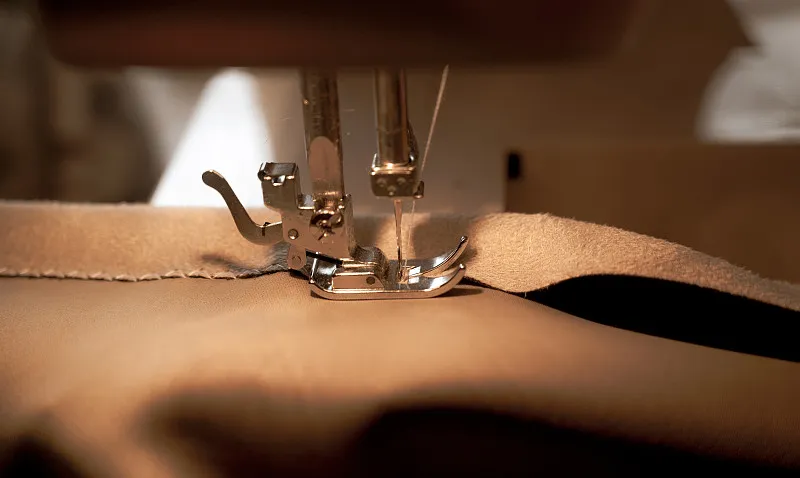
The Backbone of Any Factory: Lockstitch (Flatbed)