Is Learning to Sew Hard? The Honest Truth for Beginners

Is Learning to Sew Hard? The Honest Truth for Beginners
If you have ever watched a tailor run a perfect seam in seconds or scrolled through Instagram seeing beautiful handmade garments, you have probably asked yourself this question: Is learning to sew hard?
The short answer is no — but it does require patience, practice, and the right expectations.
Sewing is a skill, like cooking or playing a basic guitar chord. The first few attempts may feel awkward. Threading a needle, controlling the pedal, and keeping a straight line can be frustrating. But within a few hours of focused practice, most people can sew a straight seam. Within a few weeks, you can complete a simple garment like a pillowcase, tote bag, or even a pair of elastic-waist pants.
Let us break down what actually makes sewing feel difficult — and how to make it easy.
Why Sewing Feels Hard at First
1. Threading the needle and setting up the machine.
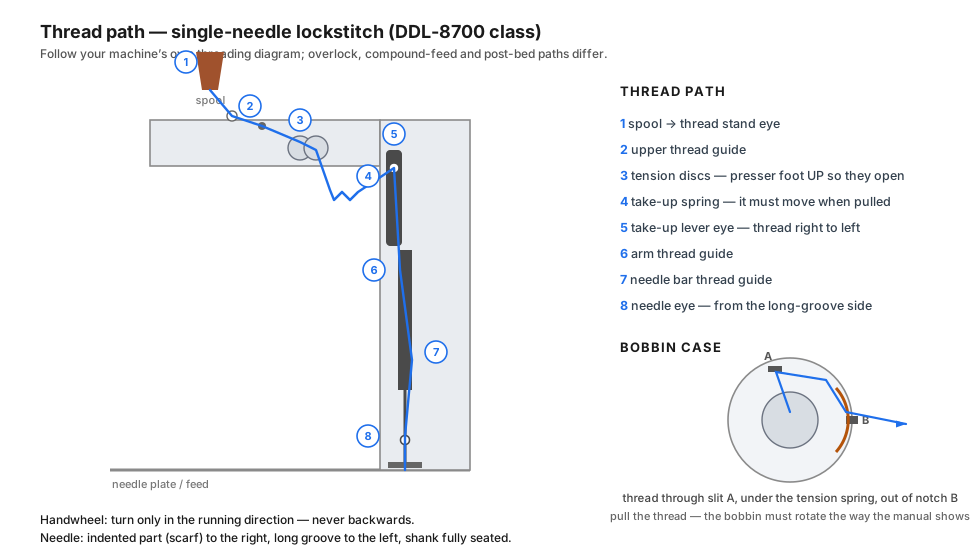
For a complete beginner, even threading an industrial machine can be intimidating. There are multiple thread guides, tension disks, the take‑up lever, and finally the needle eye. Missing any step causes thread breakage or skipped stitches. But this is purely mechanical repetition — after doing it 10 times, it becomes second nature.
2. Controlling speed.
On an industrial machine with a clutch motor, the pedal can feel like an on‑off switch. Many beginners press too hard, and the machine races away. Modern servo motors (like those on DOIT machines) offer precise speed control — you can set a maximum speed and then vary the pedal within that range, making it much easier to sew slowly and accurately.
3. Keeping a consistent seam allowance.
Sewing in a straight line while keeping the fabric edge aligned with a guide mark takes hand‑eye coordination. But every sewing machine has seam allowance lines engraved on the needle plate. If you focus on keeping the fabric edge aligned with the 1 cm or 5/8" line, straight seams become automatic.
4. Understanding tension and stitch quality.
When the upper thread loops underneath or the bobbin thread pulls to the top, beginners panic. In reality, tension adjustment is simple: turn the upper tension dial a little at a time until both threads lock in the middle of the fabric. With a few test runs on scrap fabric, you will learn the feel of a balanced stitch.
5. Fabric handling.
Knits stretch, silks slip, denim is stiff, and leather sticks to presser feet. Each fabric has its own personality. The key is to start with stable woven cotton — it does not stretch, does not fray excessively, and feeds evenly. Once you master cotton, move on to other materials one at a time.
How Long Does It Take to Learn Basic Sewing?
| Skill Level | Typical Time Investment | What You Can Sew |
|---|---|---|
| Basic operation (threading, straight stitch, turning corners) | 2–4 hours | Simple repairs, straight seams |
| Competent beginner (consistent seams, basic curves, simple hems) | 10–20 hours | Pillowcases, tote bags, scrunchies, simple skirts |
| Intermediate (insert zippers, sew buttonholes, follow commercial patterns) | 50–100 hours | Blouses, pajamas, simple dresses, aprons |
| Advanced (tailoring, fitting adjustments, complex fabrics) | 200+ hours | Tailored jackets, jeans, formal wear |
The learning curve is not steep — it is a steady, rewarding climb. Most people who sew for 30 minutes a day become comfortable within one month.
What Makes Learning Sewing Much Easier?
1. Start with the right machine.
A cheap, poorly maintained machine with inconsistent tension and a jerky pedal will make learning miserable. A reliable industrial lockstitch with a servo motor (like DOIT‘s DT 5550 or DT 8800-D4) gives you smooth, predictable control from the first stitch. You do not need dozens of decorative stitches — you need a machine that sews straight, every time.
2. Use good quality thread and a new needle.
Old thread breaks constantly. Dull needles skip stitches and damage fabric. For learning, use V69 bonded polyester thread and a #14–16 sharp point needle on cotton fabric. Replace the needle after every 8 hours of sewing.
3. Practice on scrap fabric, not your final project.
Keep a stack of cotton scraps next to your machine. Before sewing anything important, spend five minutes sewing straight lines, curves, and corners. Adjust tension until the stitch looks perfect. This habit alone eliminates 90% of beginner frustration.
4. Learn the machine’s manual and basic maintenance.
Know how to clean the bobbin area, oil the machine (use proper sewing machine oil, never WD-40), and change the needle. A clean, well‑oiled machine rarely misbehaves.
5. Take one project at a time.
Do not try to sew a tailored jacket as your first project. Start with a pillowcase. Then a tote bag. Then an apron. Then elastic‑waist pants. Each project teaches one or two new skills. Build confidence slowly.
What About Learning to Sew for a Garment Business?
If your goal is to start a small clothing line or run a tailoring shop, the learning curve changes. You do not need to be a master sewer — you need to be consistent and efficient.
-
Operator training on industrial machines: Most new operators become proficient within 2–3 days of supervised practice. Straight seams, edge finishing, and basic assembly are repetitive skills, not creative arts.
-
Production sewing is different from home sewing: You will sew the same operation hundreds of times (e.g., attaching pockets or hemming sleeves). Repetition builds speed and muscle memory quickly.
-
Mistakes are expensive: In a factory setting, learning to inspect your work and catch errors early is as important as sewing speed. But the sewing itself is not hard — it is the discipline of quality control that takes time.
Many successful garment business owners started with zero sewing experience. They learned on one industrial machine, hired a few experienced operators, and scaled from there. You do not need to be a master tailor to run a sewing business — you need to understand the process, the equipment, and the quality standards.
The Bottom Line: Is Sewing Hard?
No, learning basic sewing is not hard.
It is a mechanical skill that improves with deliberate practice. The first hour may feel clumsy. The tenth hour feels natural. The hundredth hour is effortless.
What makes sewing seem hard is:
-
Using a broken or poorly adjusted machine
-
Starting with slippery or stretchy fabrics
-
Skipping the practice stage and going straight to a complex project
-
Not learning basic maintenance (cleaning, oiling, needle changes)
Fix those four issues, and sewing becomes one of the most satisfying, practical skills you can learn.
Ready to Start Sewing? DOIT Group Has the Right Machine for You
Whether you are a home‑based beginner or a factory owner outfitting a production line, DOIT Group offers industrial‑grade lockstitch, overlock, and specialty machines that are reliable, energy‑efficient, and easy to operate.
-
DT 5550 Lockstitch: Perfect for learning on cotton and medium fabrics. High speed (5,000 SPM) with servo motor control.
-
DT 940-4AT Overlock: For professional edge finishing on knits and wovens — essential for T‑shirts and activewear.
-
DT 8800-D4 Automatic Lockstitch: With auto‑trim and touch‑screen, it boosts productivity once you outgrow a basic machine.
All DOIT machines come with ISO9002 certification, CE/UL safety marks, and responsive after‑sales support. Exporting to over 20 countries, DOIT is a trusted partner for garment businesses worldwide.
📩 Email: sales6@chinadoit.cn
🌐 Website: doitsewingmachine.com
Sewing is not hard — but having the right machine makes it easy.
Top 5 Industrial Sewing Machine Problems and How to Fix Them
What to Know Before Buying a Sewing Machine? A Complete Guide for Garment Factory Owners