Is There a Sewing Machine That Sews by Itself?
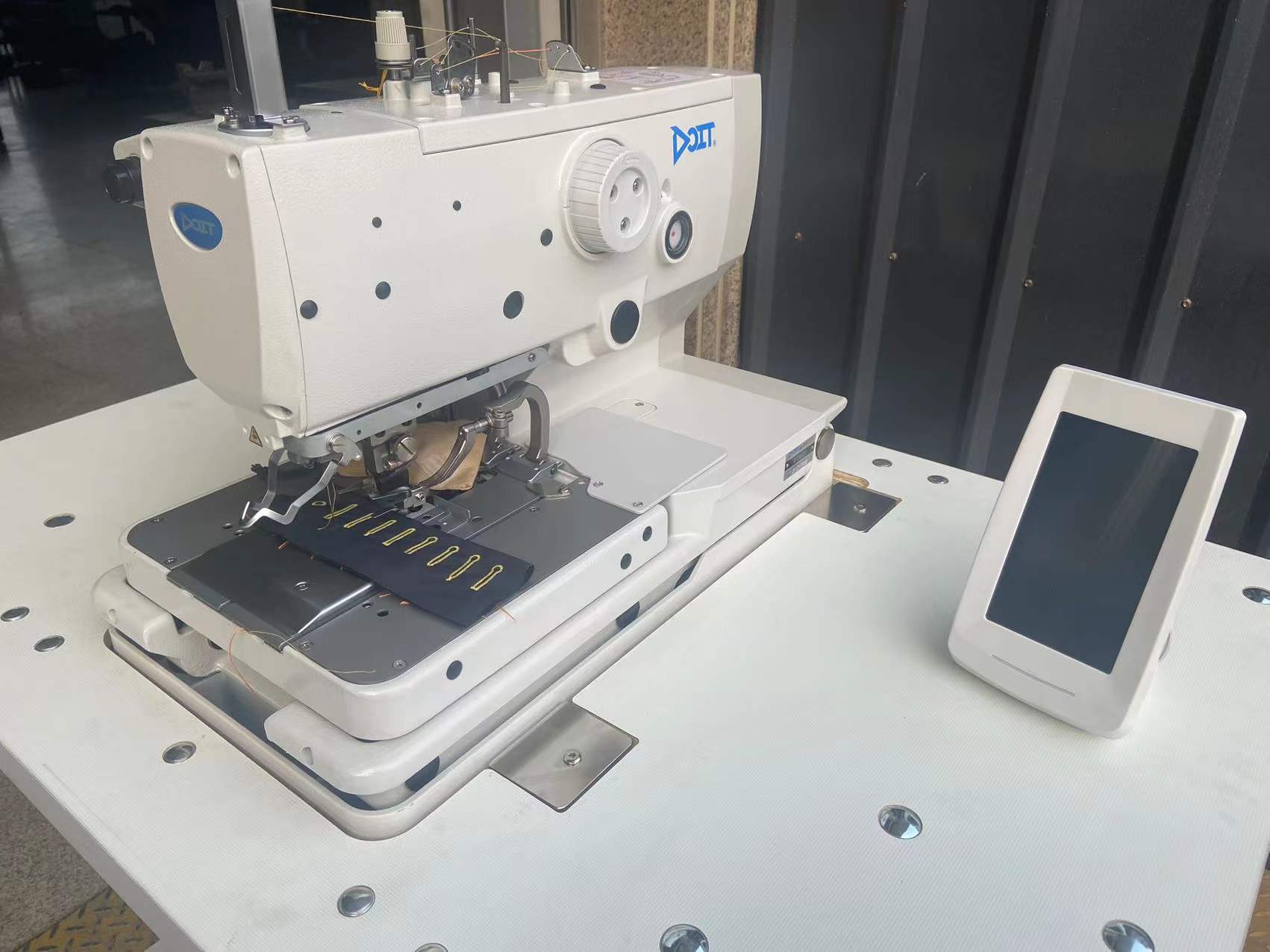
Is There a Sewing Machine That Sews by Itself?
For generations, the question of whether a sewing machine could truly operate on its own has lingered in the minds of factory owners and production managers. The answer today is a resounding yes — and it is transforming garment manufacturing in ways that were unimaginable just a decade ago.
The Reality of Manual Pocket Attachment
Pocket attachment has long been one of the most labor‑intensive and error‑prone operations on any factory floor. Traditional manual pocket setting requires a skilled operator to mark the fabric, fold the pocket, position it precisely on the garment panel, guide it through the sewing head, and reinforce the edges — all while maintaining consistent quality across hundreds or thousands of pieces.
The results are predictable: high reliance on skilled labor, inconsistent quality, frequent rework, and production bottlenecks that slow down the entire line.
The Rise of the “Self‑Sewing” Machine
The automatic pocket setter represents a fundamental shift from traditional manual sewing. These advanced machines integrate multiple processes — marking, folding, positioning, sewing, and stacking — into a single, automated cycle.
Modern automatic pocket setters are equipped with photoelectric positioning devices, pneumatic clamping systems, automatic cutting blades, and programmable sewing heads. They can automatically fold pocket cloths with sharp, consistent creases without material slippage. The presser plate clamps the pocket cloth evenly across the entire sewing area, preventing fabric from shifting or flopping during stitching.
The result is stable, high‑quality pocket setting that does not rely on operator skill. These machines ensure that pockets are sewn with precision and consistency regardless of fabric type or pocket design.
Introducing the DT‑3020TD Automatic Pocket Attach Sewing Machine
DOIT Group has developed the DT‑3020TD to bring this automation capability to garment factories of all sizes. This fully automatic pocket attaching machine is designed specifically for high‑efficiency garment production, capable of attaching various types of pockets to a wide range of garments including pants, shirts, and jackets.
Key Features and Benefits
Complete Automation — The DT‑3020TD automates the entire pocket attachment process from start to finish. It folds, positions, sews, and stacks — all in a single, uninterrupted cycle. The machine uses a software‑based control system that manages every step of the operation.
Exceptional Precision and Consistency — With programmable electronic pattern sewing technology, the DT‑3020TD delivers identical results on every piece. This eliminates the variability that comes with manual operation and ensures that every pocket is positioned and sewn to the same high standard.
High Productivity — By reducing cycle times and eliminating manual handling steps, the DT‑3020TD dramatically increases output per operator. A typical automatic pocket setter can significantly outperform manual methods, allowing factories to meet tight deadlines without sacrificing quality.
Versatility Across Fabric Types — The DT‑3020TD is designed to handle both woven and knitted fabrics, making it suitable for a wide range of garment types from shirts and denim to workwear and casual pants.
Reduced Labor Dependence — Perhaps most importantly, the DT‑3020TD reduces the factory‘s reliance on highly skilled pocket‑setting operators. With automation handling the most complex steps, semi‑skilled operators can achieve professional‑quality results with minimal training.
The Numbers That Matter
The business case for automatic pocket attachment is compelling. Factories that have adopted automatic pocket setters report:
-
Dramatically reduced cycle times — What once took minutes now takes seconds
-
Significantly lower rework rates — Consistent quality means fewer defects
-
Reduced labor costs — One machine can replace multiple manual operators
-
Higher throughput — Production capacity increases without adding headcount
Beyond Pocket Attachment: The Broader Automation Trend
The DT‑3020TD is part of a larger industry movement toward intelligent, automated sewing systems. Across the garment manufacturing sector, factories are increasingly adopting automatic units for a wide range of operations — serging, pocket facing, elastic belt sewing, and button attaching.
This shift is driven by concrete business pressures: rising labor costs, shorter lead times, smaller batch sizes, and zero‑defect tolerance from buyers. Factories that continue to rely on manual operations face not only higher per‑unit costs but also greater quality variability and longer training cycles for new operators.
A Trusted Partner in Automation
DOIT Group, based in Taizhou, Zhejiang — China‘s sewing machinery hub — has over a decade of experience in producing and exporting garment equipment. The company specializes in manufacturing a comprehensive range of industrial sewing machines, from lockstitch and overlock to embroidery and specialty automation equipment. With exports to more than 20 countries across America, Europe, Asia, Africa, and Latin America, DOIT has built a reputation for reliability and value.
The Bottom Line
Yes, there is a sewing machine that sews by itself. The DT‑3020TD Automatic Pocket Attach Sewing Machine proves that full automation of pocket attachment is not just possible — it is practical, profitable, and within reach for garment factories ready to modernize their production lines.
For factory owners and production managers facing rising labor costs, quality inconsistency, and tight delivery schedules, the question is no longer “Is there a sewing machine that sews by itself?” — but rather, “How soon can we put one on our floor?”
Ready to automate your pocket‑setting line? Contact DOIT Group today for a free consultation, a live demonstration of the DT‑3020TD, or a customized ROI analysis for your production volume.
📩 Email: sales6@chinadoit.cn
🌐 Website: doitsewingmachine.com
How do you pick your first sewing machine?
Can I Self-Teach Myself to Sew? Yes — And Here Is Exactly How to Start