Advice on Sewing Machine Features: Which Computerized Features Actually Matter (and Which Are Worth the Investment)?

Advice on Sewing Machine Features: Which Computerized Features Actually Matter (and Which Are Worth the Investment)?
A Reddit user in r/SewingMachineEdu recently posed a question that thousands of sewists face when upgrading: “Looking for advice on which computerized sewing machine features are important but relatively trouble free.” Their mechanical machine “takes way too much time for basic set-up,” tension is “never great despite servicing,” and they’re ready to invest up to $900 in a mid-level computerized machine for home décor, craft projects, mending (up to two layers of nylon webbing), and simple garment sewing.
The challenge? They don’t want features that break, gimmicks they’ll never use, or a machine that’s too heavy to set up and put away regularly. They want professional results with simplicity—and they’re not alone.
This guide breaks down exactly which computerized features deliver real value, which ones you can skip, and how to choose a machine that won’t let you down.
1. Automatic Needle Threader: The One Feature You Should Never Compromise On
The Reddit user specifically mentioned “declining vision and dexterity” as reasons the automatic needle threader has “strong appeal.” This is the single most universally appreciated feature on any computerized machine—and for good reason.
Why it matters: An automatic needle threader eliminates the most frustrating part of sewing setup. One push of a lever, and the thread passes through the needle eye. For anyone with vision challenges, arthritis, or simply limited patience, this feature alone justifies the upgrade to a computerized machine.
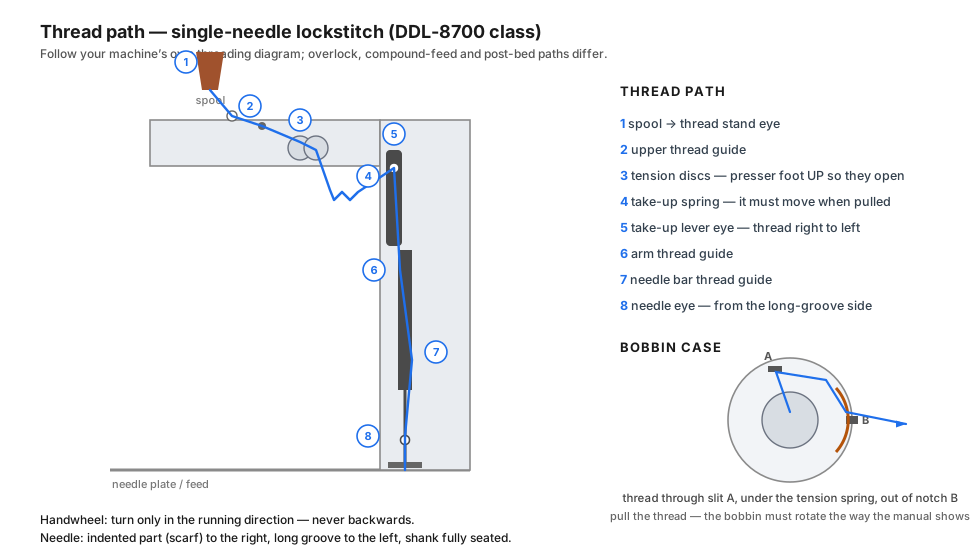
Reliability factor: Modern automatic threaders are remarkably durable. Unlike the pull-down threaders found on older mechanical machines, computerized models use a built-in hook mechanism that rarely fails. The key is to use the correct needle size (typically 75/11 through 100/16) and avoid specialty threads that can damage the hook.
DOIT advantage: While DOIT’s industrial machines are designed for production environments where operators thread manually at high speed, the company’s computerized models incorporate precision threading systems that maintain consistent thread paths—the foundation for reliable stitch quality.
2. Automatic Tension (with Manual Override): The Feature That Ends Tension Nightmares
The Reddit user’s frustration with tension is the #1 complaint among sewists everywhere. Their mechanical machine’s tension is “never great despite servicing”—a problem that automatic tension control solves completely.
How it works: Sensors monitor the fabric thickness and stitch formation in real time, adjusting upper and lower thread tension automatically. When you move from lightweight cotton to two layers of nylon webbing, the machine adjusts without you touching a dial.
The evidence: JUKI’s active tension mechanism automatically corrects needle thread tension according to sewing speed and remaining bobbin thread, delivering “consistent seam quality regardless of changes in sewing speed.” Pfaff’s automatic thread tension regulation adjusts to material thickness in real time, ensuring “optimum stitch formation, even when sewing over cross-seams.”
Why manual override matters: Even the best automatic systems need occasional adjustment. Look for machines that let you override the automatic setting when you’re sewing unusual materials or want a specific stitch appearance.
3. Adjustable Presser Foot Pressure: Essential for Mixed Fabric Work
The Reddit user plans to sew everything from home décor to nylon webbing. Adjustable presser foot pressure is what makes this range possible on a single machine.
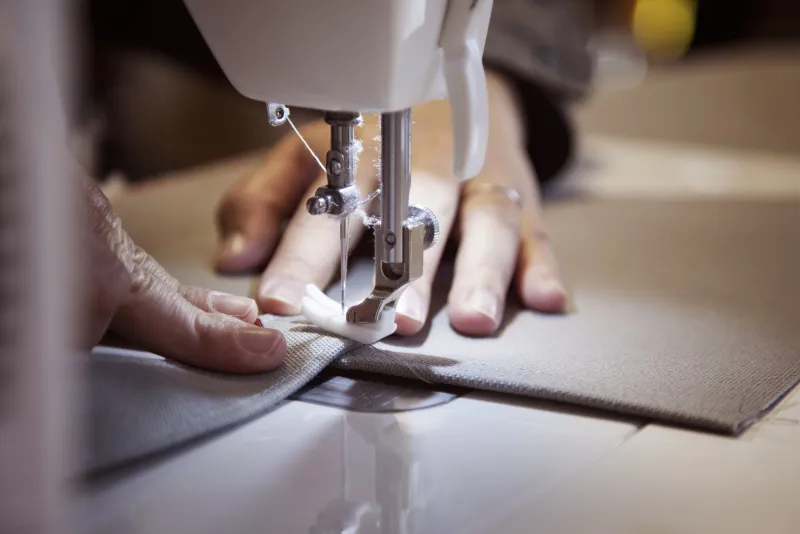
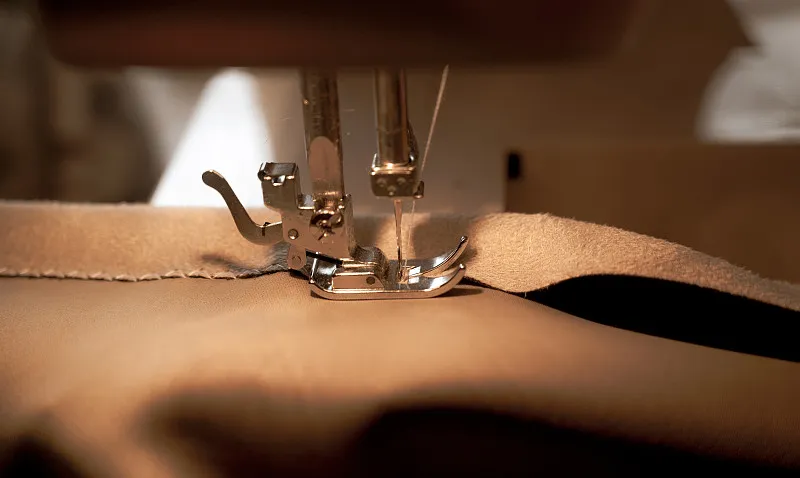
Why it matters: Presser foot pressure controls how firmly the fabric is held against the feed dogs. Too much pressure on lightweight fabric causes puckering and distortion. Too little pressure on heavy materials causes slippage and uneven feeding. The ability to adjust this setting—either via a dial or an automatic sensor—lets you switch between fabrics without changing machines.
What to look for: A simple dial with numbered settings (typically 1–5 or 1–7) is sufficient for most home and semi-professional use. Computerized machines with automatic pressure adjustment are convenient but add complexity and cost.
4. Auto Needle Up/Down and Auto Thread Cutting: Small Features, Big Time Savings
The Reddit user listed these among the features they’re evaluating. Both are worth having.
Auto needle up/down: After you stop sewing, the needle automatically returns to either the up position (for removing fabric) or down position (for pivoting at corners). This eliminates the manual handwheel turn that breaks your sewing rhythm.
Auto thread cutting: A push-button or automatic cut trims both upper and bobbin threads at the end of a seam. This saves seconds per seam—which adds up to minutes per hour in production settings. On a home machine, it’s a convenience. In a factory, it’s a productivity multiplier.
The data: Industrial machines with automatic thread trimming can increase production line efficiency by up to 20%, depending on the operation and material.
5. What About Stitch Count and Decorative Stitches? Skip the Gimmicks
The Reddit user was refreshingly honest: “I won’t use the fancy/embroidering stitches that come on all of these machines, but maybe buttonholes.”
The reality: Most sewists use three to five stitches for 95% of their work: straight stitch, zigzag, and one or two stretch stitches. A machine with 200 built-in stitches is not better than one with 20—it’s just more complex.
What you actually need:
-
Straight stitch (for seams)
-
Zigzag (for finishing edges and stretch fabrics)
-
A one-step buttonhole function (essential for garments)
-
Basic stretch stitches (for knits)
What you don’t need: Decorative embroidery stitches, alphabet fonts, and hundreds of variations that collect dust.
DOIT’s philosophy: DOIT industrial machines focus on doing one thing exceptionally well. The DT 5550 lockstitch, for example, produces a perfect straight stitch at 5,000 SPM—no gimmicks, just reliable performance.
6. Machine Weight and Build Quality: The “Travel Machine” Trap
The Reddit user was warned that “travel machines are not solid or strong enough” and asked: “What is the minimum weight of a machine that is ‘solid’/‘strong’?”
The truth: Weight correlates with build quality. A machine that weighs 15 pounds or more typically has a metal frame and internal components that resist vibration and wear. Lightweight machines (under 10 pounds) use plastic frames and gears that flex under stress, causing skipped stitches and tension problems.
The trade-off: The Reddit user wants to set up and put away the machine regularly. A 20+ pound machine is heavy to move but delivers the stability and precision that professional results require.
The industrial solution: Industrial machines from DOIT Group weigh significantly more because they’re built with cast-iron frames. They’re not designed to be moved—they’re designed to run all day, every day, without losing adjustment. For sewists who are serious about production, this is the right trade-off.
7. Throat Space: Why 8 Inches Matters More Than You Think
The Reddit user “love[s] the idea of 8-inch throat width.” Throat space—the distance from the needle to the right side of the machine—determines how easily you can maneuver large projects.
Why it matters:
-
Quilting: You need space to roll up the quilt on the right side of the machine
-
Home décor: Curtains, cushions, and large panels require room to maneuver
-
Garment construction: Jackets, coats, and large bags benefit from extra space
What’s realistic: An 8-inch throat is generous for a home machine. Most home machines offer 5–7 inches. Industrial machines like DOIT’s long-arm models offer significantly more—up to 18 inches or more for specialized applications.
8. The Features That Actually Break (and How to Avoid Them)
The Reddit user’s core concern is reliability: “features that matter the most, really save time, but are unlikely to go awry.”
Features with higher failure risk:
-
Touchscreens: More prone to failure than physical buttons; expensive to replace
-
Wireless connectivity: Adds complexity with limited practical benefit for most sewists
-
Automatic thread tension sensors: Generally reliable, but sensor failure is costly
-
Embroidery modules: Complex mechanical systems with more points of failure
Features with proven reliability:
-
Automatic needle threader: Simple mechanical mechanism, rarely fails
-
Auto thread cutting: Simple solenoid or motor-driven cutter, reliable
-
Auto needle up/down: Basic motor control, robust
-
Adjustable presser foot pressure: Manual dial, no electronics to fail
The principle: Simpler is more reliable. A machine with fewer electronic components has fewer things that can break.
9. Why Industrial Machines Win on Reliability (and What Home Machines Can Learn)
The Reddit user is looking at home machines in the $900 range. But here’s the uncomfortable truth: **a $900 home machine still has plastic gears, lightweight construction, and limited duty cycles.**
The industrial alternative:
-
All-metal construction: Cast-iron frames and steel gears that last decades
-
Continuous duty cycle: Built for 8-hour shifts, not occasional use
-
Standard parts: Easy to find replacement needles, bobbins, and accessories
-
Simpler electronics: Focused on reliability, not gimmicks
DOIT Group manufactures industrial sewing machines built for this level of reliability. The DT C10-D4 direct-drive computerized lockstitch machine, for example, features a 550W high-efficiency servo motor (noise ≤ 60dB), stepper motor-controlled auto reverse and presser foot lift, and an LCD interface for intuitive adjustment—all with ISO9001 quality certification.
The Reddit user’s budget: $900 can buy a mid-level home machine with features that may fail—or it can be a down payment on an industrial machine that will outlast three home machines. For sewists who are serious about production, the industrial path is more economical over time.
10. DOIT Group: Industrial Reliability for Serious Sewists
If you’re tired of tension problems, broken plastic parts, and machines that can’t handle real work, DOIT Group offers industrial sewing machines built for professionals.
Key DOIT models for home décor, crafts, and garment sewing:
| Model | Type | Key Specifications | Best For |
|---|---|---|---|
| DT 5550 | High-speed single-needle lockstitch | 5,000 SPM, 13mm thickness, 250W motor | General garment construction, home décor |
| DT C10-D4 | Direct-drive computerized lockstitch with stepper motor | 550W motor, noise ≤ 60dB, stepper-controlled auto reverse and presser foot lift, LCD interface | Precision work, production sewing |
| DT 8800-D4 | Direct drive with auto-trimmer | Automatic thread trimming, 15mm presser foot lift | High-volume sewing, efficiency-focused |
Why DOIT machines deliver on the Reddit user’s requirements:
-
Automatic features that work: Stepper motor control for precise, quiet auto reverse and presser foot lift
-
Consistent tension: Industrial-grade tension mechanisms that don’t drift
-
Built to last: All-metal construction with cast-iron frames
-
Standard parts: 135×17 needle system for easy sourcing
-
Warranty protection: 1-year on machine parts, 2-year on motor
Industry benchmark: World-class OEE (Overall Equipment Effectiveness) in garment manufacturing is 85% —a level achieved by machines that run reliably shift after shift. DOIT machines are engineered to help factories and serious sewists approach this benchmark, not fall short of it.
Ready to stop fighting your machine and start sewing with confidence? Explore DOIT Group’s full range of industrial sewing machines at doitsewingmachine.com.
📩 Email: sales6@chinadoit.cn
🌐 Website: doitsewingmachine.com
Thread Choices for Machine Embroidery: A Complete Guide for Returning and Beginner Embroiderers
From Leather to Kevlar: What It Takes to Custom-Make a Motorcycle Jacket