Are Old Sewing Machines Worth Money? The Truth About Vintage vs. Modern Industrial Value
Are Old Sewing Machines Worth Money? The Truth About Vintage vs. Modern Industrial Value
That dusty Singer in your attic could be worth hundreds — or it could be worth exactly what it looks like: an old machine past its useful life. This guide separates collectible treasure from functional scrap, and explains why, for serious garment production, modern industrial machines from DOIT Group deliver far more value than any vintage find.
Outline
1. What Determines Whether an Old Sewing Machine Has Real Value?
The value of a vintage sewing machine depends on four key factors: brand and model, condition, age and rarity, and completeness. Singer dominates the collectible market — the Featherweight 221, produced from 1933 to 1968, is the most famous example. The Singer 301A (“Featherweight's big sister”) and the Singer 15-91 are also highly sought after. But most old machines fall into the $50 to $150 range. Working models in clean condition typically sell for $200 to $400, while mint examples with original attachments can fetch significantly more. Non-working machines or those missing parts are worth far less — often under $50.
2. Which Vintage Sewing Machines Are Actually Worth Money?
Some models command real collector prices. A Singer Featherweight 221 in good condition can sell for $400 to $700+, with rare colors or mint condition examples exceeding $1,000. A 1941 Singer in very good condition with original case can fetch around **$500**. Singer treadle machines from the late 19th century range from $150 to $350 in used condition, rising to $500 or more** fully restored. A Singer from 1897 with original cabinet is valued at **$200–$300**. Vintage Pfaff, Bernina, and Husqvarna Viking models also hold value, especially those with unique features or rare attachments. However, mass-produced plastic-body machines from the 1970s and 1980s rarely fetch much — often **$25 to $100 even in working condition.
3. Why Is Condition the Single Most Important Factor in Value?
Condition is the single biggest variable affecting value. Faded or chipped decals, missing cases, hairline cracks in the bed, and replaced parts all reduce value significantly. A working machine with sharp decals and its original case is worth considerably more than a seized-up, accessory-free version. Collectors place high value on original decals and japanned finish — repainting or amateur restoration can actually destroy value. For antique Singers with elaborate gilt decoration, the condition of that decoration is particularly important to collectors and “is not something you can restore”.
4. Does Age Alone Make a Sewing Machine Valuable?
Age alone does not guarantee value. While machines over 100 years old are considered antiques and “can hold substantial value if they are rare or in good condition,” most were produced in factories by the thousands. Only the oldest, hardest to find, aesthetically pleasing, or technologically significant models command high prices. A common Singer from 1910 might sell for $100–$150, while a rare model from the same era could fetch $1,500. Supply and demand matter: “with considerably less demand than supply, prices remain modest” for many antique machines.
5. What Accessories and Original Parts Add the Most Value?
Original accessories significantly boost value. Collectors prize machines with original cords, foot pedals, manuals, and attachments intact. The original case is especially valuable — machines not built into tables that retain their original domed cases are worth more. Missing cabinet drawers can drop value by $50–$100. A complete machine with all original parts and accessories signals to buyers that it was cared for, while missing items suggest neglect or amateur repairs.
6. Can You Still Use an Old Sewing Machine for Production?
You can, but with serious limitations. Vintage all-metal machines are often more durable than modern plastic-heavy home machines and are well suited to working on heavier materials. However, they are still single-needle, straight-stitch machines operating at 800–1,100 stitches per minute — compared to 4,000–5,500 SPM on modern industrial machines. They lack automatic thread trimming, programmable stitch patterns, and energy-efficient servo motors. Parts availability is a major concern — finding replacement parts for a 1930s Singer can take weeks or months. For occasional home use, a vintage machine can be a charming and functional tool. For a garment factory, it is a production bottleneck.
7. What Is the Difference Between “Antique,” “Vintage,” and “Old” in the Sewing Machine Market?
Antique machines are over 100 years old, often treadle or hand-crank models. These can hold substantial value if rare or in good condition. Vintage machines are typically 50–100 years old — the Featherweight 221 falls into this category. “Old” machines from the 1970s and 1980s are often mass-produced plastic-body models with limited collector interest. The distinction matters because antique and vintage machines may have collector value, while merely “old” machines from the recent past are often worth little more than scrap.
8. When Should You Sell an Old Machine vs. Keep It for Parts or Restoration?
If your machine is a rare model (Featherweight, 301A, early treadle) in good condition with original accessories, selling to a collector can be profitable. Use the serial number to identify the model and check completed eBay sales for comparable prices. If the machine is a common model, non-working, or missing parts, it may be worth more as a decorative piece or parts donor than as a functional machine. Restoration is expensive — professional servicing can cost $100–$300, and parts replacement adds more. A $50 machine with $200 in repairs is still a $50 machine to most buyers. Only restore if you plan to keep and use it yourself.
9. Why Is a Modern Industrial Machine a Better Investment for Serious Production?
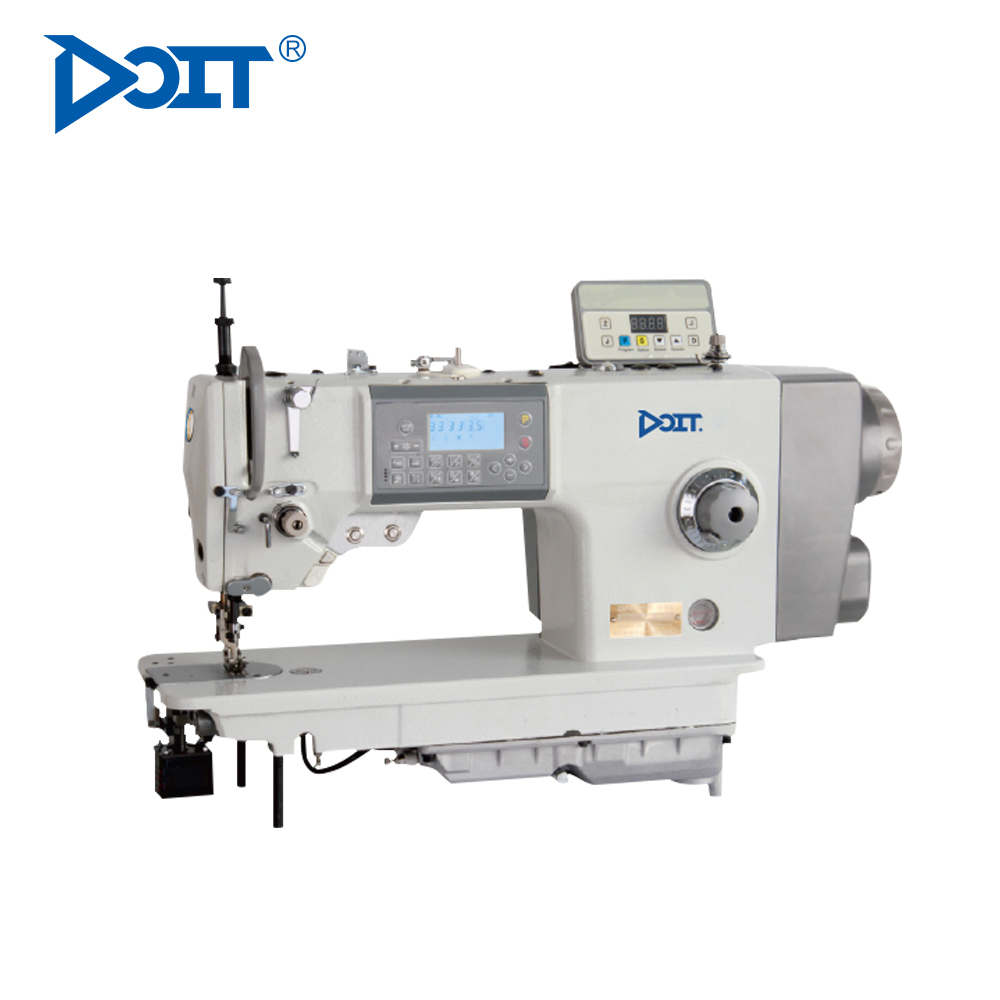
For any garment factory or serious small business, the value equation is simple: productivity equals profitability. A modern industrial machine from DOIT Group delivers what no vintage machine can:
-
Speed: DOIT lockstitch machines operate at 5,000 SPM — over five times faster than vintage machines
-
Energy efficiency: Direct-drive servo motors save up to 70% on electricity compared to traditional clutch motors
-
Reliability: Built for 8‑hour shifts, not occasional use — cast-iron frames and all-metal construction
-
Automation: Automatic thread trimming, programmable stitch patterns, and stepper motor precision
-
Parts availability: Standard 135×17 needle systems and widely available components — no hunting for obsolete parts
DOIT Group, headquartered in Taizhou, Zhejiang, manufactures a full range of industrial lockstitch, overlock, and specialty machines exported to over 20 countries. All machines carry ISO9002 certification, CE and UL safety marks, one-year warranty on parts, and two-year warranty on the motor.
10. What Is the Bottom Line — Are Old Sewing Machines Worth Money?
Yes — if they are the right brand (Singer Featherweight, 301A, early treadle, certain Pfaff or Bernina models), in excellent condition, and complete with original accessories. Most old machines, however, sell for $50 to $150. For a collector or vintage enthusiast, that old Singer might be a treasure. For a garment factory owner, the real value is not in how old the machine is — it is in how reliably, efficiently, and profitably it runs today.
Ready to invest in reliable, modern industrial sewing equipment that delivers real production value? Explore DOIT Group's full range at doitsewingmachine.com.
📩 Email: sales6@chinadoit.cn
🌐 Website: doitsewingmachine.com
What‘s the Best Sewing Machine for Beginners Right Now? (Easy to Use Under $300)
What Is the Average Cost to Service a Sewing Machine?