Can I Self-Teach Myself to Sew? Yes — And Here Is Exactly How to Start

Can I Self-Teach Myself to Sew? Yes — And Here Is Exactly How to Start
The short answer is yes. You absolutely can teach yourself to sew. In fact, many of today's most skilled sewists and even successful garment business owners are entirely self-taught.
The longer answer is that self-teaching requires the right resources, realistic expectations, and a willingness to make — and learn from — mistakes. This guide walks you through exactly how to start, what resources to use, what challenges to expect, and when to consider upgrading to industrial equipment for serious production.
Why Self-Teaching Sewing Has Never Been Easier
Twenty years ago, learning to sew meant taking expensive in-person classes or learning from a family member. Today, the internet has completely transformed access to sewing education.
Free YouTube tutorials are arguably the most valuable resource for self-taught sewists. Channels like Made to Sew offer detailed, professional-grade tutorials on everything from threading a machine to advanced dressmaking techniques. Creators like Evelyn Wood, Aneka from Made to Sew, Diane Deziel, and Professor Pincushion produce incredibly clear, step-by-step videos that let you watch a technique being demonstrated before trying it yourself.
Online course platforms provide structured learning paths. Craftsy offers classes on everything from beginner sewing to advanced garment construction, with expert instructors and Q&A support. Skillshare and Udemy also offer both free and paid courses with clear progression — starting with machine operation, then moving into basic skills and troubleshooting.
Community support is another game-changer. The r/sewing subreddit is an active community where beginners can ask questions, share projects, and get feedback from experienced sewists. When you run into a problem — and you will — there are always people willing to help.
Written resources like sewing blogs (Crazy Little Projects) and online guides provide alternative explanations when video tutorials leave you confused.
What You Need to Get Started
Before you sew a single stitch, assemble a basic sewing kit:
| Item | Why You Need It |
|---|---|
| Pins | Hold fabric pieces together before sewing |
| Hand sewing needles (various sizes) | Finer for light fabrics, thicker for heavy materials like denim |
| Thread | Choose good-quality polyester thread for beginners |
| Measuring tape | Essential for taking measurements and marking fabric |
| Fabric scissors | Dedicated scissors that never cut paper — paper dulls blades quickly |
| Seam ripper | Your best friend. You will make mistakes, and this is how you fix them |
Do you need a sewing machine? For basic repairs — darning socks, patching holes, hemming pants — hand sewing is sufficient. But if you want to make garments, work with patterns, or handle heavy fabrics like denim, a sewing machine is essential. A good machine is an investment that can last decades.
The Self-Teaching Roadmap: From Zero to Competent
Phase 1: Learn Your Machine (Week 1)
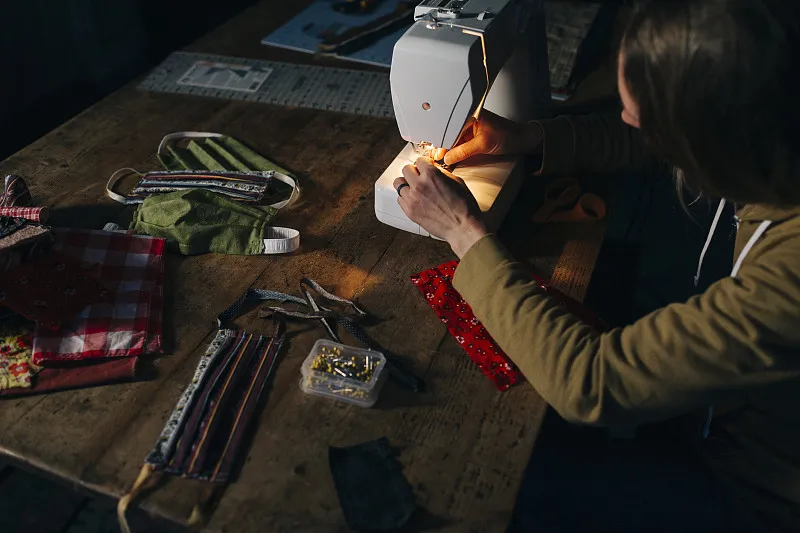
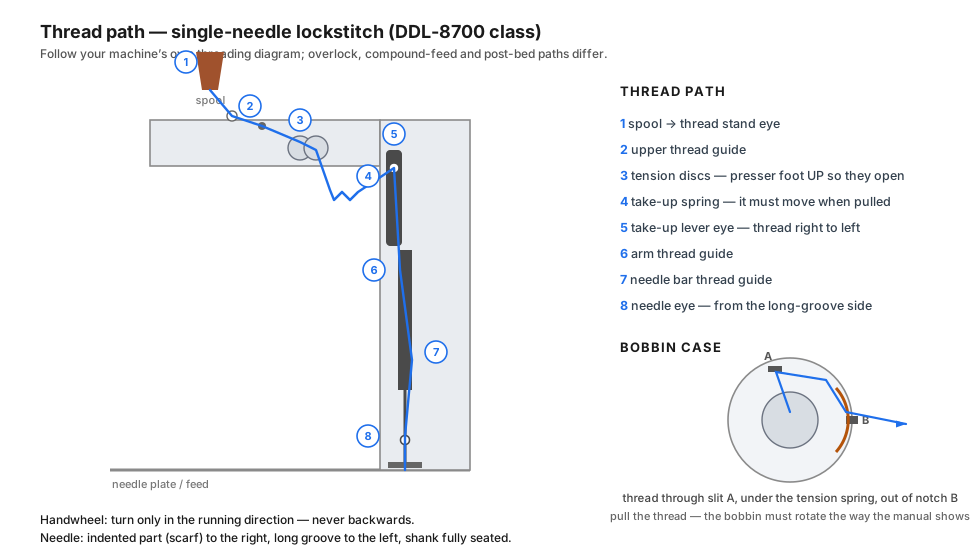
Start by reading the manual. Thread the machine. Wind a bobbin. Practice sewing straight lines on scrap fabric. This is where most beginners quit — but persevere, because once you can sew with a machine, a whole new world of possibilities opens up.
Phase 2: Master the Basics (Weeks 2–4)
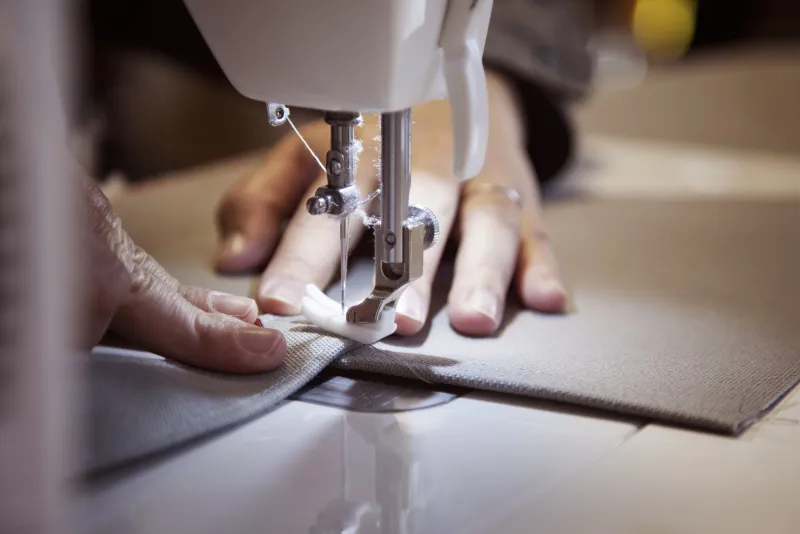
Learn to sew straight seams, turn corners, and finish edges. Made to Sew's tutorials are excellent for this stage. Practice on cotton — it is stable, does not stretch, and feeds evenly.
Phase 3: Simple Projects (Weeks 4–8)
Make a pillowcase. Then a tote bag. Then an apron. Each project teaches one or two new skills. Do not skip to a complex garment — that is how frustration happens.
Phase 4: Garment Construction (Months 2–6)
Follow a simple pattern. Learn to insert zippers, sew buttonholes, and adjust fit. This is where sewing becomes truly rewarding.
Common Challenges Self-Taught Sewists Face — And How to Overcome Them
Challenge 1: Interpreting Pattern Instructions
Beginners often struggle to visualize how flat pieces of fabric come together into a three-dimensional garment. Pattern instructions can be confusing, especially for self-taught sewists. Solution: Watch video tutorials of the same pattern being made. Seeing the process visually bridges the gap between written instructions and physical execution.
Challenge 2: Inappropriate Seam Finishes
Using the wrong seam finish can ruin a garment just as much as a crooked seam. Solution: Learn basic seam finishes (zigzag, overlock, French seam) and when to use each.
Challenge 3: Tracing Patterns Incorrectly
Tracing and cutting around existing clothes is not necessarily easier than using proper sewing patterns. Solution: Start with commercial patterns designed for beginners. They include detailed instructions and seam allowances built in.
Challenge 4: Mistakes That Require Unpicking
Every beginner sews pieces together backward, sews the wrong sides together, or makes errors that require hours of unpicking. Solution: Accept that mistakes are part of learning. A seam ripper is not a failure tool — it is a learning tool. Double-check before sewing, but do not beat yourself up when you get it wrong.
Challenge 5: Lack of Accountability
Without a teacher or class, it is easy to lose motivation. Solution: Join online communities. Share your progress. The encouragement from other sewists keeps you going.
When to Move from Home to Industrial Equipment
If your goal is to start a small garment business or scale up production, a home sewing machine will eventually limit you. Home machines max out around 800–1,100 stitches per minute and are not designed for continuous daily operation. Industrial machines run at 4,000–5,500 stitches per minute — four to five times faster — and are built for 8-hour shifts.
DOIT Group, a professional manufacturer based in Taizhou, Zhejiang — China's sewing machinery hub — produces a full range of industrial sewing machines suitable for serious small businesses and garment factories. With over 95% of its products exported to more than 20 countries across America, Europe, Asia, Africa, and Latin America, DOIT has built a reputation for reliability and value.
Key DOIT models for those moving beyond beginner status:
-
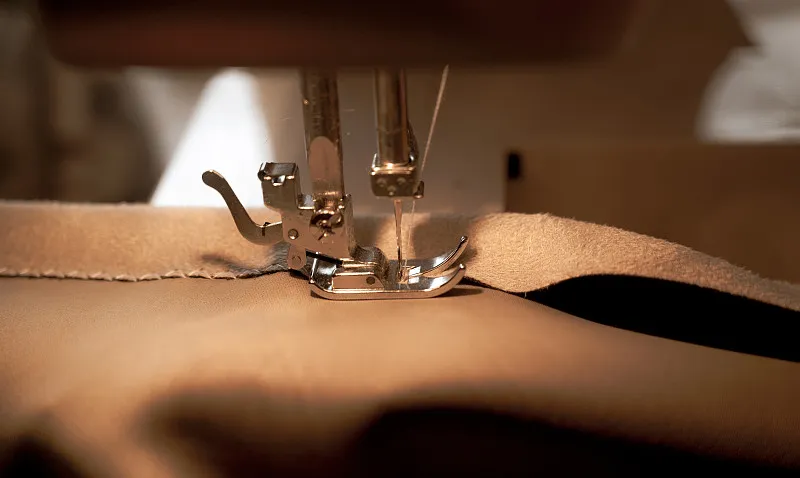
DT 5550 High-speed Single-needle Lockstitch — The workhorse for daily assembly. Handles up to 13mm sewing thickness, making it capable of denim and heavy fabrics. Maximum speed of 5,000 SPM. Ideal for general garment construction.
-
DT 8800-D4 Direct Drive Full Automatic Lockstitch — Features a direct-drive servo motor that saves up to 70% on electricity compared to traditional clutch motors. Includes automatic thread trimming and a 15mm presser foot lift for bulky seams — features that significantly reduce operator fatigue and increase output.
-
DT 940-4AT High-speed Automatic Overlock — Essential for professional edge finishing. Sews, trims, and finishes edges in a single pass at speeds up to 7,000 RPM. Perfect for T-shirts, activewear, and knit garments.
-
DT C10-D4 Computerized Lockstitch with Stepper Motor — Advanced digital control for precise, repeatable stitch quality across high-volume production runs.
All DOIT machines are manufactured under ISO9002 quality standards, with many models carrying CE, UL, and TUV certifications. With a one-year warranty on machine parts and a two-year warranty on the motor, DOIT stands behind its equipment.
The Bottom Line
Yes, you can teach yourself to sew. The resources are abundant, the community is welcoming, and the skills are genuinely learnable through consistent practice.
-
Start with free YouTube tutorials — Made to Sew, Evelyn Wood, Professor Pincushion
-
Join online communities — r/sewing for questions and encouragement
-
Accept that mistakes are part of learning — every expert was once a beginner who unpicked a hundred seams
-
Practice consistently — 20 minutes a day beats four hours once a month
-
Upgrade when you outgrow your equipment — a reliable industrial machine from DOIT Group can take you from hobbyist to business owner
Sewing takes patience and practice to master. But the rewards — perfectly fitting clothes, the ability to repair and upcycle, and the satisfaction of creating something with your own hands — are well worth the effort.
Ready to start your sewing journey with the right equipment? DOIT Group offers a full range of industrial sewing machines for beginners and growing businesses alike. Contact us for a free consultation and equipment recommendation.
📩 Email: sales6@chinadoit.cn
🌐 Website: doitsewingmachine.com
Is There a Sewing Machine That Sews by Itself?
Is It Actually Cheaper to Sew Your Own Clothes? The Honest Truth