From Leather to Kevlar: What It Takes to Custom-Make a Motorcycle Jacket
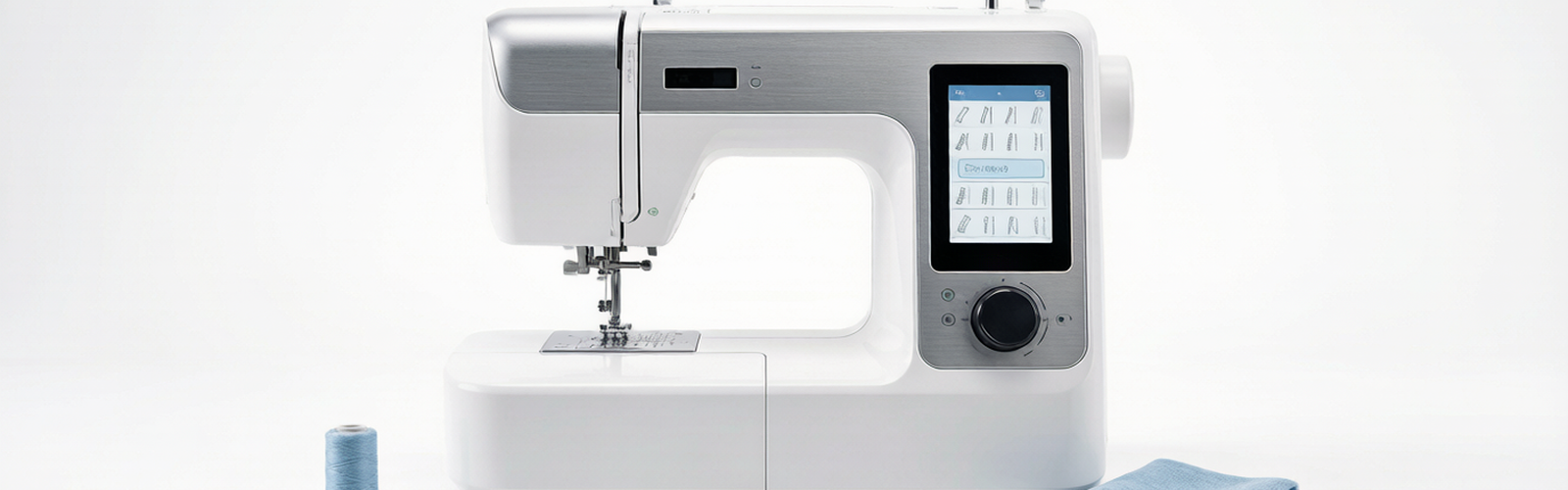
From Leather to Kevlar: What It Takes to Custom-Make a Motorcycle Jacket
A Reddit user in the motorcycle community recently shared an ambitious plan: “I plan on getting a motorcycle. I have a friend that has a fashion degree and a sewing machine or two and I plan on contracting her to make a jacket for me.” The specs are impressive—kangaroo leather outer layer, fur stitched on the shoulders, and Kevlar woven between the outer and inner layers.
If you've ever considered custom-making your own motorcycle gear—or wondered what it takes—this guide breaks down the materials, techniques, and equipment needed to bring a project like this to life. And why having the right sewing machine makes all the difference between a jacket that looks good and one that actually protects you.
1. Why Custom-Make a Motorcycle Jacket Instead of Buying Off the Rack?
The Reddit user's decision to commission a custom jacket reflects a growing trend: riders want gear that fits perfectly, reflects their style, and offers the protection they need—without settling for mass-produced options.
Why go custom:
-
Perfect fit: Off-the-rack jackets rarely fit everyone's body shape. A custom jacket fits you.
-
Material choice: You control every layer—from the outer leather to the inner lining.
-
Design freedom: Fur on the shoulders, specific pocket placement, custom colors—your vision, your jacket.
-
Quality control: You know exactly what materials are used and how it's constructed.
The Reddit user's approach: They're leveraging a friend's fashion degree and sewing equipment to create something truly bespoke. This is custom garment making at its most personal.
2. Kangaroo Leather: Why It's the Gold Standard for Motorcycle Gear
The Reddit user chose kangaroo leather for the outer layer. This is a smart choice—kangaroo leather is widely regarded as one of the best materials for motorcycle protective gear.
Why kangaroo leather stands out:
-
High tensile strength: Kangaroo leather is significantly stronger than cowhide of the same thickness
-
Lightweight: It offers excellent protection without the bulk of heavier leathers
-
Abrasion resistance: Ideal for sliding protection in a crash
-
Flexibility: Molds to the body for a comfortable fit
The trade-off: Kangaroo leather is more expensive and requires specialized sewing techniques. Standard home sewing machines often struggle with its density and thickness.
3. Kevlar: The Hidden Layer That Saves Lives
The Reddit user plans to have “Kevlar woven in between the outside layer (the kangaroo leather) and the inside layer”. This is the smartest safety decision you can make in a custom jacket.
What Kevlar does:
-
Cut and abrasion resistance: Kevlar is five times stronger than steel on an equal-weight basis
-
Heat resistance: Maintains integrity at high temperatures
-
Impact protection: Works in conjunction with armor to absorb energy
-
Lightweight protection: Adds safety without significant weight
Sewing Kevlar: Kevlar is notoriously difficult to sew. Its high strength means standard needles can't penetrate it cleanly. You need industrial-grade machines with powerful motors and heavy-duty needles.
4. The Inside Layer: What Material Should You Use?
The Reddit user asked about the inner layer material for 2–3 pockets. The inside layer needs to be comfortable against the skin while durable enough to hold pockets and withstand wear.
Recommended inner layer materials:
-
Nylon or Cordura: Durable, breathable, and comfortable against the skin
-
Cotton or cotton-blend: Soft and comfortable, but less durable than synthetics
-
Mesh or perforated fabric: Provides airflow for warmer weather riding
-
Taffeta or satin: Smooth, allows the jacket to slide on and off easily
The pocket consideration: The inner layer must be strong enough to support pockets without tearing. Reinforce pocket areas with additional stitching or backing material.
5. Joint Protection: Hard Shells and Armor
The Reddit user asked about “the material used for the kinda hardish parts that protect the joints… like the elbows and shoulders”. This is where safety meets engineering.
Common armor materials:
-
CE-rated foam: Multi-density foam that absorbs impact
-
Hard plastic shells: Often combined with foam for maximum protection
-
D3O or similar viscoelastic polymers: Soft and flexible in normal use, hardens on impact
-
Carbon fiber or Kevlar composite: Lightweight, high-strength protection
Sewing armor into the jacket: Armor pockets need to be precisely positioned and securely sewn. This requires accurate measurement and strong, reliable stitching—the kind that industrial machines deliver.
6. The Challenge of Sewing Multiple Layers of Heavy Materials
A custom motorcycle jacket isn't just a garment—it's a protective system. Sewing kangaroo leather, Kevlar, inner lining, and armor pockets together creates a multi-layer challenge that standard home sewing machines cannot handle.
Why standard machines fail:
-
Insufficient motor power: Can't penetrate multiple layers of leather and Kevlar
-
Plastic components: Bend or break under the stress of heavy materials
-
Inadequate presser foot lift: Can't accommodate thick seam intersections
-
Needle limitations: Can't accept the heavy-duty needles required
The industrial advantage: Industrial sewing machines are built with all-metal construction, powerful motors, and high presser foot lift—exactly what's needed for motorcycle gear.
7. DOIT Group: The Industrial Machines That Make Custom Gear Possible
DOIT Group manufactures industrial sewing machines built for the demands of heavy materials. With all-metal construction, powerful motors, and professional-grade features, DOIT machines can handle the toughest sewing challenges—from kangaroo leather to Kevlar.
Why DOIT machines excel at motorcycle gear:
-
All-metal construction: No plastic parts to break or wear out under heavy use
-
Powerful motors: Sew through multiple layers of leather and Kevlar without stalling
-
Standard needle systems: Easy to find heavy-duty needles (#18–22) for tough materials
-
High presser foot lift: Accommodates thick seam intersections
-
Direct-drive servo motors: Smooth, consistent power delivery and energy efficiency
The DOIT difference: DOIT machines are used to make clothing including shirts, pants, and other products—and they're equally capable of tackling custom motorcycle gear. With 2-year warranty and lifetime after-sales support, DOIT stands behind its equipment.
8. Key DOIT Models for Motorcycle Gear Production
| Model | Type | Why It Works for Motorcycle Gear |
|---|---|---|
| DT 5550 | High-speed lockstitch | 5,000 SPM, handles up to 13mm thickness—perfect for multi-layer leather and Kevlar |
| DT 8800-D4 | Direct drive with auto-trimmer | Automatic thread trimming saves time on every seam; 15mm presser foot lift handles bulky layers |
| DT 4420HL-18 | Long arm double needle compound feed | Extra-long arm for maneuvering large panels; handles up to 16mm thickness |
| DT 700-5 | 5-thread overlock with walking foot | Industrial walking foot prevents layer shifting; 400W power for heavy fabrics |
The Reddit user's friend: With a fashion degree and “a sewing machine or two”, they're already partway there. Upgrading to an industrial machine from DOIT would transform their capability from basic garment construction to professional-grade motorcycle gear production.
9. The Bottom Line: Custom Gear Deserves Professional Equipment
The Reddit user's vision—kangaroo leather, Kevlar reinforcement, fur accents, and integrated armor—is ambitious and exciting. It's exactly the kind of project that demonstrates why custom garment making is so rewarding.
But it's also exactly the kind of project that demands the right equipment. Standard home sewing machines can't handle the combination of heavy leather, abrasion-resistant Kevlar, and multi-layer construction. Industrial machines from DOIT Group are built for exactly this work.
Key takeaways:
-
Kangaroo leather offers unmatched strength-to-weight ratio for motorcycle gear
-
Kevlar provides critical abrasion resistance when woven between layers
-
Inner lining materials should balance comfort and durability
-
Armor materials range from CE-rated foam to advanced polymers like D3O
-
Industrial sewing machines are essential for sewing heavy, multi-layer materials
-
DOIT Group offers the machines and support needed for custom gear production
Your custom motorcycle jacket is an investment in safety, style, and individuality. Make sure the equipment behind it matches the ambition behind the design.
Ready to take your custom garment projects to the next level? Explore DOIT Group's full range of industrial sewing machines at doitsewingmachine.com.
📩 Email: sales6@chinadoit.cn
🌐 Website: doitsewingmachine.com
Advice on Sewing Machine Features: Which Computerized Features Actually Matter (and Which Are Worth the Investment)?
From Fraying to Forever: How to Reinforce a Weak Seam and Make Your Clothes Last