How do you pick your first sewing machine?
How Do You Pick Your First Sewing Machine? Your Complete Starter Guide for a Small Garment Business
Starting a small garment business is an exciting step, but choosing your first sewing machine can quickly become overwhelming. Walk into any sewing equipment showroom or scroll through online marketplaces, and you‘re met with hundreds of options — domestic machines, industrial lockstitch, overlockers, coverstitch, and more. Each promises something different, but not every machine is right for where you are today.
This guide walks you through exactly how to choose your first sewing machine for business use — and why the DT‑940‑4AT from DOIT Group is one of the most practical starter machines you can buy.
Step 1: Do You Really Need an Industrial Sewing Machine?
This is the most important question to answer first.
If you‘re a hobbyist sewing occasionally on weekends, a domestic sewing machine (like those from Brother, Singer, or Janome) is likely sufficient. These machines are designed for versatility, with dozens of stitch patterns and user-friendly controls, but they lack the durability and speed needed for long hours of sewing and typically max out around 800 stitches per minute.
However, if you’re serious about turning sewing into a business — whether it‘s a home‑based clothing brand, a small tailoring shop, or a micro‑factory — then an industrial sewing machine is almost certainly the right choice. Industrial machines are built for continuous operation, handle a wider range of fabrics from delicate silks to thick denim, and operate at speeds of 4,000 to 6,000 stitches per minute. The global industrial sewing machine market is projected to reach USD 10.3 billion by 2032, driven precisely by this shift toward higher efficiency and precision equipment.
Step 2: One Machine or Two? Understanding Your Core Stitching Needs
Many first‑time buyers assume they can buy a single machine and sew everything. In reality, garment production typically requires at least two types of industrial machines working together.
The two most essential machines for a small garment business are:
-
Lockstitch (also called flatbed or single‑needle machine) – Used for straight seams, topstitching, zipper insertion, and most general construction work. This is the workhorse of any sewing operation.
-
Overlock (also called serger or four‑thread machine) – Used for finishing raw fabric edges, preventing fraying, and sewing stretch fabrics. Overlock machines also cut excess seam allowance as they sew, producing a professional, ready‑to‑wear finish.
If you are only going to start with one machine, most small garment businesses should prioritize an overlocker first. Why? Because unfinished seam edges look unprofessional and will quickly unravel with wear. An overlocked seam, by contrast, has the clean, finished appearance customers expect from ready‑to‑wear garments.
Step 3: Introducing the DT‑940‑4AT – Your Ideal First Overlock Machine
Once you‘ve decided that an industrial overlock machine is your starting point, the next question is: which model?
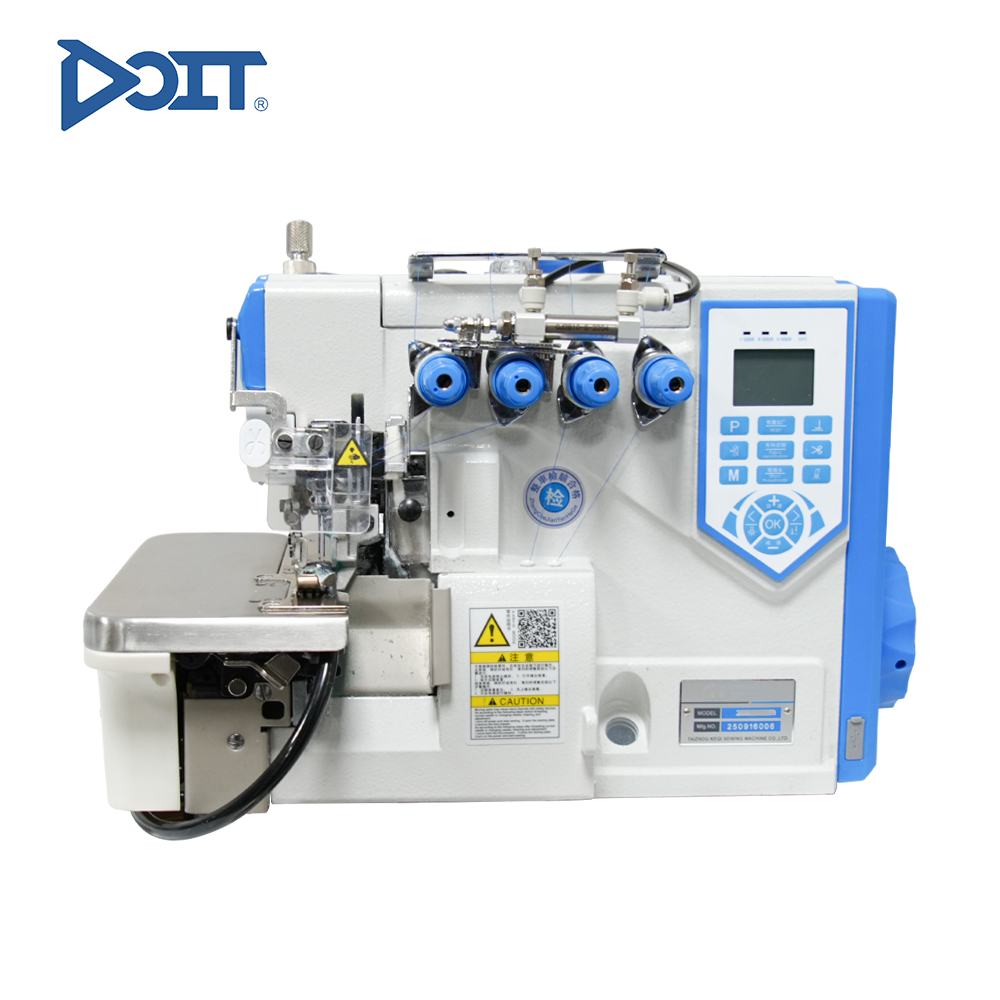
Enter the DT‑940‑4AT from DOIT Group — a four‑thread industrial overlock machine specifically designed to meet the needs of small garment businesses and first‑time industrial machine users.
Here’s why the DT‑940‑4AT stands out as a starter machine:
Built for Speed Without Sacrificing Control – The DT‑940‑4AT delivers the high-speed performance you need for production while maintaining the stitch consistency required for quality garments. Industrial machines typically reach speeds of 4,000 to 5,000 stitches per minute — far faster than any domestic machine.
Four‑Thread Versatility – With four threads, this machine can perform both three‑thread overlock (for lightweight fabrics) and four‑thread safety stitch (for medium to heavy fabrics). This means you can sew everything from delicate blouses to sturdy work pants on a single machine.
Professional Edge Finishing – The DT‑940‑4AT simultaneously trims excess seam allowance and encases the raw edge with thread, producing the same clean finish found on mass‑produced garments.
Built for Continuous Operation – Unlike domestic machines that may overheat or jam after extended use, the DT‑940‑4AT is engineered for all‑day production. Its robust construction means less downtime and more consistent quality.
Beginner‑Friendly Learning Curve – While industrial machines have a reputation for complexity, the DT‑940‑4AT’s straightforward design allows new operators to become proficient within days, not weeks.
Step 4: What to Look for in Any First Industrial Machine
Whether you choose the DT‑940‑4AT or another model, keep these five criteria in mind when selecting your first industrial sewing machine:
1. Production Volume – Estimate how many garments you plan to produce weekly. For small‑scale production (50–200 pieces per week), a single industrial machine is sufficient. For larger volumes, you’ll likely need multiple machines.
2. Fabric Types – Identify the primary fabrics you’ll sew. Lightweight fabrics (chiffon, silk) require different handling than heavy textiles (denim, canvas). A four‑thread overlock like the DT‑940‑4AT offers good versatility across medium weight ranges.
3. Speed Requirements – Look for machines capable of at least 4,000 stitches per minute for production efficiency. Slower machines will become bottlenecks as your business grows.
4. Build Quality and Durability – Choose machines with all‑metal internal construction. Industrial machines are heavier and require a dedicated table, but this weight translates directly to stability and longevity.
5. After‑Sales Support and Parts Availability – Before purchasing, confirm that spare parts and technical support are readily available. Downtime is expensive, and waiting weeks for a replacement bobbin case or feed dog can stall your entire production.
Step 5: Space, Budget, and Setup Considerations
Industrial machines are not the same as plug‑and‑play domestic machines. Here‘s what to expect:
-
Space – Industrial machines come mounted on专门的 steel tables with an integrated motor underneath. You’ll need a dedicated workstation, typically around 1.2 meters wide and 1 meter deep. Unlike portable domestic machines, industrial machines are designed to stay in place.
-
Power – Most industrial machines require standard 110V or 220V power, depending on your region. Confirm voltage compatibility before purchase.
-
Price Range – Entry‑level industrial lockstitch machines generally start around $800–$1,200, while overlock models like the DT‑940‑4AT offer excellent value for their speed and durability.
-
Delivery and Assembly – Unlike retail stores, many industrial machine suppliers ship the machine head separately from the table and motor. Confirm with your supplier whether the machine arrives fully assembled and tested. Some suppliers will pre‑assemble and calibrate the machine before delivery, saving you hours of setup time.
Why the DT‑940‑4AT Is the Right First Machine for Your Business
For the small garment business owner or home‑based entrepreneur taking the first step into industrial production, the DT‑940‑4AT offers the ideal balance of speed, durability, and ease of use.
It helps you produce professional‑quality garments from day one. Clean, finished seams are the hallmark of quality clothing. With the DT‑940‑4AT, every edge is trimmed and wrapped simultaneously — no second pass needed.
It grows with your business. As your order volume increases from 50 pieces per week to 500, the DT‑940‑4AT’s industrial‑grade construction keeps running shift after shift. Unlike domestic machines that max out around 800 stitches per minute, industrial machines maintain high speed and consistent stitch quality for years of continuous operation.
It keeps your production moving. Reliable after‑sales support, readily available parts, and straightforward maintenance mean less downtime and higher profitability.
Your Next Step
Choosing your first industrial sewing machine is an investment in your business‘s future. The right machine will pay for itself through faster production, higher quality, and lower rework rates.
The DT‑940‑4AT from DOIT Group is engineered specifically for businesses taking that first step into industrial production. With four‑thread versatility, high‑speed performance, and durable construction, it delivers everything you need — and nothing you don‘t.
📞 Ready to start your garment business with the right equipment? Contact DOIT Group today at sales6@chinadoit.cn for pricing, technical specifications, and a personalized consultation on the DT‑940‑4AT.
Let us help you make your first industrial sewing machine your best business decision.
What to Know Before Buying a Sewing Machine? A Complete Guide for Your Garment Business
What Is the Most Trouble‑Free Sewing Machine?