Is It Actually Cheaper to Sew Your Own Clothes? The Honest Truth
Is It Actually Cheaper to Sew Your Own Clothes? The Honest Truth
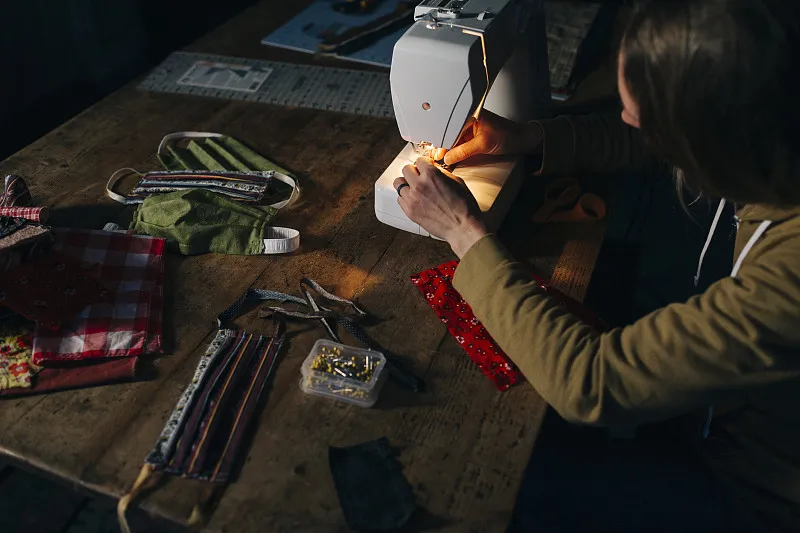
Walk into any mall today, and you will see it: a simple cotton dress priced at $80, a denim jacket at $120, a linen shirt at $90. The numbers seem impossible to justify. So you start wondering: What if I just made my own clothes?
It is a question more and more people are asking. In China, the number of young people choosing to buy fabric and make their own clothes has grown by a staggering 280% over the past three years. A dress that costs $140 in a store can be made at home for just **$28 in materials**. “Eight dollars for a bag, fifteen dollars for a set of underwear — half the price of buying ready-made,” as one report put it.
But here is the catch: material cost is only part of the story.
The Two Sides of the Coin
The Optimist’s View
Many DIY sewers report dramatic savings. Crystal, a 33-year-old who has been sewing her own clothes for four years, explains: “A dress that sells for over $140 in stores costs me just over $28 to make. Every piece of fabric, every bow — I select, cut, and sew it myself. The material cost is only about a quarter of the retail price, yet I get a better fit than anything off the rack.”
For those with non-standard body shapes, the savings are even more meaningful. One fashion student noted: “My body proportions are unusual. Ready-made clothes never fit properly. Making my own clothes means they actually fit my body.”
The Realist’s Counterpoint
However, a sobering analysis reveals a different picture for beginners. One detailed cost breakdown for a novice making a simple cotton dress came out to $27 for fabric + $1.40 for notions + $14 for five hours of labor + $4.20 for equipment amortization = roughly $47 total**. The same quality dress online? **$14 to $21 — cheaper than making it yourself.
The hidden costs that beginners often overlook are substantial:
| Cost Category | Beginner Handmade (One Garment) | Ready-to-Wear (Same Quality) |
|---|---|---|
| Fabric + Notions | $5.60 – $11.20 | Included in price |
| Equipment + Tools Amortization | $2.80 – $7 | $0 |
| Labor (at minimum wage) | $11.20 – $28 | $0 |
| Learning + Mistakes | $4.20 – $14 | $0 |
| Total | $24 – $60 | $14 – $42 |
A decent beginner sewing machine costs $140 to $420. Add fabric, thread, needles, scissors, patterns, and before you have sewn a single seam, you could easily have spent $280 to $560. A yard of decent cotton costs $11 to $21, and a simple dress might need three to four yards — $42 in fabric alone. To truly save money through sewing, you need to make at least 10 garments to spread out the equipment and learning costs, and you need to reach a point where you almost never make mistakes.
The Real Factors That Determine Whether Sewing Saves Money
1. What You Are Making
Simple garments — tote bags, pajama pants, basic T-shirts — are where DIY starts to make financial sense. A skilled sewer can knock out an easy garment in 30 minutes to an hour. But complex pieces with linings, hardware, or specialty fabrics can actually cost more to make than to buy.
2. Your Skill Level
The longer you sew, the cheaper it gets. You waste less fabric, make fewer mistakes, and get faster. You can also stop buying patterns for every project — patterns, apart from fabric, are one of the most expensive recurring costs.
3. Where You Source Materials
Thrift store fabrics offer 50–80% savings compared to retail prices. Repurposing old clothes or upcycling textiles you already have can bring material costs close to zero. One report noted that “eight dollars for a bag, fifteen dollars for a set of underwear” is achievable by shopping smart.
4. The Value of Fit and Quality
This is where sewing wins every time. Ready-to-wear is designed for an “average” body that almost no one actually has. A homemade garment fits you — not a mannequin. Plus, you control the quality. Fast fashion garments are designed to last a season. A well-made garment, with quality fabric and careful stitching, can last for years.
5. The Hidden Value: Time as Pleasure, Not Cost
For many sewers, the time spent sewing is not “lost income” — it is a hobby, a stress reliever, a creative outlet. One DIY enthusiast compared sewing to coding: “Work is stressful. Making clothes is like writing a program — every step requires patience and logic. Measuring, cutting, sewing — each detail is like debugging code. One wrong step and you start over.”. When time is pleasure rather than labor, the cost equation changes completely.
The Industrial Edge: When Sewing Becomes a Business
For those who want to take sewing beyond a hobby — into a small business or commercial production — the economics shift dramatically. This is where industrial sewing machines become essential.
A home sewing machine maxes out around 800–1,100 stitches per minute. It is built for intermittent use, not 8-hour shifts. An industrial machine, by contrast, runs at 4,000–5,500 stitches per minute — four to five times faster — and is designed for continuous daily operation.
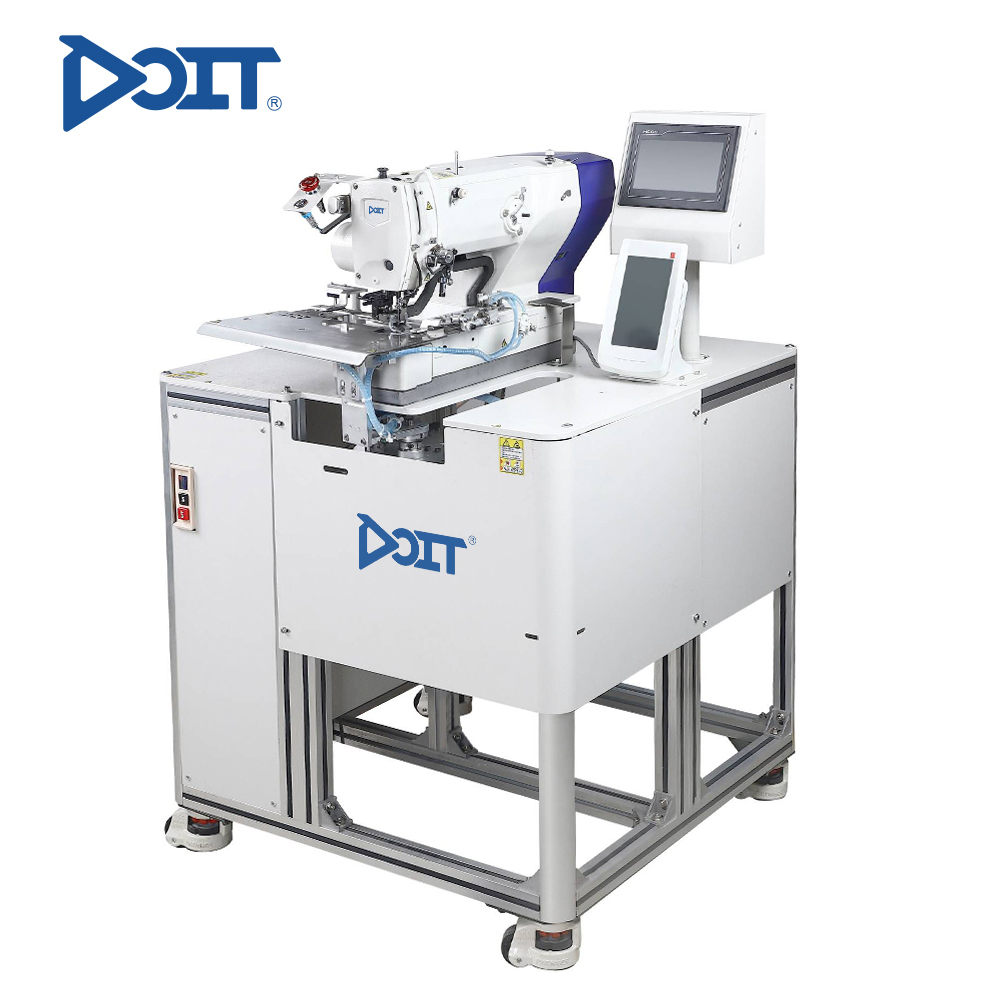
DOIT Group, a professional manufacturer based in Taizhou, Zhejiang — China‘s sewing machinery hub — produces a full range of industrial sewing machines for garment factories and serious small businesses. With over 95% of its products exported to more than 20 countries across America, Europe, Asia, Africa, and Latin America, DOIT has built a reputation for reliability and value.
Key DOIT Models for Garment Production:
-
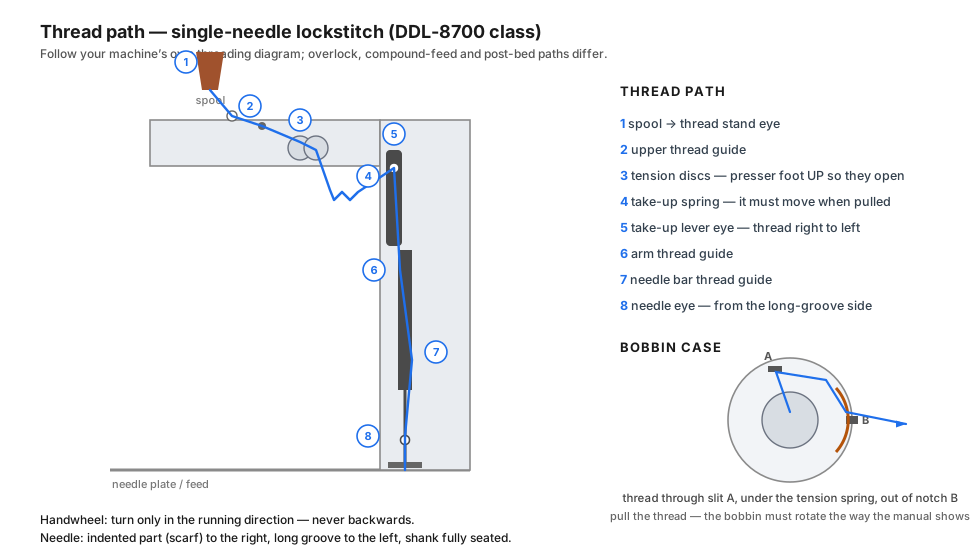
DT 5550 High-speed Single-needle Lockstitch — A workhorse for daily assembly. Suitable for knitwear, cotton, and medium-thickness materials with automatic oil supply and two-way feeding. It handles up to 13mm sewing thickness, making it capable of denim and heavy fabrics. With a maximum speed of 5,000 SPM, it delivers production efficiency that no home machine can match.
-
DT 8800-D4 Direct Drive Full Automatic Lockstitch — Features a direct-drive servo motor that saves up to 70% on electricity compared to traditional clutch motors. A factory that upgraded 120 sewing machines to servo motors saved 158 MWh annually in energy consumption. The DT 8800-D4 also includes automatic thread trimming and a 15mm presser foot lift for bulky seams — features that significantly reduce operator fatigue and increase output.
-
DT 940-4AT High-speed Automatic Overlock — Essential for professional edge finishing. It sews, trims, and finishes edges in a single pass at speeds up to 7,000 RPM, making it ideal for T-shirts, activewear, and knit garments.
-
DT 1508P Multi-needle Double Chainstitch — A 4-needle, 8-thread configuration specialized for trousers, jeans, and workwear waistband production at 4,500 SPM.
All DOIT machines are manufactured under ISO9002 quality standards, with many models carrying CE, UL, and TUV certifications. With a one-year warranty on machine parts and a two-year warranty on the motor, DOIT stands behind its equipment.
For a small garment business, investing in an industrial machine is not an expense — it is a productivity multiplier. A home machine might cost $200–$400. A DOIT industrial lockstitch starts at a comparable price point but delivers 5x the speed, 10x the durability, and the ability to scale from hobby to business.
So, Is It Actually Cheaper?
The honest answer: it depends.
| Scenario | Is Sewing Cheaper? |
|---|---|
| Beginners making complex garments | ❌ No — equipment, learning curve, and mistakes make it more expensive than buying ready-made |
| Beginners making simple garments | ⚠️ Maybe — if you already own a machine and source fabric wisely |
| Experienced sewers making simple garments | ✅ Yes — fast, minimal waste, low material cost |
| Experienced sewers making custom-fit garments | ✅ Yes — the value of perfect fit outweighs any cost difference |
| Small business with industrial equipment | ✅ Yes — economies of scale, speed, and quality control make it profitable |
| Sewing as a hobby | ✅ Yes — because time is pleasure, not cost |
If you go in expecting to slash your clothing budget in month one, you will be disappointed. But if you go in knowing it is a skill that compounds over time, it is usually worth it — especially if you enjoy the craft.
The real savings of sewing are not just financial. They are the savings of perfect fit — clothes that actually fit your body. They are the savings of quality — garments that last for years instead of seasons. They are the savings of creativity — the ability to make exactly what you want, in exactly the colors and fabrics you love.
And if you are ready to take that step beyond hobby into business, industrial equipment from DOIT Group gives you the speed, durability, and efficiency to turn sewing from a cost center into a profit center.
Ready to upgrade from home sewing to industrial production? DOIT Group offers a full range of lockstitch, overlock, and specialty machines for garment factories of all sizes. Contact us for a free consultation and quote.
📩 Email: sales6@chinadoit.cn
🌐 Website: doitsewingmachine.com
Can I Self-Teach Myself to Sew? Yes — And Here Is Exactly How to Start
What Is the Most Trouble‑Free Sewing Machine?