What Is the Most Trouble‑Free Sewing Machine?
What Is the Most Trouble‑Free Sewing Machine?
Walk onto any garment factory floor, and you will hear the same complaints: skipped stitches, broken needles, thread jams, and motors that groan under heavy loads. These problems cost time, money, and operator morale. So, what makes a sewing machine truly “trouble‑free”?
The answer is not a single brand name. It is a combination of engineering choices: direct‑drive servo motors that eliminate belts and clutches, stepper motor technology that replaces mechanical parts prone to failure, and automatic lubrication systems that reduce daily maintenance. The global industrial sewing machine market was valued at approximately USD 3.6 billion in 2024 and is projected to grow at a CAGR of 4.3% to reach USD 5.4 billion by 2034—and the factories driving this growth are increasingly prioritizing machines that minimize downtime.
What Makes a Machine Trouble‑Free?
Direct‑Drive Servo Motors
Traditional sewing machines use clutch motors mounted under the table, connected by a belt. Belts stretch, slip, and break. Clutch motors run continuously, wasting energy and generating heat. Direct‑drive motors eliminate the belt entirely—the motor is mounted directly on the machine shaft. Fewer parts mean less wear and tear. The result is quieter operation, reduced vibration, significant energy savings, and a more comfortable working environment. Modern direct‑drive systems can achieve approximately 50% less power consumption compared to previous models.
Stepper Motor Control
Stepper motors provide precise positioning and control over stitch formation. They allow industrial machines to handle different fabric thicknesses effortlessly. Unlike traditional mechanical systems, stepper motors require less maintenance, have longer lifespans, and offer higher energy efficiency. Dual stepper motor systems enhance responsiveness, enabling precise stitch control from delicate single‑layer gauze to multi‑layer denim.
Automatic Lubrication
A machine that oils itself is a machine that cannot be forgotten. Automatic lubrication systems keep moving parts properly oiled without daily operator intervention. Some industry‑leading models now feature semi‑dry head technology or minimum lubrication systems that prevent problems such as oil leakage and oil scattering while sewing. Brother’s unique dry technology has been described as making “the first maintenance‑free machine in the industry”.
The DT C10‑D4: Engineered for Reliability
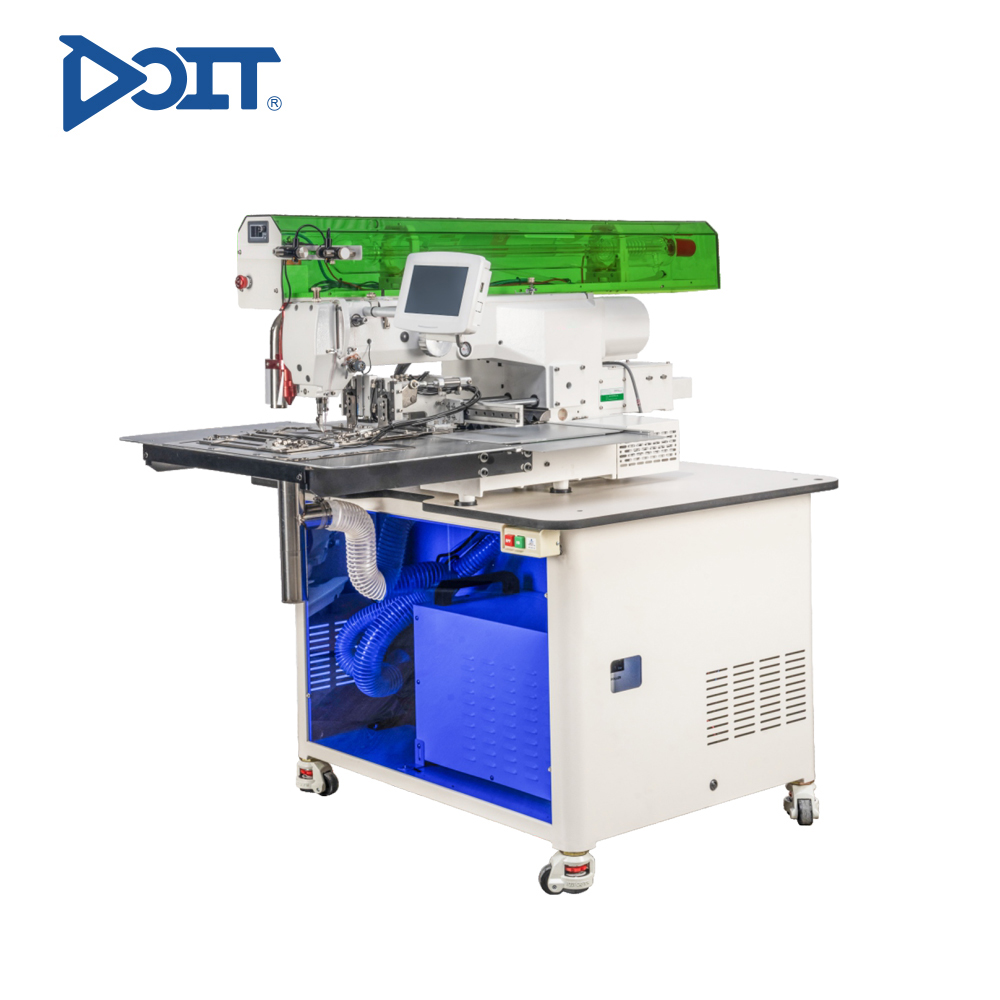
The DOIT DT C10‑D4 Direct Drive Computerized Lockstitch Sewing Machine with Stepper Motor embodies these trouble‑free principles.
Direct‑Drive Servo Motor — Eliminates belts, reduces noise and vibration, and saves up to 70% on electricity compared to traditional clutch motors. The 550W motor outputs large amounts of torque even at slow speeds, allowing accurate sewing of heavy materials and joints.
Dual Stepper Motor System — Two high‑precision stepper motors replace traditional mechanical components, providing ultra‑quiet, perfectly accurate backtacking and automated presser foot lift. This eliminates electromagnets that are prone to failure.
Heavy‑Duty Build — A robust cast‑iron frame and direct‑drive system provide a stable sewing platform that withstands continuous industrial use.
Standard Compatibility — Uses the widely available 135×17 needle system, making replacement parts easy to source.
Certified Quality — Manufactured under ISO9002 standards with CE, UL, and TUV certifications for safety and compliance.
What the Industry Says About Reliability
When evaluating industrial sewing machines, three brands consistently emerge as leaders: Juki, Brother, and Jack. Juki is renowned for high‑speed, professional quality with long‑term durability. Brother offers a balance of affordability and innovation. Jack provides an affordable, efficient option for bulk production.
However, “most reliable” does not always mean “most trouble‑free.” Reliability is about avoiding breakdowns; trouble‑free is about minimizing the daily friction of operation. A machine can be reliable yet still require constant tension adjustments, frequent cleaning, and careful operator handling. The truly trouble‑free machine reduces those daily interventions.
Brother’s NEXIO S‑7300B, for example, features DIGIFLEX FEED electronic feed technology that reduces stress on the operator and achieves high sewing quality. It also includes a stepping motor for the presser foot lifting mechanism, making it quieter and reducing worker stress. These are the same principles that guide the design of the DOIT DT C10‑D4—advanced technology that makes the operator’s job easier.
Trouble‑Free vs. Maintenance‑Free: An Important Distinction
No sewing machine is truly maintenance‑free. Even the best machines require:
-
Daily cleaning — Lint from the bobbin area and needle plate must be removed.
-
Needle replacement — Change needles after every 8 hours of operation (more often for heavy fabrics).
-
Oil level checks — Even automatic lubrication systems need monitoring.
-
Periodic timing checks — Stitch quality degrades if timing drifts.
The trouble‑free machine is the one where these tasks are simple, quick, and predictable—not a daily battle with stripped screws, hard‑to‑reach oil points, or parts that require special tools.
Which Machine Is Right for You?
| If You Need... | Consider... |
|---|---|
| Maximum uptime with minimal daily adjustment | DOIT DT C10‑D4 with stepper motor control |
| Industry‑benchmark durability for heavy‑duty use | Juki industrial models |
| Affordable entry into industrial sewing | DOIT DT 5550 lockstitch |
| Professional edge finishing for knits | DOIT DT 940‑4AT overlock |
| Energy savings and quiet operation | Any direct‑drive servo motor machine |
The Bottom Line
The most trouble‑free sewing machine is not the most expensive or the most famous brand. It is the machine that:
-
Eliminates common failure points (belts, clutches, mechanical linkages)
-
Automates routine adjustments (tension, presser foot lift, thread trimming)
-
Uses durable, proven components (stepper motors, cast‑iron frames)
-
Is easy to maintain with standard parts and clear service procedures
The DOIT DT C10‑D4 delivers all of these. It is engineered for factories that cannot afford downtime and operators who need consistent, predictable performance shift after shift.
Ready to equip your production line with a truly trouble‑free machine? Contact DOIT Group for a free consultation, equipment recommendation, and quote tailored to your fabric types and production volume.
📩 Email: sales6@chinadoit.cn
🌐 Website: doitsewingmachine.com
Are Old Sewing Machines Worth Money?
What Should I Buy as a Beginner Sewer? Your Complete Starter Guide