What is the Best Sewing Machine to Sew Denim? From Single Lockstitch to Full Jeans Line

What is the Best Sewing Machine to Sew Denim? From Single Lockstitch to Full Jeans Line
Denim isn‘t just a heavy fabric — it’s a demanding production challenge. Multiple layers, high thread tension, dense seams at waistbands and fly, and the risk of skipped stitches or broken needles on every seam. For many garment factories, choosing the right denim sewing machine is the difference between a smooth production line and daily downtime. This guide breaks down exactly what equipment you need, how to configure it, and how to keep it running reliably for years.
Part 1 — Denim Machine Fundamentals: What Makes a Machine Truly “Denim-Ready”
Straight out of the box, most industrial sewing machines struggle with genuine heavy denim. A denim-capable machine needs three specific features:
-
Powerful servo motor with high torque at low speeds (needle penetration through multiple layers of thick denim requires sustained pushing force, not just top speed)
-
High presser foot lift (minimum 8–10mm, ideally 13–15mm, to clear bulky seams at waistbands, hems, and fly overlaps without crushing the fabric stack)
-
Ability to handle larger needles (size #18–22) and bonded threads (V69–V138) without timing drift or excessive hook wear
Without these three elements, what looks like a denim machine on paper will break needles, skip stitches, or stall on every thick seam — and your rework rate will tell the story.
Part 2 — Machine by Machine: The Denim Lineup
A full denim production line requires multiple machine types. One machine cannot do everything.
Single-Needle Lockstitch — The Foundation Machine
The lockstitch is the most widely used machine on any jeans floor. It handles flat seams, side seams, fly stitching, and general assembly.
-
What to look for: Direct-drive servo motor for instant response and energy saving, large vertical hook for heavy thread (V69–V92), adjustable presser foot pressure, maximum sewing speed of 4,000–5,000 SPM
-
When to upgrade: If your lockstitch machine hesitates or stalls when crossing the flat-felled inseam (multiple layers of folded denim), you need a more powerful motor or a machine with a larger hook and stronger feed mechanism. Modern direct-drive lockstitch machines offer up to 5,000 SPM while maintaining exceptional stitch quality across fabric thicknesses
-
Recommended configuration: The DOIT DT 5550 lockstitch (single-needle high-speed industrial machine) handles medium to heavy denim, cotton, and chemical fiber materials with automatic oil supply and two-way feeding — suitable for daily jeans assembly. For factories needing automated features, the DOIT DT8800D4 direct-drive lockstitch with auto-trimmer and 15mm foot lift saves 70% electricity. The DT9700D reaches 5,000 rpm max speed, while the advanced DT C10-D4 computerized lockstitch with stepper motor delivers precision stitch control and consistent quality through high-volume denim runs
Overlock Machine (Serger) for Edge Finishing
After seams are stitched, raw denim edges must be overlocked to prevent fraying and create a clean, professional finish.
-
What to look for: For medium denim, a basic 3‑thread overlock often works. However, for heavyweight denim production such as jeans pants, a specialized heavy overlock machine is strongly recommended [according to JUKI‘s industrial MO-6900G series product page]
-
The industrial standard: The Juki MO-6916G is a 2‑needle, 5‑thread bottom-feed overlock/safety stitch machine specifically designed for extra heavyweight materials like denim. It features an extra high lift type upper looper, tractor foot, and coarse type feed dog — specially designed for denim‘s multi-layered seams. The needle thread heat remover and needle cooler prevent stitching problems during high-speed sewing
-
What to know: Overlock machines are one of the most widely used types of equipment in jeans manufacturing enterprises. Common failures (broken threads, broken needles, skipped stitches) can be prevented with consistent daily maintenance
Walking Foot Machine — For Upholstery-Grade Denim (Extreme Conditions)
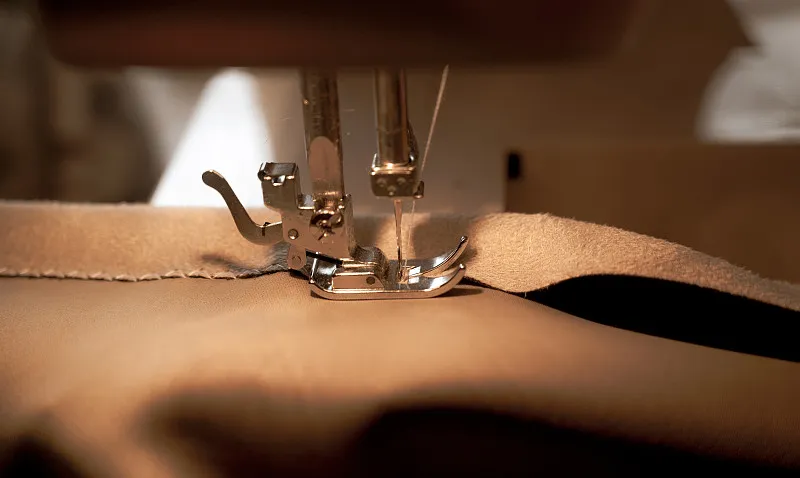
For factories sewing multiple layers of heavy denim with sticky coatings or dense folds, a walking foot machine prevents the upper layer from shifting during stitching. It feeds material from above and below so layers don‘t creep, with a high presser foot lift for foam and piping. For thick denim, heavy canvas, or coated denim where standard lockstitch struggles, a walking foot is not optional — it’s the solution.
Specialty Denim Machines — J‑Stitch, Waistband, and Automated Systems
High-volume denim production introduces dedicated machines for specific operations:
-
J‑stitch machine: Produces the signature decorative and structural curve stitching on jeans pockets, fly areas, and waistbands. A dedicated J‑stitch machine ensures uniform stitching curves and strong seam reinforcement, essential for premium denim brands
-
Multi-needle chainstitch (waistband) machine: For attaching elastic waistbands and hemming heavy denim sleeves with stretch strength, a multi-needle double chainstitch machine like DOIT‘s DT 1508P platform (4‑needle, 8‑thread configuration, 4,500 SPM) is specialized for trousers, jeans and workwear waistband production
-
Fully automatic jeans making machine: Integrates multiple processes (cutting, stitching, pattern alignment, finishing) into a single workflow. While the initial investment is higher, automation significantly reduces labor costs, improves consistency, and increases output over time
Part 3 — Needle, Thread, and Tension: Get the Settings Right for Denim
Needle selection is the most frequently mismatched variable. Denim demands larger, sharper needles designed specifically for heavy woven fabrics.
For standard 12–14 oz denim, needle sizes #16–18 (100–110 metric) are correct. For 15–16 oz raw denim or multi-layer seams (fly, waistband crossover), move up to #19–20 (120–125) or even #22 for extreme stacks. Use sharp point needles — not ballpoint — because denim fibers must be cleanly cut, not pushed aside. Ballpoint needles punch holes large enough to cause permanent fabric damage visible after repeated wash cycles.
Recommended settings for typical denim production:
-
Needles: #18–20 sharp point (denim-specific needles) for 12–16 oz denim
-
Thread: V69–V92 bonded polyester thread (minimum breaking strength ~4,700–6,200 cN)
-
Upper thread tension: Dial setting 5–6 (higher than lightweight fabrics)
-
Presser foot: Walking foot for multi-layer stacks or thick folds; standard foot acceptable for lighter applications
-
Stitch length: 3.0–4.0 mm — heavier fabric requires longer stitch length
Needle replacement frequency changes dramatically with denim. For most fabrics, standard industrial recommendation is 8–10 hours, but denim degrades needles significantly faster because dense cotton fibers cause rapid blunt tip wear. A general guideline for owners of sewing machines is to trust that sewing performance drops after a certain number of seams on heavy fabric. For woven garment schedules, replace after 8–10 hours; for denim project intervals and knit fabric timing, replace every 4–6 hours. Denim demands a swap every 4–6 hours [source].
A dull needle doesn‘t announce itself — skipped stitches, thread shredding, unusual noises, and fabric snags trace back to a needle you should’ve swapped out hours ago. A needle degrades long before it visibly fails — the flat spot, the microscopic burr, the barely-bent tip — and your fabric feels all of it before you do. Professionals change needles on a schedule, not when something breaks, because they know the performance degradation curve intimately.
Part 4 — Thread Breakage and Skip Stitches: The Real Production Killers
Thread breakage during stitching is the single most common cause of unplanned downtime in denim factories. Upper thread breakage accounts for a majority of failure cases in some garment industry data, with skipped stitches a close second.
The causes are almost always preventable:
-
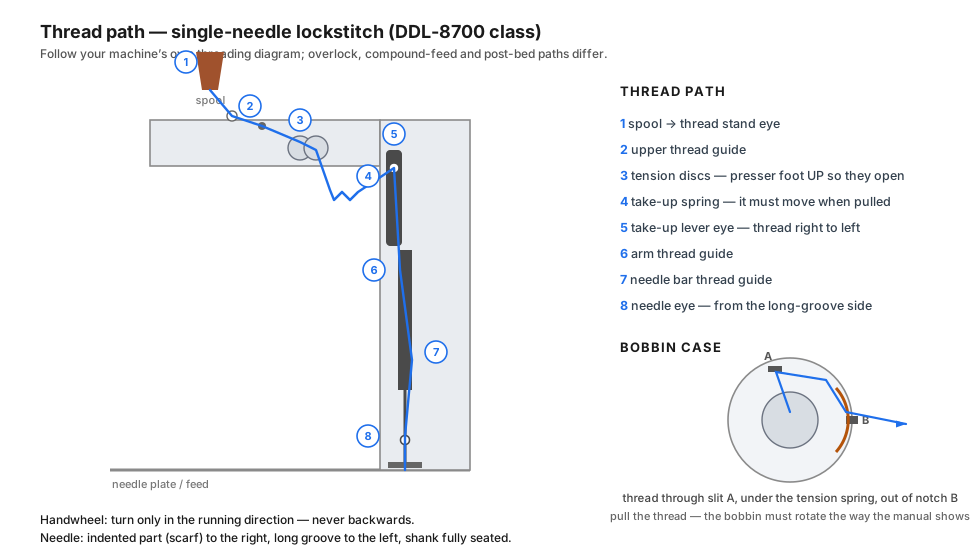
Too small a needle for thread thickness — needle eye should be roughly 40% larger than thread diameter. V92 thread needs minimum #18 needle
-
Bent or worn needle — replace every 4–6 hours of denim sewing
-
Incorrect thread tension balance — upper and bobbin threads must lock in the middle of fabric layers. For heavy denim, start with upper tension setting 5–6 on most industrial machines
-
Needle heat — high-speed denim sewing generates enough needle friction to melt synthetic threads. Machines with needle coolers or heat removers (standard on Juki MO-6900G series and higher-end lockstitch models) are valuable for heavy denim production
-
Poor hook timing or wear — the hook point should pass the needle‘s scarf at precise timing. Even minor wear causes skipped stitches
The academic literature on jeans production confirms that overlock machines in jeans manufacturing lines face common faults including broken threads, broken needles, and skipped stitches, all of which can be reduced with systematic daily maintenance.
Part 5 — Essential Consumables: Needle Selection Matrix for Denim Production
| Denim Weight | Needle Size (Metric) | Needle Type | Needle System | Thread | Stitch Length (mm) | Tension (Dial) |
|---|---|---|---|---|---|---|
| 8–10 oz (light) | #16 (100) | Sharp point | 135x17 | V69 | 3.0 – 3.5 | 5 – 6 |
| 10–12 oz (standard) | #18 (110) | Sharp point | 135x17 | V69 | 3.5 – 4.0 | 5 – 6 |
| 12–14 oz (mid-heavy) | #18–19 (110–120) | Sharp point / Denim | 135x17 | V69–V92 | 3.5 – 4.0 | 5 – 6 |
| 14–16 oz (heavy) | #19–20 (120–125) | Denim-point | 135x17 | V92 | 4.0 – 4.5 | 5.5 – 6 |
| Multi-layer seams (waistband / fly) | #20–22 (125–140) | Denim-point | 135x17 | V92–V138 | 4.0 – 4.5 | 5.5 – 6 |
Sharp point needles (135x17) are standard for denim. Leather-point needles (135x16) are not required — denim fibers are cut cleanly by sharp point, not pierced by cutting point.
Part 6 — Maintenance That Actually Matters for Denim Machines
Daily checklist:
-
Clean lint from bobbin area, needle plate, and feed dogs (denim produces more lint than lightweight fabrics; accumulation increases tension friction)
-
Check oil level; refill to HIGH mark if low
-
Inspect needle for bending or dull tip — replace if any doubt
-
Check thread path for lint buildup at tension disks
Weekly checklist:
-
Replace needle after 4–6 hours of denim sewing (not when thread breaks — before)
-
Deep clean hook compartment and shuttle area — lint buildup here causes most thread jams
-
Inspect feed dog teeth for lint packing — brush thoroughly
-
Check hook point for burrs under magnification — even minor wear causes skipped stitches
Monthly checklist:
-
Tighten all screws (needle clamp, presser foot bar, covers) — vibration from heavy materials loosens fasteners
-
Check and adjust timing if stitch quality has changed or hook clearance feels excessive
-
Inspect belt tension for any slipping; direct-drive models eliminate this concern
-
Verify automatic lubrication reservoir is feeding correctly
For overlock machines specifically, systematic daily maintenance significantly reduces the occurrence of broken threads, needle breakage, skipped stitches, wrong stitches, and sewing material problems. A well-maintained overlock machine ensures a virtuous cycle on the production line and provides the hardware needed for smooth operation.
Part 7 — Factory Example: What a Complete Jeans Production Line Looks Like
A typical denim jeans manufacturing line with target output of approximately 1,000 denims per 8‑hour shift uses a setup of 27 total sewing machines. The line is divided into three stages: front preparation, back preparation, and final assembly. Heavy-duty lockstitch sewing machines handle thick denim fabric for constructing front and back panels, sewing coin pockets, and side pockets. Overlock machines edge-finish every seam. Specialty machines (waistband attach, buttonhole, bartack) complete the line.
For a smaller shop starting with denim production, a practical minimal configuration would be:
-
2 lockstitch machines — for assembly and topstitching
-
1 overlock machine — for edge finishing all cut pieces
-
1 chainstitch or multi-needle machine (if producing denim with knits or elastic waistbands)
This three-machine starter setup can realistically produce 150–200 jeans per shift with two operators, with upgrade paths as volume scales.
Part 8 — DOIT Group‘s Denim-Compatible Lineup
DOIT Group manufactures industrial sewing equipment for denim, leather, and heavy-duty applications. Key denim-compatible models include:
-
DT 5550 High-speed Single-needle Lockstitch — suitable for cotton, knitwear, and medium-thickness materials with automatic oil supply and two-way feeding
-
DT 1508P Multi-needle Double Chainstitch Machine — 4‑needle, 8‑thread configuration, 4,500 SPM, specialized for trousers, jeans and workwear waistband production and heavy denim hemming
-
DT C10-D4 Direct Drive Computerized Lockstitch with Stepper Motor — advanced digital control and precision stitch formation for consistent quality through high-volume denim runs
-
DT8800D4 Direct Drive Lockstitch with Auto-trimmer — equipped with direct-drive servo motor saving up to 70% electricity, 15mm foot lifter for bulky denim seams
DOIT machines are ISO9002‑certified, built to CE and UL standards, and exported to over 20 countries across America, Europe, Asia, Africa, and Latin America. DOIT‘s direct-drive motors respond instantly to speed changes, providing operators with precise control over needle penetration through denim‘s heavy layers.
Ready to equip your denim production line with reliable industrial machines?
DOIT Group offers a complete range of lockstitch, overlock, and specialty sewing machines for denim — from entry-level to heavy-duty production configurations. Contact our team for a free production line consultation, customized machine configuration based on your denim weight and volume, or a request for quotation including shipping.
📩 Email: sales6@chinadoit.cn
🌐 Website: doitsewingmachine.com
The Backbone of Any Factory: Lockstitch (Flatbed)
Can I Use WD-40 to Lubricate My Sewing Machine? – What Every Factory Owner Must Know