What to Know Before Buying a Sewing Machine? A Complete Guide for Garment Factory Owners
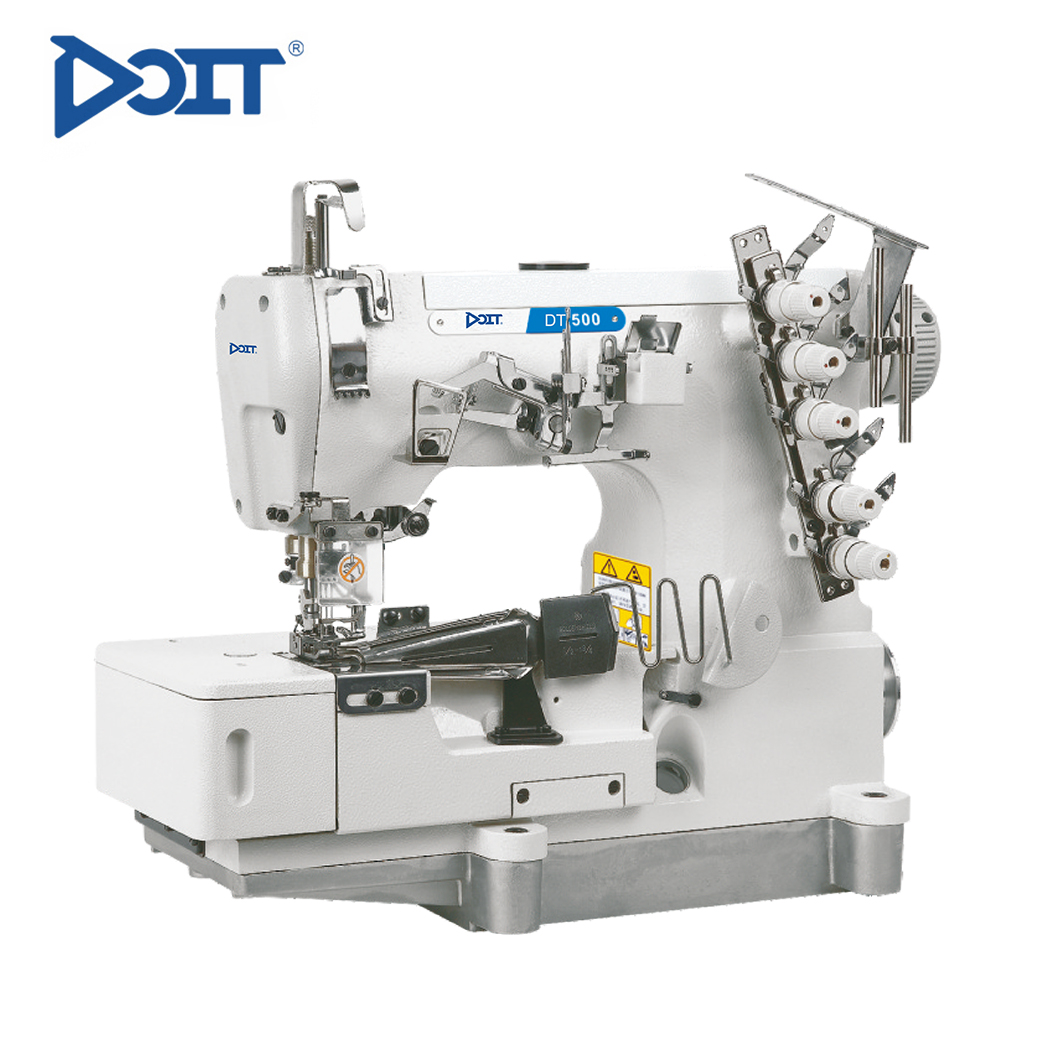
What to Know Before Buying a Sewing Machine? A Complete Guide for Garment Factory Owners
Purchasing a sewing machine — whether for a home-based business or a full-scale garment factory — is a major investment decision. The global sewing machine market is projected to grow from $5.5 billion in 2025 to $7.45 billion by 2030, driven by automation, customized apparel demand, and the rise of fashion startups and small workshops. The industrial segment alone is expected to reach $4.64 billion by 2030, growing at 4.8% CAGR. With this rapidly expanding market, the number of choices can be overwhelming.
This guide walks you through everything you need to know — from machine types and energy efficiency to supplier evaluation and total cost of ownership — before making your purchase decision.
Part 1: Home Machine or Industrial Machine — Which One Do You Really Need?
The most fundamental question: what will you use this machine for?
Home Sewing Machines are designed for versatility and intermittent use. They feature multiple stitch types (decorative, zigzag, buttonholes), are lightweight and portable, and typically operate at 800–1,100 stitches per minute. They are best suited for occasional projects, DIY sewing, and low-volume home businesses.
Industrial Sewing Machines, in contrast, are purpose-built for continuous, high-volume production. They operate at 3,000–5,500 RPM — three to five times faster than household machines — are constructed with heavy-duty components including cast iron frames, and are designed for 8–16 hours of daily operation with an expected lifespan of 10–15 years under proper maintenance. They are task‑specialized: lockstitch for straight seams, overlock for edge finishing, coverstitch for hems on stretch fabrics, and bar tack for reinforcing high‑stress areas.
Decision rule: If you plan to produce more than 100 garments per month or run a full‑time production line, start with an industrial machine. Its speed and durability will pay for itself within months, not years.
Part 2: Understanding Industrial Machine Types — Which One Does Your Factory Need?
Industrial sewing machines are not one‑size‑fits-all. Each type serves a specific function:
Lockstitch (Flatbed) — The workhorse of any sewing line. It uses a needle thread and a bobbin thread interlocking together, producing a firm, non‑stretch seam perfect for woven fabrics like denim, cotton, and canvas. The DT 5550 high-speed lockstitch from DOIT Group operates at up to 5,000 SPM and handles up to 13mm sewing thickness, making it suitable for medium to heavy materials.
Overlock (Serger) — Essential for edge finishing. Overlock machines sew, hem, and trim fabric edges in one step, creating clean, professional seams that prevent fraying. They are ideal for knit fabrics and stretch materials. DOIT’s high-speed automatic overlock reaches 7,000 RPM — up to twice the speed of standard lockstitch machines.
Double Chainstitch — Unlike lockstitch, double chainstitching is stretchable and offers excellent strength, making it the go‑to choice for knitted fabrics, waistbands, and activewear.
Specialty Machines — Include bar tack machines for reinforcing buttonholes and belt loops, coverstitch machines for finished hems on T‑shirts and sportswear, and blindstitch machines for nearly invisible seams.
Factory insight: A standard jeans production line typically requires 20–30 machines: lockstitch units for assembly and topstitching, overlock machines for edge finishing, and additional specialty equipment for specific operations. Do not expect one machine to do everything.
Part 3: Motor Technology — The Hidden Cost Driver
The single most overlooked factor in machine selection is the motor type. Understanding the difference between clutch motors and servo motors can save thousands of dollars annually.
Clutch motors (traditional type) run at full power continuously, regardless of whether the machine is stitching, repositioning, or idle. Given that needle time accounts for only one‑third of an operator‘s working day, significant energy is wasted while machines are idle. In the apparel industry, sewing machines can consume up to 70% of total factory energy.
Servo motors (modern, direct‑drive) consume as little as 1 watt in standby mode, resulting in a 65%–70% reduction in overall energy consumption compared to traditional clutch motors. They also offer precise speed control, quieter operation (no belt noise), and 15%–30% higher work efficiency due to smoother starts and stops. Modern servo motors can achieve up to 75% energy savings while providing high starting torque even at low speeds.
Real‑world example: PepClo, southern Africa‘s largest clothing manufacturer, upgraded over 1,000 machines to servo motors, dramatically reducing electricity costs and lowering their carbon footprint per garment produced. Operators also reported less physical strain and a quieter, more comfortable working environment.
Bottom line: When comparing quotes, verify whether the price includes a direct‑drive servo motor. The energy savings alone often cover the price difference within 12–18 months.
Part 4: Supplier Evaluation — The Six Criteria That Matter
Choosing a supplier is as important as choosing the machine. Use this framework to evaluate B2B manufacturers systematically:
1. Certifications and compliance: Prioritize suppliers with ISO 9001 (or ISO9002) for quality management systems, plus CE marking for Europe, UL for North America, or TUV for safety standards. These indicate formalized production control and defect reduction protocols. DOIT Group holds ISO9002 certification, with many models carrying TUV, GS, CE, and UL marks.
2. Production capacity and scalability: Look for facility size (over 3,000 m²), workforce count (200+ employees), and annual output (over 100,000 sets). These indicators show capacity to handle bulk orders and maintain stable delivery timelines. DOIT operates from a 66,000 ft² facility with over 300 employees and annual production exceeding 200,000 sets.
3. Quality assurance and testing: Ask about in-house inspection procedures. Do they conduct in-line testing? Are samples tested under real production conditions? Do they provide stitch consistency reports and vibration analysis? Reliable suppliers run their own QA protocols even without visible ISO marks.
4. Delivery performance: On-time delivery rate above 90% signals strong logistics and production planning. Aim for partners with a proven track record of reliable shipping through major ports (Ningbo and Shanghai are DOIT‘s primary ports).
5. Customer retention and reorder rate: Reorder rate above 25% indicates strong reliability, consistent quality, and responsive service. Lower reorder rates may signal dissatisfaction even if initial pricing appears attractive.
6. Responsiveness: Suppliers who respond within hours — not days — are better positioned to address urgent inquiries, resolve issues quickly, and collaborate effectively across time zones. DOIT offers a one‑year warranty on the machine, two‑year warranty on the motor, and provides video solutions and free parts under warranty to minimize production downtime.
Part 5: Understanding Total Cost of Ownership — Beyond the Purchase Price
Many buyers focus exclusively on the initial price tag. But the total cost of ownership (TCO) tells the full story. Here is what to include in your calculation:
Initial purchase price: This is the easiest factor to compare, but ensure specifications are identical — motor power, stitch speed, automation level, and included accessories.
Energy consumption: As outlined above, servo motors reduce energy use by up to 70%. For a factory running 50 machines 8 hours daily, this translates to thousands of dollars saved per year.
Maintenance costs: Annual maintenance typically runs 5%–8% of equipment value, ranging from $500 to $4,000 per machine per year depending on usage intensity. Machines with automatic lubrication systems and direct-drive motors significantly reduce routine maintenance requirements. New servo motors use brushless technology requiring no cleaning and offering extended service life.
Downtime cost: This is the most expensive hidden factor. When a machine breaks down mid-shift, the cost includes idle labor, emergency repair fees, expedited parts shipping, and potentially delayed customer orders. For a production line with 20 machines, just one hour of unplanned downtime can cost hundreds in lost output.
Depreciation and lifespan: Industrial machines typically depreciate over 7–10 years for accounting purposes. With proper maintenance, the functional lifespan is 10–15 years. Cheaper machines often fail earlier, requiring replacement and incurring double the capital expense.
TCO calculation example: A $1,200 lockstitch machine with servo motor, over a 10-year lifespan, may have annual energy costs of just $50–100, maintenance at 5% ($60/year), and minimal downtime. An $800 machine with clutch motor may have annual energy costs of $300–500, higher maintenance, and more frequent downtime interruptions. Over a decade, the "cheaper" machine can cost significantly more.
Part 6: Common Mistakes and How to Avoid Them
Mistake 1: Buying a machine that is too light for your primary fabric. Match the machine to your heaviest regular material, not your lightest. A machine that struggles on thick seams will break needles and skip stitches constantly.
Mistake 2: Ignoring parts availability. Before purchasing, confirm that spare parts for that specific model are readily available from the supplier or local dealers. For critical components, wait times of weeks can cripple production lines.
Mistake 3: Overlooking the need for multiple machine types. A single lockstitch cannot replace an overlock for edge finishing, nor can an overlock replace a lockstitch for straight seams. Plan your production line holistically.
Mistake 4: Skipping sample testing. Always request a sample machine or test unit. Run your actual materials and fabric stacks through it. Factory production reveals performance issues that no spec sheet can predict. Ask the supplier for stitch consistency reports at maximum RPM and vibration analysis under load.
Mistake 5: Focusing only on upfront cost. The cheapest machine often becomes the most expensive when downtime, energy waste, and frequent repairs are factored in. Total cost of ownership is what truly matters for profitability.
Part 7: DOIT Group — A Reliable Partner for Your Factory’s Sewing Equipment
DOIT Group Co., Ltd., based in Taizhou, Zhejiang — China‘s industrial sewing machine hub — has over a decade of experience in producing and exporting garment equipment. With 300+ employees, a 66,000 ft² facility, and ISO9002-certified quality control, DOIT delivers industrial-grade reliability at competitive wholesale prices. Over 95% of its products are exported to more than 20 countries across America, Europe, Asia, Africa, and Latin America.
Key DOIT product lineup:
-
DT 5550 High‑speed Single‑needle Lockstitch — 5,000 RPM max speed, 13mm sewing thickness, automatic oil supply. Suitable for medium to heavy materials like denim, cotton, and canvas.
-
High‑speed Automatic Overlock (4‑thread) — Reaches up to 7,000 RPM, trimming and finishing edges in a single pass. Ideal for knit fabrics, T‑shirts, and activewear mass production.
-
DT 8800‑D4 Direct Drive Full Automatic Lockstitch — Touch‑screen interface, automatic thread trimming, 15mm presser foot lift for bulky seams, 550W servo motor with 70% energy savings.
-
Computerized Lockstitch with Stepper Motor — Advanced digital control for precise, repeatable stitch quality across high‑volume production runs.
Support and warranty: DOIT provides a one‑year warranty on machine parts, two‑year warranty on the motor, and responsive video/online support with free replacement parts under warranty. Minimum order quantity of 50 units for OEM options, with delivery through Ningbo or Shanghai ports.
Part 8: Final Recommendations — Your Next Steps
For home‑based or small business starting out: Start with one reliable lockstitch machine for general construction. Add an overlock machine as volume grows. Prioritize servo motor technology from day one — the energy savings will pay for the upgrade quickly.
For established garment factories: Conduct a full line assessment. Calculate total cost of ownership for each machine type before purchasing. Consolidate orders from a single supplier to simplify logistics, ensure parts compatibility, and negotiate better pricing.
For denim, leather, or heavy upholstery production: Ensure your lockstitch machine has high presser foot lift (13mm minimum), can accommodate larger needles (#18–22), and is paired with a walking foot mechanism to prevent layer shifting on thick stacks.
General rule: The best machine for your operation is not necessarily the most expensive brand — it is the one with the strongest local support, the most readily available parts, the most disciplined maintenance program behind it, and the technology (servo motor, direct drive) that minimizes long‑term operating costs.
Ready to equip your production line with reliable, energy‑efficient industrial sewing machines?
Explore the full DOIT Group range at doitsewingmachine.com. For product inquiries, pricing, or a free production line consultation, contact:
📩 Email: sales6@chinadoit.cn
🌐 Website: doitsewingmachine.com
Is Learning to Sew Hard? The Honest Truth for Beginners
Is It Better to Fix an Old Sewing Machine or Buy a New One?