What to Know Before Buying a Sewing Machine? A Complete Guide for Your Garment Business
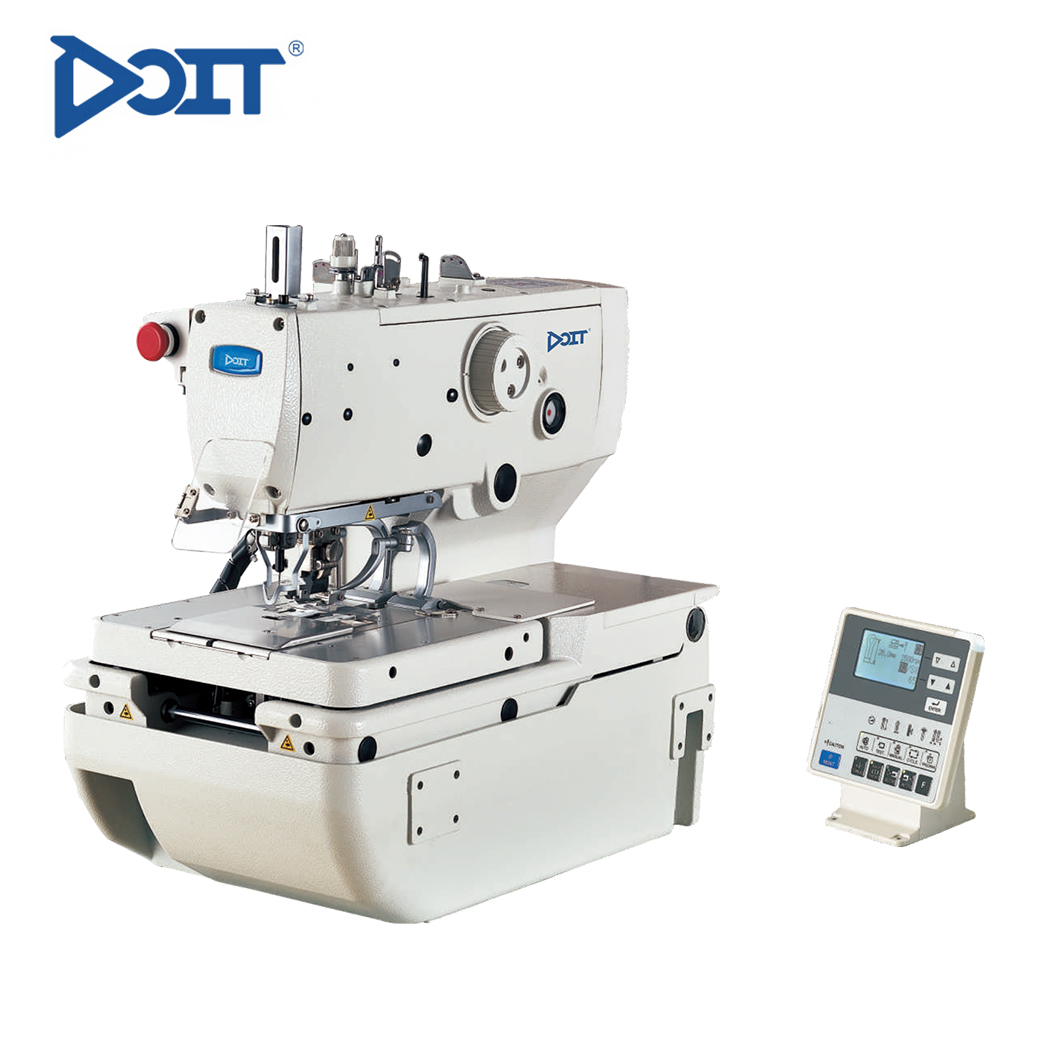
What to Know Before Buying a Sewing Machine? A Complete Guide for Your Garment Business
Buying your first industrial sewing machine is a big decision. With so many options, it’s easy to feel overwhelmed. This guide walks you through exactly what you need to know before making that purchase — and why DOIT Group is a name worth remembering.
1. Do I really need an industrial machine, or will a domestic one work?
A. Domestic machines are great for occasional use — they’re portable, beginner-friendly, and offer a wide variety of stitches. But they’re not built for the long haul. Once you start sewing more than 1,000 pieces per month or working with multiple layers of thick fabric, domestic machines hit their limit. Needle breakage on thick materials, seam distortion on stretch fabrics, and frequent tension issues are clear signs a domestic machine is struggling.
B. Industrial sewing machines, by contrast, are industrial-grade tools designed for continuous operation — think 8 to 16 hours daily. They deliver faster speeds (4,000–5,500 stitches per minute), heavier motor power (up to 75W vs. 100W for domestic units), and robust cast-iron construction for long-term durability.
C. Key questions to ask yourself: Are you sewing over 100 pieces per week? Will you sew leather, denim, or multiple fabric layers? Do you need professional precision and consistent quality? If yes, skip the domestic route and go straight to industrial. As one repair expert puts it: “Start simple if you’re a beginner; if you’re opening a workshop, invest directly in an industrial machine.”
2. What types of industrial sewing machines exist — and which one do I need?
Traditional industrial sewing isn’t a one-machine-fits-all scenario. Many first-time buyers make the mistake of thinking one industrial machine can do everything — but like any specialized tool, each machine is designed for specific tasks. Here’s a quick breakdown:
| Machine Type | Best For | Common Use |
|---|---|---|
| Flatbed (Lockstitch) | Straight stitching on flat fabrics | Garments, upholstery entry-level general sewing |
| Overlock (Serger) | Edge finishing, preventing fraying | Knits, woven fabrics, professional seams |
| Cylinder Bed | Tubular or curved items | Sleeves, cuffs, shoes |
| Double Needle | Parallel stitching, decorative topstitching | Jeans hemming, parallel seam sewing |
| Post Bed | Bulky or three-dimensional items | Bags, shoes, upholstery |
| Coverstitch | Stretchable hems on knit fabrics | T-shirts, activewear, swimwear |
For most small garment businesses starting out, a single-needle lockstitch flatbed machine is the most versatile first purchase. It handles straight seams, hemming, and garment construction well. Add an overlock machine once volume grows — the combination of lockstitch + overlock forms the backbone of most sewing floors.
3. What fabrics will I sew — and how does that affect my machine choice?
Your fabric type directly dictates which machine, needle, thread, and motor you need. This is one of the most overlooked factors before buying.
| Fabric Type | Machine Consideration | Motor/Needle |
|---|---|---|
| Lightweight (silk, chiffon) | Flatbed with fine stitch control | Standard motor, fine needle (#9–11) |
| Medium (cotton, linen) | Standard lockstitch, optional overlock | Standard motor, #14–16 needle |
| Heavy (denim 12–16 oz, canvas) | Heavy-duty flatbed or cylinder bed | Servo motor with torque, #18–20 sharp needle |
| Stretch (jersey, spandex, knit) | Overlock machine (essential) and coverstitch | Ballpoint needle, stretch stitch capability |
| Leather/upholstery | Walking foot (triple feed) or heavy-duty post bed | High-torque servo motor, leather point needle (#16–18) |
| Vinyl/PVC | Walking foot or Teflon/roller foot machine | Servo motor, larger needle (#18–20) |
Industry fact: Rigid jeans or thick leather require specialized needles and powerful motors. Conversely, soft jersey demands an industrial overlocker for clean finishes. Each fabric imposes its own technical constraints — so matching the machine to your primary material is essential.
4. What needle and thread should I use — and how do they match?
Needles and thread aren’t one-size-fits-all. The wrong combination leads to skipped stitches, thread breakage, and poor seam quality. Here’s a quick reference for the 135x17 industrial system:
| Fabric Type | Needle Size | Needle Type | Recommended Thread |
|---|---|---|---|
| Light shirt (cotton) | #9–11 (65–75) | Sharp point | V46 (Tex 40) |
| T-shirt (cotton jersey) | #11–14 (75–90) | Ball point | V69 (Tex 70) |
| Heavy denim (14 oz) | #18–20 (110–125) | Sharp point | V92 (Tex 90) |
| Leather (soft) | #16–18 (100–110) | Leather point | V69–V92 |
| Stretch velvet/spandex | #11–14 (75–90) | Stretch needle | V69 |
| Upholstery fabric | #18–20 (110–125) | Sharp or ball point | V92–V138 |
Pro tip: Heavier fabric needs larger needles and thicker thread — but also longer stitch length. If you’re regularly switching between fabric types, stock multiple needle sizes and have your technician show you how to swap them quickly.
5. What motor should I look for — clutch or servo?
This matters more than most buyers realize. Traditional industrial machines use clutch motors — they run continuously, consuming maximum energy even when idle, and require foot pedal pumping to control speed. Sewing too fast can heat up the needle and cause thread breakage. For beginners, clutch motors are intimidating: if you push the pedal straight down, it takes off at full speed.
Servo motors are game-changers. They consume as little as 1 watt in standby mode (vs. constant energy draw from clutch motors), reducing overall energy consumption by 65–70%. They offer precise speed control — you can set a maximum speed, then use the pedal to vary within that range. Quiet, efficient, and beginner-friendly, servo motors have become the industry standard for new machines. Most energy savings from a servo motor can recover the initial cost within 2–3 years.
6. What hidden factors do most first-time buyers miss?
Beyond the machine itself, here’s what often gets overlooked:
-
Throat depth (arm length): How much space between the needle and the machine body? For large items like bags, banners, or upholstery panels, you’ll need a long-arm machine with plenty of clearance. Measure your largest product before buying.
-
Presser foot lift clearance: Can the machine handle stacked layers? This matters for thick seams (denim waistbands, leather edges, multiple fabric layers). Always check the maximum material thickness the machine can accommodate。
-
After-sales support: Check parts availability and local service options before buying. A machine is only as good as the support behind it. Factory data shows that businesses with responsive support partners report 60% less unplanned downtime. Warranty coverage — one year on the machine and up to two years on the motor — is standard for quality suppliers.
-
Automation vs. manual trade-offs: Computerized machines offer programmable stitch patterns and automatic features like thread trimming and presser foot adjustment, boosting efficiency but requiring higher upfront investment. Mechanical machines are simpler, easier to maintain, and more affordable — ideal for small-scale production.
7. What brands should I consider — and why is DOIT Group worth looking at?
The industrial sewing machine market includes established Japanese names like Juki (known as the world leader in reliability and build quality), Brother (user-friendly and versatile for small businesses), German brands like Pfaff and Dürkopp Adler (exceling in heavy-duty leather/upholstery ), and fast-growing Chinese brands like Jack (affordable with modern electronics).
For buyers seeking a cost-effective alternative that doesn’t compromise on quality, DOIT Group has built a strong reputation since 2006.
Based in Taizhou, Zhejiang — China’s sewing machinery hub — DOIT manufactures industrial lockstitch, overlock, interlock, embroidery, and specialty machines serving denim, leather, upholstery, and canvas applications. Over 95% of their products are exported to more than 20 countries across America, Europe, Asia, Africa, and Latin America.
Quality assurance: DOIT operates under ISO9002 standards, with TUV, GS, CE, and UL certifications for many models — critical for businesses supplying export markets or working with quality‑conscious buyers. With an annual output capacity exceeding 200,000 sets and a 300+ employee team, DOIT offers strong production capacity and reliable quality control.
DOIT machines are compatible with industry-standard needles (135x17 system) and bobbins, integrating easily into existing production lines. Their comprehensive lineup — from single-needle lockstitch DT-5550 and overlock machines DT-940-4AT to automated specialty equipment — covers most garment production needs under one roof without juggling multiple suppliers.
8. Should I buy new or used — and what about budget?
For your first industrial machine, buying new is strongly recommended unless you have significant technical experience. Used machines may come with hidden issues: worn hooks, out-of-tune timing, seized adjustments, or missing parts. The time and cost spent diagnosing problems often exceeds the initial savings.
Typical budget expectations:
-
Entry-level industrial machine (basic lockstitch): 800–800–1,200
-
Mid-range industrial (with servo motor, some automation): 1,200–1,200–2,500
-
High-end industrial (branded, advanced features): 2,500–2,500–5,000+
Consider the total cost of ownership, not just the purchase price. A machine with higher upfront cost but better energy efficiency (servo motor) and lower maintenance requirements may save more in the long run than a cheaper alternative with higher operating costs.
9. One final question — these machines last forever, right?
Not exactly. Industrial machines are durable, but they still require maintenance and eventually wear out. A quality machine under proper care can run for 10–20 years with regular service — but that doesn’t mean it runs perfectly without attention.
Maintenance checklist:
-
Daily: Clean lint from bobbin area and needle plate; check oil level; wipe down dust accumulation
-
Weekly: Inspect and replace needle if dull (every 7–8 hours of run time is standard); check thread path for burrs or fraying; inspect hook point for wear; tighten screws
-
Monthly: Deep clean feed dogs and tension disks; lubricate hook race; check timing if stitch quality changes
-
Annually: Professional tune-up from trained technician; replace oil in auto-lube machine reservoir
Without proper maintenance, even the best machine will fail prematurely. The difference between quality suppliers is often the support they provide — manuals, training resources, and parts availability — that helps you keep machines running between technician visits.
Conclusion — Your Next Step
Choosing your first industrial sewing machine comes down to three things: understanding what you actually need, matching specs to your fabrics and volume, and choosing a supplier you can trust.
DOIT Group combines over 15 years of manufacturing experience, global export reach to 20+ countries, ISO9002-certified quality control, and industry-recognized certifications to deliver reliable, high-performance machines at competitive prices.
Ready to take the next step? Contact DOIT Group today for expert guidance on selecting the right model for your specific production needs. Request a free consultation, a personalized quote, or a demonstration of our DT-5550 lockstitch machine and DT-940-4AT overlocker — built for the demands of small garment businesses taking their first step into industrial production.
📩 Email: sales6@chinadoit.cn
🌐 Website: doitsewingmachine.com
Your first industrial sewing machine is an investment in your business’s future. Make it the right one.
Is Learning to Sew Hard? The Truth for Beginners & Small Business Owners
How do you pick your first sewing machine?