You Don't Need a $2,500 Sewing Machine – And Here's Why
You Don't Need a $2,500 Sewing Machine – And Here's Why
A recent Reddit post in the Bitch Eating Crafters community sparked a conversation that many garment factory owners and home sewists desperately need to hear. The poster had $1,500 to spend on a new machine, but dealers kept pushing them toward a $2,500 model—even though all they needed was straight-line stitching and a little extra throat space.
The comment section was flooded with recommendations for "stupid expensive" machines. But as one experienced sewist pointed out: "If you are just sewing straight lines, you do not need a fcking $1,500 sewing machine. You don't even need a $500 machine to do that."*
This guide explores why expensive machines aren't always the answer—and how to make smarter equipment decisions for your factory or workshop.
Outline
**1. "You Don't Need a $2,500 Sewing Machine"—What's the Argument?**
The core argument is simple: for most sewing tasks—especially straight-line stitching, hemming, and basic garment construction—a $2,500 machine is complete overkill. The Reddit poster, who has been sewing at a "really high level and high volume for something like 40 years," notes that their newest machine is a 25-year-old Bernina Activa 125. They've been making quilts for 25 years, learning from thrift store books, and producing professional-quality work without ever buying a top-tier machine. The message isn't anti-spending—it's anti-unnecessary spending driven by marketing and status rather than actual need.
2. Why Do Dealers Always Push You Toward More Expensive Machines?
The Reddit poster's experience—dealers pushing a $2,500 machine when they only needed straight-line stitching—is not unique. Dealers have a financial incentive to upsell: higher-priced machines mean higher commissions and margins. They often frame the upgrade as "the next logical step" from a perfectly functioning machine. But as one commenter noted, if all you're doing is sewing straight lines, "you don't even need a $500 machine". The key is knowing what you actually need versus what you're being sold.
3. What Do You Actually Need for Straight-Line Stitching?
For straight-line stitching—the vast majority of garment production and quilting—you need very little: a reliable machine that feeds fabric consistently, maintains even tension, and doesn't break down. You don't need 200 built-in stitches, computerized embroidery functions, or a $2,500 price tag. The Reddit poster emphasizes that "if all you are doing is sewing straight lines, and you don't need an industrial machine, spending that kind of money on a sewing machine is just about straight up consumption and status".
4. The Quilting Tradition: Waste Not, Want Not
The Reddit poster's frustration is rooted in the history of quilting itself. "The whole point of patchwork quilting was to avoid waste: to use and reuse every single tiny scrap because all bits of fabric were precious". Quilting was born from necessity—making something beautiful, functional, and life-sustaining from "trash". The modern trend of buying expensive machines and "taking a big piece of fabric, cutting it into a bunch of little pieces, then sewing them together into another big piece" is, as the poster puts it, a departure from tradition. The spirit of making do with what you have is being replaced by conspicuous consumption.
5. How Much Sewing Machine Do You Really Need for a Garment Factory?
For a garment factory, the answer depends on volume and fabric type. For high-volume production of denim, workwear, or heavy fabrics, an industrial machine is essential—not a luxury. But "industrial" doesn't mean $2,500. Entry-level industrial lockstitch machines from reliable manufacturers deliver 4,000–5,500 stitches per minute, all-metal construction, and continuous-duty motors at a fraction of the price of premium brands. The key is matching the machine to the work, not the work to the machine.
6. What's the Difference Between "Expensive" and "Valuable"?
Expensive doesn't always mean valuable—and valuable doesn't always mean expensive. A $2,500 machine with 200 stitches is expensive. A $500 machine that runs reliably for 10 years is valuable. The Reddit poster's 25-year-old Bernina Activa 125 is a perfect example: not the fanciest machine, but still their "new machine" after decades of professional and high-volume sewing. Value is measured in reliability, uptime, and longevity—not in price tags or stitch counts.
7. When Does an Expensive Machine Actually Make Sense?
There are legitimate reasons to spend more: high-volume production requiring 8-hour shifts; heavy materials like leather, multiple layers of denim, or upholstery fabrics; specialized operations like automatic thread trimming, programmable patterns, or stepper motor precision; and the need for parts availability and warranty support. But these are functional requirements, not status symbols. If you don't need the features, you don't need the price tag.
8. What Should You Look For in a Factory Sewing Machine?
Focus on the fundamentals: direct-drive servo motor (energy savings and reliability), all-metal construction (durability), standard needle system (parts availability), automatic lubrication (reduced maintenance), and proven reliability (uptime). Stitch count, decorative features, and brand prestige are distractions for production environments. The best machine for your factory is the one that runs reliably, shift after shift—not the one with the most impressive marketing.
9. DOIT Group: Industrial Performance Without the Premium Price Tag
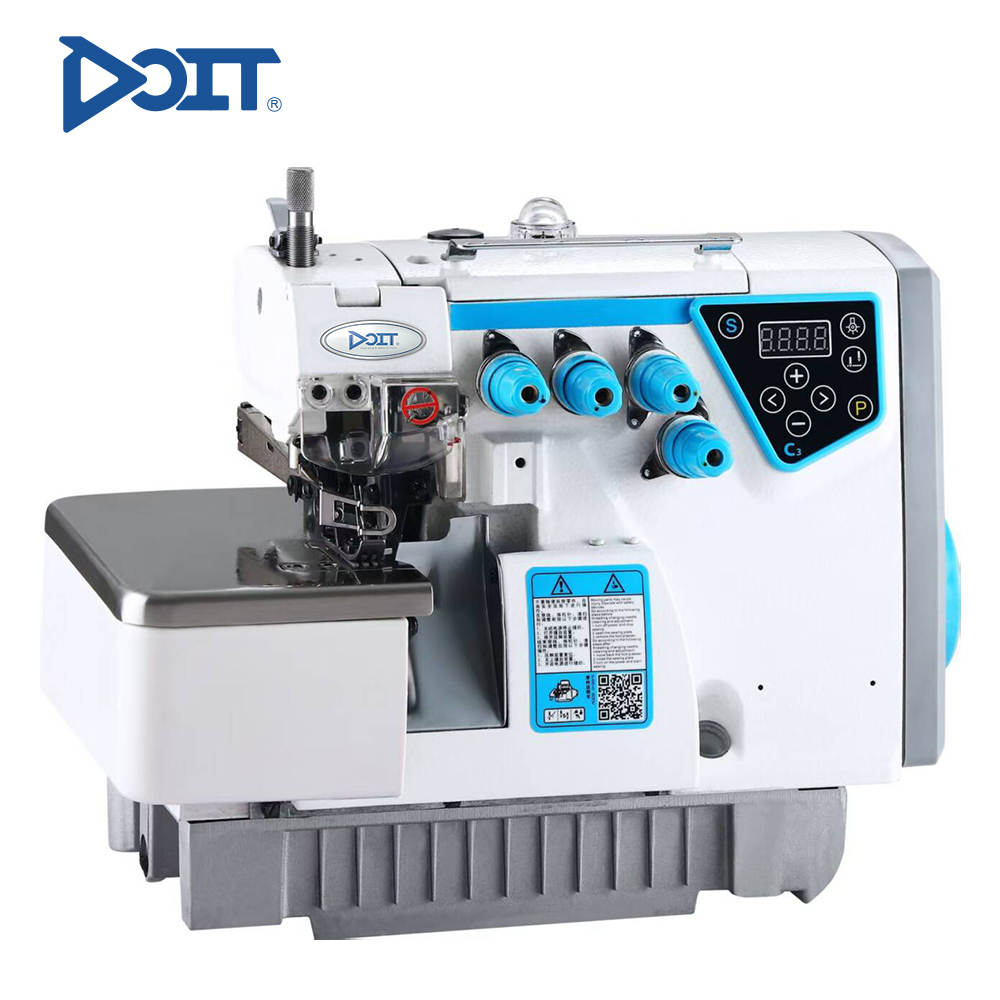
DOIT Group manufactures industrial sewing machines that deliver the performance factories need—without the $2,500 price tag. The DT 5550 High-Speed Single-Needle Lockstitch operates at 5,000 stitches per minute, handles up to 13mm sewing thickness, and features automatic oil supply and two-way feeding. The DT 8800-D4 Direct Drive Full Automatic Lockstitch adds a direct-drive servo motor saving up to 70% on electricity, automatic thread trimming, and a 15mm presser foot lift for bulky seams. The DT C10-D4 Computerized Lockstitch with Stepper Motor provides precise stitch control for consistent quality across high-volume production. All DOIT machines are manufactured under ISO9002 quality standards with CE and UL safety certifications, and carry a one-year warranty on parts and a two-year warranty on the motor.
10. The Bottom Line: Sew Smarter, Not More Expensively
The Reddit poster's frustration resonates because it speaks to a real problem: the sewing industry has convinced many people that they need expensive machines to produce quality work. It's simply not true. As the poster put it: "My people have been making quilts (and everything else) on simple, workhorse sewing machines... because that's what they had". The same principle applies to garment factories today. Invest in reliability, durability, and performance—not in status, brand prestige, or unnecessary features. Your production line will thank you, and so will your bottom line.
Ready to invest in industrial performance without the premium price tag? Explore DOIT Group's full range of lockstitch, overlock, and specialty machines at doitsewingmachine.com.
📩 Email: sales6@chinadoit.cn
🌐 Website: doitsewingmachine.com
What I Wish I Knew Before Buying My Sewing Machine – Lessons from Real Beginners
What‘s the Best Sewing Machine for Beginners Right Now? (Easy to Use Under $300)