Overrated Sewing Machine Features: What Actually Matters
1. The Great Feature Debate
Ask a sewing community which machine feature turned out to matter more than expected, and the same themes come back again and again.
The pattern in those discussions is consistent: people dismiss a feature, then discover it solves a problem they had been working around. Automatic needle threaders are the classic example — written off as a gimmick until someone develops arthritis or declining vision and finds it indispensable.
Two themes dominate the community consensus:
- Stitch counts are marketing. Buyers repeatedly report paying for 100 or 200 built-in stitches and using a handful — straight, zigzag, a stretch stitch, a buttonhole.
- Reliability outranks features. The recurring advice is that a machine which sews a consistent stitch every time beats one with an impressive feature list that skips or jams.
The useful conclusion: the features worth paying for are the ones that make the machine work the same way on day 900 as on day one.
2. The Most Overrated Features
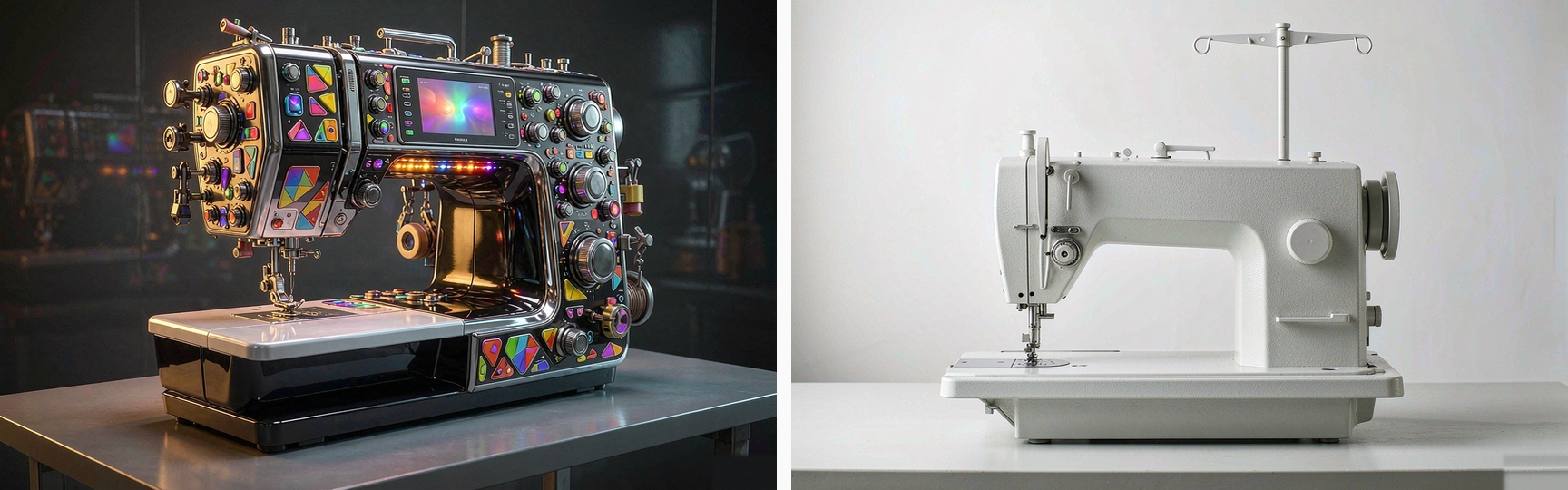
#1 — Hundreds of decorative stitches. The most common regret in sewing communities. Guidance from buyer’s guides is blunt on this point: ignore stitch count; what most people actually need is a short list — straight, zigzag, one or two stretch stitches, and a buttonhole.
For garment production the list is even shorter: straight stitch and overlock.
#2 — Touchscreen controls. Touchscreens look modern, cost more, and are not easier to operate than a good dial. They are also the most expensive thing on the machine to replace when they fail. Physical controls are more reliable, cheaper to repair, and operators already understand them.
#3 — All-in-one embroidery capability. Machines that promise to sew, embroider, and do everything else rarely excel at any of it. A dedicated machine outperforms a compromise in every category that matters.
3. The Underrated Features Users Actually Love
#1 — Automatic needle threader. The most-cited "gimmick that wasn’t." It saves real time when changing thread colours, and for anyone with limited vision or hand mobility it is not a luxury.
Note for industrial buyers: this is a domestic machine feature. Industrial lockstitch and overlock machines are not equipped with needle threaders — operators thread by hand, and it takes seconds once trained. Do not evaluate an industrial machine against this list.
#2 — Needle up/down positioning. Consistently the feature people say they did not know they needed. Needle-down lets you pivot fabric without losing position; needle-up lets you clear the fabric immediately. In production, those saved seconds compound across a shift.
#3 — Knee lift. Raises the presser foot hands-free. When you are controlling a thick stack with both hands, this is genuinely transformative — and it is standard on industrial machines for exactly that reason.
#4 — Automatic thread cutter. Eliminates reaching for scissors at every seam: fewer motions per operation, less operator fatigue, more consistent chain-offs.
4. Where Industrial Buying Is a Different Conversation Entirely
This is the pivot most guides skip. Everything above is a domestic machine discussion. On a production floor, the criteria change:
|
Feature category |
What marketing emphasises |
What actually matters |
|
Stitch count |
200+ built-in stitches |
Consistent straight stitch, reliable overlock |
|
Speed |
Maximum spm |
Average speed at your fabric thickness |
|
Controls |
Touchscreen interface |
Dials and buttons operators understand |
|
Build |
Lightweight, portable |
All-metal construction for continuous duty |
|
Maintenance |
"Easy to use" |
Automatic lubrication, standard consumables |
|
Energy |
Standard motor |
Direct-drive servo |
A factory is not buying a machine for weekend projects. It is buying a production asset that has to behave identically across hundreds of machines and thousands of hours. The same principle applies — reliability beats features — but the stakes are multiplied by every hour the line is down.
5. Why Reliability Outweighs Features in Industrial Settings
On a line of fifty machines, one failure slows the whole line. The features that matter are the ones that keep machines running.
Community discussions about machine longevity come back to the same two points:
- Avoid lightweight construction where the case and chassis flex — it is a marker of how the machine will age
- Look for metal internals and quality parts in the load path
What that means in machine design:
- Cast-iron / metal frames that hold alignment under load rather than flexing
- No plastic gears in the drive path to wear out
- Direct-drive servo motors, which eliminate belts and clutches — historically the most common failure points
6. Features With Measurable ROI in Denim Production
For denim jackets, jeans, and heavy workwear:
|
Feature |
Why it matters |
DOIT example |
|
High presser foot lift |
Clears waistbands, hems and fly intersections |
DT C10-D4 |
|
Large hook capacity |
Fewer bobbin changes; covers heavier thread |
DT H10-D4 |
|
Compound / unison feed |
Prevents ply shift on thick stacks |
DT 1510N |
|
Direct-drive servo motor |
Lower energy draw, precise speed control, fewer wear parts |
All DOIT direct-drive models |
|
Automatic lubrication |
Longer service life, less daily intervention |
DT 63900 |
|
Standard needle system (lockstitch) |
Easy sourcing, less downtime |
135×17 on lockstitch models |
On energy: direct-drive servo motors draw substantially less power than clutch motors because they are not running at full load while the operator positions fabric — and on most lines, that idle time is the majority of the shift.
7. Five Things Buyers Wish They Had Known
- Don’t buy features you won’t use. Fancy stitch patterns and computer menus are irrelevant to production work.
- Reliability is the whole game. A machine that runs beats a machine with a longer feature list.
- Parts availability is a specification. Common consumables and serviceable parts matter more than any option box.
- Build quality trumps feature count. Flex in the chassis shows up as alignment problems years later.
- Start with the core, expand later. A dependable basic machine plus the right specialist head beats one over-optioned machine.
For a factory this translates directly: reliability, parts availability, and build quality first. DOIT machines are specified on that basis — 135×17 on the lockstitch range for easy sourcing, ISO 9001 manufacturing, 1-year warranty on machine parts and 2-year on the motor.
8. DOIT Group: Reliability as the Default
|
Design choice |
What it means on your floor |
|
All-metal construction |
Frames that hold alignment through years of continuous use |
|
Direct-drive servo motors |
Lower energy draw, quieter running, fewer parts to fail |
|
Automatic lubrication |
Consistent oil delivery where it matters most |
|
Standard needle system (lockstitch) |
135×17 — easy sourcing, minimal downtime |
|
ISO 9001 certification |
Documented quality management |
|
1-year parts / 2-year motor warranty |
Coverage on the components that matter |
DOIT machines for denim production
|
Machine |
Application |
|
DT 254 |
Belt loops — uniform strength and durability |
|
DT 165-02 |
Placket — smooth, flat finish |
|
DT 3020TD |
Automatic pocket attaching — symmetrical placement |
|
DT 63900 |
Computerized hemming — consistent stitch quality |
|
DT C10-D4 |
Computerized lockstitch — 5,000 spm |
|
DT 900-4AT |
Overlock — auto trimmer, stepper motor |
9. How to Evaluate a Machine Beyond the Feature List
Standing in front of a spec sheet, ask:
- What is the average speed at MY fabric thickness? Not the maximum on light cotton
- What is the presser foot lift? Enough to clear your thickest seam without forcing it
- Does it use standard needles and consumables? 135×17 on lockstitch; confirm the system per model
- What is the motor type? Direct-drive servo
- What does the warranty cover? Look for meaningful coverage on the motor
- Are parts available locally? Downtime costs more than parts
- What do existing customers say about reliability? Not features — reliability
10. The Bottom Line
The most valuable features are the ones you never have to think about.
- A reliable straight stitch is worth more than 200 decorative options
- An automatic thread cutter removes more motions per shift than a touchscreen saves
- All-metal construction outlasts any feature list
- Standard consumables prevent more downtime than any option
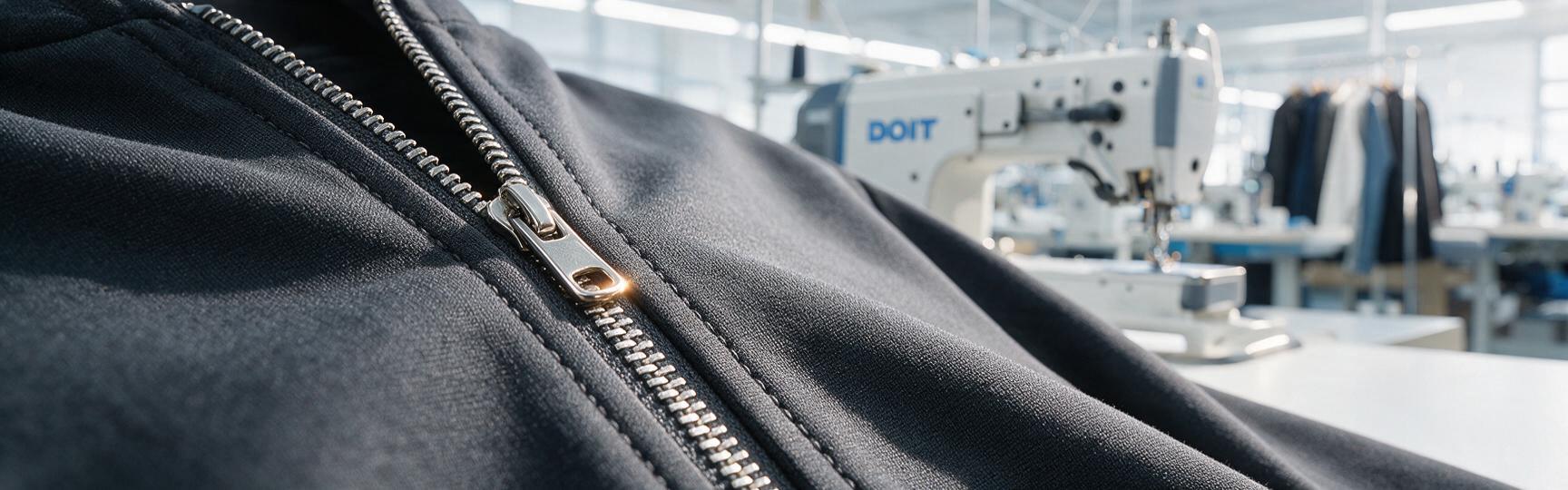
DOIT Group builds industrial sewing machines on those principles — metal construction, direct-drive servo motors, automatic lubrication, and standardised consumables on the lockstitch range. No gimmicks. Machines that work.
Ready to invest in reliability instead of feature counts? Explore DOIT Group’s range at doitsewingmachine.com.
📩 Email: sales6@chinadoit.cn
🌐 Website: doitsewingmachine.com
I Inherited a Longarm Quilting Machine — Now What? A Beginner’s Guide to Turning an Inheritance Into a Legacy