Fabric Dye Stained My Sewing Machine – How to Remove It and Keep Your Machine White
Fabric Dye Stained My Sewing Machine – How to Remove It and Keep Your Machine White
A Reddit user recently shared a frustrating experience that many sewists can relate to: "I helped my sister sew half a dozen red skirts. I didn't realize until halfway that the fabric stained my machine! Everything was stained with red! Everything I touched after also stained with red (transferred from my hand). I need help how to clean this up and make my machine white again!"
They tried alcohol swabs, dishwasher detergent, and body soap – but after all that effort, 65–70% of the stain remained . The excitement of sewing was quickly overshadowed by the frustration of a stained machine.
If you've ever dealt with dye transfer, you know the sinking feeling. Here's what to do when it happens – and why the right machine makes all the difference.
1. Why Does Fabric Dye Stain Sewing Machines?
The Reddit user's experience is not uncommon. Red dye from cheap or unstable fabrics can transfer onto sewing machine surfaces through direct contact, especially when handling large quantities of fabric. The dye can stain the machine bed, the arm, the thread guides, and even transfer to your hands .
What causes dye transfer:
-
Unfixed dyes: Some fabrics, especially deep reds, blacks, and navies, have excess dye that hasn't been properly set
-
Friction: Handling and feeding fabric through the machine creates friction that rubs loose dye onto surfaces
-
Moisture: Sweaty hands can activate and transfer dye more easily
-
Light-colored machines: Stain shows up most visibly on white or cream-colored machines
The Reddit user's machine is "white" , making every stain painfully visible.
2. What Actually Works to Remove Dye Stains from Sewing Machines?
The Reddit user tried alcohol swabs, dishwasher detergent, and body soap – but only removed 30–35% of the stain . Here's what experienced sewists recommend:
| Cleaning Method | Effectiveness | Best For |
|---|---|---|
| Rubbing alcohol | Moderate | Fresh stains, but may not fully remove set-in dye |
| Dishwasher detergent | Low | Mild stains only |
| Baking soda paste | Moderate | Gently abrasive, good for stubborn spots |
| Magic eraser | High | Surface stains on smooth machine bodies |
| Acetone/nail polish remover | High | Stubborn stains – but test on a hidden area first (can damage some finishes) |
| Specialized sewing machine cleaner | High | Safe for machine finishes and removes dye, oil, and grime |
Important caution: Do not use harsh chemicals on the needle plate, bobbin area, or any internal parts. Focus cleaning on the exterior surfaces only.
3. What Should You NOT Use to Clean Dye Stains?
Some cleaning methods can damage your machine more than the stain itself.
Avoid:
-
Bleach: Can damage the machine's finish and corrode metal parts
-
Abrasive scrubbers: Steel wool or rough pads will scratch the surface
-
Excessive water: Moisture can seep into internal components and cause rust or electrical issues
-
Harsh solvents: May strip paint or damage plastic parts
The best practice: Start with the gentlest method (mild soap and water) and work your way up to stronger solvents only if needed. Always test on a hidden area first.
4. How Can You Prevent Dye Transfer in the First Place?
The Reddit user's frustration could have been avoided with a few simple precautions.
Prevention tips:
-
Pre-wash all deep-colored fabrics: Wash reds, blacks, and navies before sewing to remove excess dye
-
Use a press cloth: Place a thin white cloth between the fabric and the machine bed
-
Wipe down regularly: Clean your machine bed with a soft cloth between projects
-
Wear gloves: When handling heavily dyed fabrics, disposable gloves prevent dye transfer to your hands – and then to your machine
-
Test for colorfastness: Rub a damp white cloth on the fabric – if color transfers, pre-wash or use precautions
The Reddit user's lesson: "I was very happy I got to play with my sewing machine but the stain kinda bums me out too" . A little prevention goes a long way.
5. Does the Machine's Surface Material Affect Stain Removal?
The material of your sewing machine body directly impacts how easily stains can be removed.
Machine body materials:
| Material | Stain Resistance | Ease of Cleaning |
|---|---|---|
| Glossy plastic | Moderate | Easy to wipe clean |
| Matte plastic | Low | Stains can absorb into texture |
| Painted metal | High | Durable, easy to clean |
| White/light finishes | Low (visually) | Shows every stain |
What this means for you: A machine with a smooth, durable finish is easier to keep clean than one with a textured or porous surface.
6. What Should You Look for in a Machine That's Easy to Clean?
When choosing a sewing machine, consider how easy it is to maintain.
Features that make cleaning easier:
-
Smooth, non-porous surfaces: Stains wipe off rather than absorbing
-
Dark or neutral colors: Stains are less visible (but still should be cleaned)
-
Removable parts: Easy-to-clean needle plates, presser feet, and bobbin covers
-
Clear access: Ability to reach all surfaces for cleaning
7. DOIT Group: Built for Durability and Easy Maintenance
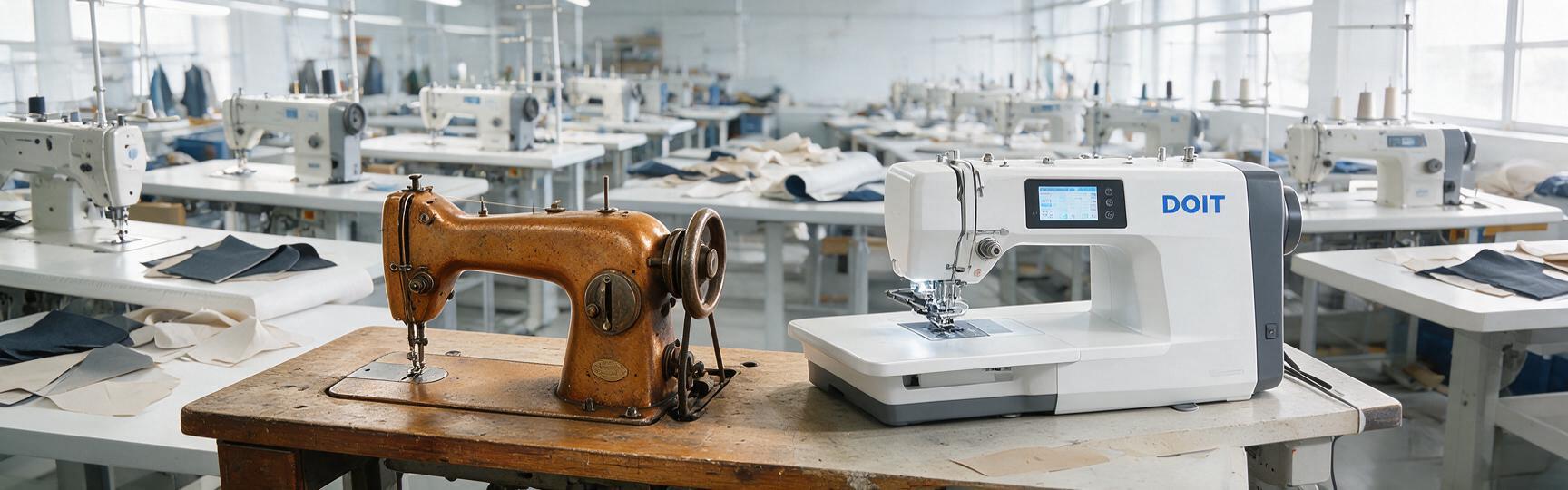
DOIT Group's industrial sewing machines are designed with durability and ease of maintenance in mind.
Why DOIT machines are easier to keep clean:
-
Durable finishes: Smooth surfaces that resist staining and are easy to wipe clean
-
All-metal construction: No porous plastic surfaces that absorb dye
-
Standardized design: Easy access to all parts for cleaning and maintenance
-
Professional-grade materials: Built for the demands of continuous production, not occasional use
The DOIT difference: When you're sewing hundreds of garments, dye transfer and stains are inevitable. DOIT machines are built to handle the wear and tear of production sewing – including the occasional dye mishap.
8. What Should You Do if the Stain Won't Come Out?
Sometimes, despite your best efforts, a stain persists – as the Reddit user discovered (65–70% remaining) .
If the stain won't budge:
-
Accept it as a badge of honor: Many sewists wear their machine stains as proof of their craft
-
Cover it: Some sewists use decorative decals or machine covers
-
Consult a professional: A sewing machine technician may have specialized cleaning products
-
Prevent future stains: Learn from the experience and use prevention methods going forward
The important thing: A stain doesn't affect the machine's performance. The Reddit user was still able to sew – the stain was a cosmetic issue, not a functional one .
9. The Bottom Line: Prevention Is Better Than Cure
The Reddit user's experience is a reminder that sewing machines – like any tool – require care and maintenance.
Key takeaways:
-
Pre-wash deep-colored fabrics to remove excess dye
-
Wipe down your machine regularly – especially between projects
-
Use gentle cleaning methods – start mild and escalate only if needed
-
Choose a machine with a durable finish that's easy to clean
-
Don't let a stain ruin your enjoyment – it's a cosmetic issue, not a functional one
10. Ready to Invest in a Machine That's Built to Last?
If you're tired of fighting with stains, breakdowns, and unreliable equipment, it's time to consider industrial-grade sewing machines.
DOIT Group offers a full range of industrial lockstitch, overlock, and specialty machines built for the demands of serious sewists and garment factories. With all-metal construction, smooth finishes, and professional-grade reliability, DOIT machines are designed to keep running – and keep looking good – project after project.
Ready to upgrade to a machine that's built for real work? Explore DOIT Group's full range at doitsewingmachine.com.
📩 Email: sales6@chinadoit.cn
🌐 Website: doitsewingmachine.com
Lining a Hexagon Cardigan and Sewing in a Zipper – A Complete Guide for Crocheters Ready to Level Up
Sewing Tutorials for "Dumb Dumb" People? What Every Beginner Actually Needs to Know