From Frustrating Outsourcing to In-House Control: Why Quilters Are Turning to Industrial Machines
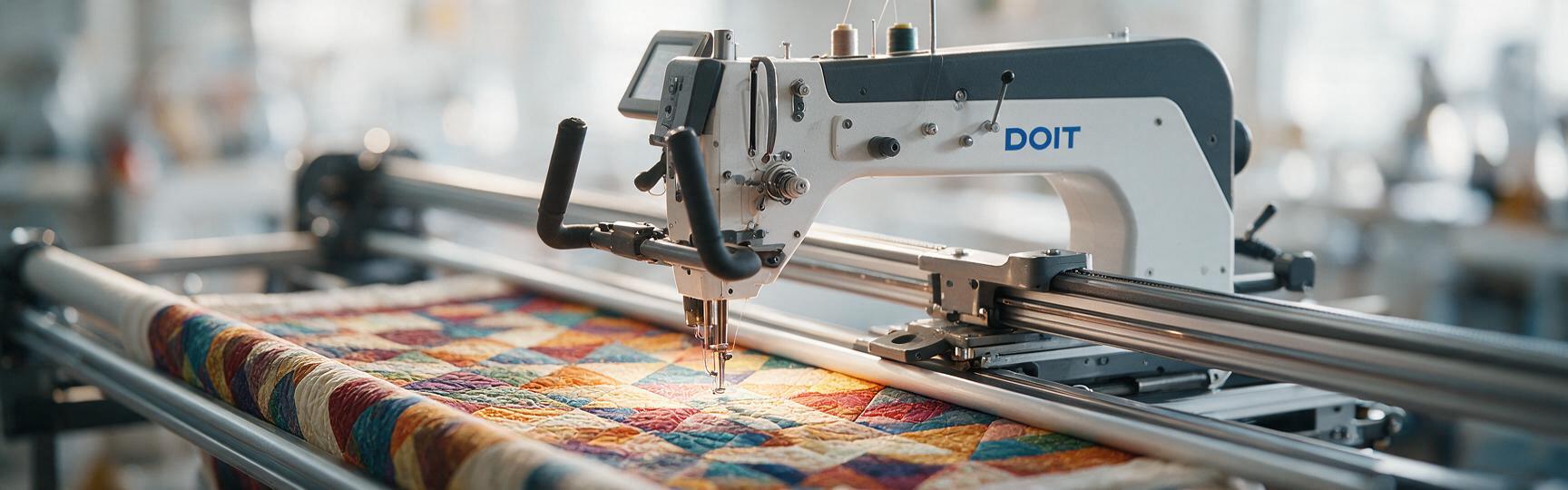
From Frustrating Outsourcing to In-House Control: Why Quilters Are Turning to Industrial Machines
A recent Reddit post in r/quilting struck a nerve: a quilter paid $1,200 to have two twin quilts and one king quilt long-armed by a local service — and was left feeling ripped off. The binding wasn't what they wanted, they couldn't find a mail-in company that met their needs, and they had another twin quilt waiting. What should have been a joyful finish became a source of frustration and expense.
This is a story far too many quilters and small textile businesses know. Whether you're producing quilts for clients, making quilted garments, or running a small home-based business, the question inevitably arises: should you outsource your quilting, or bring it in-house?
This guide explores the real costs of outsourcing, the limitations of the system, and why an industrial sewing machine from DOIT Group is the smartest long-term investment for anyone serious about quilting — at any scale.
1. What Is the Real Cost of Outsourcing Your Quilting?
Let's start with the numbers. Long-arm quilting services charge by the square inch, and those costs add up fast.
| Quilt Size | Typical Dimensions (inches) | Square Inches | Cost at $0.03/sq in | Cost at $0.04/sq in |
|---|---|---|---|---|
| Baby | 36 × 52 | 1,872 | $56 | $75 |
| Throw | 50 × 65 | 3,250 | $98 | $130 |
| Twin | 68 × 90 | 6,120 | $184 | $245 |
| Queen | 90 × 108 | 9,720 | $292 | $389 |
| King | 108 × 108 | 11,664 | $350 | $467 |
Many services add a minimum loading fee of $50 per project, plus setup fees ranging from $15 to $40. For the Reddit user, paying $1,200 for three quilts meant an average of $400 per quilt — far above the industry standard.
The hidden cost: Outsourcing means you're paying someone else to do what you could do yourself. You lose control over the binding method, the stitch pattern, the thread color, and the timeline.
2. What Are the Limitations of Long-Arm Services?
The Reddit user's frustration wasn't just about price — it was about fit. They found only one local long-armer in their region and couldn't find a mail-in company that met their needs. When they did find a service (Sundance Quilting), it machine-sewed both sides of the binding, which wasn't what they wanted.
Common limitations of outsourcing:
-
Limited availability: In many regions, long-arm services are scarce, creating monopolies that can charge premium prices
-
Binding preferences: Many services only offer machine-sewn binding on both sides, not the hand-sewn finish that traditional quilters prefer
-
No control over design: You can't adjust the stitch pattern or thread color once the quilt is in someone else's hands
-
Turnaround time: Mail-in services can take weeks or months
-
Shipping risk: Sending a finished quilt top through the mail is stressful and expensive
The takeaway: Outsourcing works for one-off projects, but for anyone producing multiple quilts or running a business, it's a bottleneck, not a solution.
3. What Does It Cost to Bring Quilting In-House?
The alternative to outsourcing is investing in your own equipment. But what does that actually cost?
Option 1: Home sewing machine with quilting features
-
Cost: $500–$2,500
-
Limitations: Small throat space, limited speed, struggles with thick layers
-
Best for: Hobbyists making small quilts
Option 2: Dedicated long-arm quilting machine
-
Cost: $5,000–$15,000+
-
Limitations: High upfront cost, large footprint, steep learning curve
-
Best for: Full-time quilting businesses
Option 3: Industrial sewing machine with quilting capability
-
Cost: $800–$3,000
-
Limitations: Requires a larger table, focused on straight stitching
-
Best for: Quilters who want speed, durability, and versatility
The DOIT difference: DOIT industrial sewing machines offer the power and reliability of long-arm machines at a fraction of the cost — and they're built for continuous production, not occasional use.
4. Why Are Industrial Sewing Machines the Smart Choice for Quilters?
Industrial machines are designed for one thing: consistent, high-speed performance over long production runs. That's exactly what quilters need when they're producing multiple quilts or quilted garments.
| Feature | Home Quilting Machine | Industrial Sewing Machine |
|---|---|---|
| Speed | 800–1,200 SPM | 2,500–5,000 SPM |
| Throat space | 6–10 inches | 10–18+ inches |
| Duty cycle | Intermittent use | Continuous operation |
| Construction | Plastic and metal | All-metal, cast-iron frame |
| Fabric capacity | Light to medium | Light to heavy (13mm+) |
| Lifespan | 5–10 years | 20+ years with maintenance |
| Parts availability | Proprietary | Standard 135×17 needle system |
The key insight: An industrial machine gives you the speed and capacity of a long-arm at a fraction of the price — and it can do far more than just quilting.
5. What DOIT Machines Are Best Suited for Quilting?
DOIT Group manufactures industrial sewing machines that handle quilting and quilted garment production with ease.
DOIT DT 5550 High-Speed Single-Needle Lockstitch
-
Max sewing speed: 5,000 RPM
-
Max sewing thickness: 13mm
-
Suitable for knitwear, cotton, and chemical fiber materials
-
Two-way feeding, automatic oil supply, and retrieving device
-
Perfect for general quilting and quilted garment construction
DOIT DT 1510N Single Needle Compound Feed Heavy Duty Lockstitch
-
Compound feed mechanism ideal for thick, multi-layer quilts
-
Heavy-duty construction for continuous operation
-
Excellent for quilting and quilted garment production
DOIT DT-1510D-AE Compound Feed Auto Cutting and Binding Lockstitch Machine
-
Specifically designed for quilt and carpet edging sewing
-
High-speed operation at 2,500 stitches per minute
-
Large hook mechanism ensures robust performance for thick materials
-
Double needle design for leather, sofas, bags, and car interiors
DOIT DT 906C 9-Needle 6-Head Computerized Embroidery Machine
-
Max speed: 1,200 RPM
-
Sewing area: 400×680mm
-
CE certified with 1-year warranty
-
Suitable for quilting, embroidery, and decorative stitching
6. What Is the ROI of an Industrial Machine for Quilting?
The math is compelling. Let's compare the cost of outsourcing versus owning a DOIT industrial machine.
Scenario: A quilter producing 2 twin quilts per month
| Cost Category | Outsourcing | DOIT DT 5550 (Owned) |
|---|---|---|
| Machine cost (one-time) | $0 | $800–$1,200 |
| Monthly outsourcing cost | $368 (2 quilts × $184) | $0 |
| Annual cost | $4,416 | $0 |
| 3-year cost | $13,248 | $800–$1,200 |
| 3-year savings | — | $12,000+ |
Payback period: The machine pays for itself in less than 4 months of quilting production.
Beyond quilting: An industrial lockstitch machine can also handle garment construction, home décor, bag making, and repairs — multiplying its value across your entire sewing practice.
7. What Are the Practical Benefits of In-House Quilting?
Beyond the financial savings, owning an industrial machine delivers practical advantages that outsourcing can never match.
Complete creative control:
-
Choose your own binding method (machine-sewn or hand-sewn)
-
Select thread color, stitch pattern, and density
-
Adjust as you go — no waiting for approval or revisions
Production on your schedule:
-
Quilt when inspiration strikes, not when a service has an opening
-
Meet client deadlines without depending on external turnaround times
-
Scale up production without renegotiating service contracts
Skill development:
-
Learn free-motion quilting, walking foot quilting, and more
-
Build expertise that adds value to your products and services
No shipping risk:
-
Never worry about a finished quilt top being lost or damaged in transit
8. What Should You Look for in an Industrial Quilting Machine?
When evaluating an industrial machine for quilting, prioritize these features:
| Feature | Why It Matters for Quilting |
|---|---|
| Large throat space | Accommodates rolled quilts and large projects |
| High presser foot lift | Handles thick quilt layers and batting |
| Compound feed or walking foot | Prevents layer shifting during quilting |
| Direct-drive servo motor | Smooth, precise speed control; energy efficient |
| Standard needle system (135×17) | Easy to source quilting needles |
| All-metal construction | Durability for years of production |
| Automatic lubrication | Reduces maintenance and extends machine life |
DOIT machines check every box — with models specifically designed for quilt and carpet edging, and lockstitch machines capable of handling 13mm of thickness.
9. How Do You Transition from Outsourcing to In-House Quilting?
Making the switch doesn't have to be overwhelming. Here's a practical step-by-step approach:
Step 1: Start with one machine. A DOIT DT 5550 or DT 1510N lockstitch machine is the perfect entry point. These machines handle quilting and general garment production with equal ease.
Step 2: Practice on scrap materials. Before quilting your first project, practice on layered fabric to get comfortable with the machine's speed and feeding.
Step 3: Master the basics. Learn walking foot quilting and straight-line quilting first, then progress to free-motion.
Step 4: Take on small projects. Start with baby quilts or quilted pillows before tackling a king-sized quilt.
Step 5: Scale up. As your skills and confidence grow, your DOIT machine will keep pace — handling heavier fabrics, larger projects, and faster production speeds.
Step 6: Consider complementary machines. For serious production, add a DOIT overlock machine for edge finishing or a DT 906C embroidery machine for decorative quilting.
10. The Bottom Line: Stop Paying Others to Quilt Your Quilts
The Reddit user's $1,200 outsourcing bill was a wake-up call. They paid premium prices for results they weren't happy with, and they still had another quilt waiting.
Key takeaways:
-
Outsourcing is expensive: $60–$250+ per quilt adds up quickly
-
Availability is limited: Many regions have only one or two long-arm services
-
Control is lost: You can't choose binding method, thread, or timeline
-
In-house quilting pays for itself: A DOIT industrial machine pays for itself in months, not years
-
Versatility multiplies value: An industrial machine quilts, sews garments, and handles home décor
DOIT Group manufactures industrial sewing machines built for quilters and garment makers who demand speed, durability, and professional results. With models specifically designed for quilt edging, heavy-duty lockstitch capability, and all-metal construction, DOIT machines deliver what long-arm services can't: complete control over your craft, on your schedule, at your pace.
Ready to bring your quilting in-house and stop paying others to finish your projects? Explore DOIT Group's full range of industrial sewing machines at doitsewingmachine.com.
📩 Email: sales6@chinadoit.cn
🌐 Website: doitsewingmachine.com
Thread Choices for Machine Embroidery: A Complete Guide for Returning and Beginner Embroiderers