
RC Boat Flex Shaft Greasing: How Often, With What, and What Else Actually Matters
RC Boat Flex Shaft Greasing: How Often, With What, and What Else Actually Matters
A boat owner on r/rcboats asked a question that sounds trivial and is not: how long can you leave a flex shaft before greasing it, and does it need oil as well? The thread that followed is a good example of hobby knowledge at its best — practical, specific, and occasionally wrong in a way that costs money.
Here is what the replies said, what the mechanism actually is, and how to turn it into a routine you will keep.
What Did the Thread Say?
Five replies carry the conversation, quoted as posted:
"With my Traxxas Disruptor I was first told to regrease the shaft every so often. So for the first 3 months (and running almost every week atleast once) I never did. Never had any issues with water getting in.
After the first regrease, it’s now something that has to happen after every time it goes in the water."
— u/FastFredNL
FastFredNL: "Long story short I would recommend to regrease when you get home after running the boat. But maybe for different boats it can be different, if the inside of your boat stays relatively dry it might not be necessary but if you have loads of water inside it could’ve come in through the shaft."
FastFredNL: "Boats really don’t need much if you compare them to RC cars. Making sure the driveshaft has grease and once in a while take the motor out of the boat to inspect and oil the motorbearings as they are steel and can rust when exposed to water (it’s pretty normal for water to get into the boat even when nothing is wrong)."
Top-Gear2538: "Any grease will do, even the cheapest.Its mainly there to prevent corrosion after the runs i.e. if you run often it will never corrode and no grease needed. Always do it before long periods of inactivity."
Top-Gear2538: "No not really, as long as you do not get any water into the motor you should be fine.Keep it dry in storage. Motor bearings might need some oil after100h or so but that is a lot of runtime."
Three useful positions, one of which needs qualification. Take them in order.
How Often Should You Actually Regrease a Flex Shaft?
The thread’s answer — after every run that puts water in the boat, and always before storage — is the right one, and it is better than any fixed interval, because the interval is not a number. It is a decision:
- Did water get into the hull? Then assume some came up the stuffing tube, and regrease. The shaft is a hole in the hull with a spinning cable through it; the grease is what closes the gap.
- Was the boat run in salt, brackish or gritty water? Regrease, and rinse the hull and hardware with fresh water first. Salt crystals and sand in a flex cable are grinding paste.
- Is the boat going into storage for more than a couple of weeks? Regrease regardless. This is when corrosion actually happens — see below.
- Has it been sitting dry and unused for months? Grease it before the first run, not after. A dry cable in a dry tube is metal on metal for the first minute.
What you should not do is pick a number like "every ten runs" and follow it. Ten runs on a calm lake is not ten runs in chop with a wet hull.
Why Did It Start Needing Grease After the First Regrease?
The first reply describes something a lot of owners notice and few can explain: months of running with the factory fill and no water ingress, then, after the first regrease, water in the boat every time.
The likely mechanism — and this is a mechanism, not a measured result — is that the factory fill is not just a lubricant, it is a seal. It goes in thick, fills the tube end to end, and stays put. When you strip and replace it, three things can happen:
- The replacement is thinner, so it migrates and leaves the top of the tube dry.
- The tube is not fully packed, so there is an air gap through which water can travel.
- The cable and tube have worn slightly since new, so the clearance the original grease was bridging is now bigger.
None of that means greasing caused the problem. It means the quality of the fill matters as much as the fact of it, and a half-filled tube is worse than the factory fill it replaced. Pack it properly — see below.
Which Grease Should You Use?
The thread says "any grease will do, even the cheapest", which is true for corrosion protection and misleading for drag.
Two different things are being specified when someone says "grease", and confusing them is the most common lubrication mistake in every hobby:
|
What it describes |
Scale |
|
|
NLGI number |
How stiff the grease is — its consistency |
NLGI 000 (runny) to NLGI 6 (blocky) |
|
ISO VG number |
The viscosity of the base oil inside the grease, at 40 °C |
ISO VG 2 up to VG 1500+ |
A grease is base oil plus a thickener. Two greases can both be "NLGI 2" and behave completely differently, because their base oils are different viscosities. That is why "any grease" is fine for keeping rust off a steel linkage and not fine for a cable spinning at tens of thousands of rpm.

For a flex shaft, the trade-off is:
- Stiffer, more water-resistant grease (marine wheel-bearing type, typically around NLGI 2 with a water-resistant thickener) — better seal, longer protection, more drag and more heat at speed.
- Lighter grease or a dedicated cable lubricant — less drag, cooler running, but it washes out or flings off sooner, so it needs more frequent attention.
For a sport boat running a few packs a session, water-resistant marine grease packed properly is the sensible default. For a high-rpm setup chasing speed, a lighter cable grease and more frequent regreasing is the better trade.
What not to use: WD-40 or any penetrant as a substitute — it is a solvent with a light oil in it, it will not stay in a stuffing tube, and it strips what is there. Silicone spray in a flex tube is the same story. Vegetable oils go sticky and rancid. And do not pack a tube with grease meant for a car suspension joint and expect it to stay put at cable speed.
How Much Grease, and How Do You Pack It?
Enough to fill the tube and coat the cable, and no more.
- Clean the old grease out first — a rag through the tube, and wipe the cable down. New grease over old grit is how a shaft starts to wear.
- Coat the cable along its length as you slide it back in, so the grease is distributed rather than pushed to one end.
- Fill the tube, not the hull. Excess grease gets thrown off at the coupler, into the hull, and onto everything else. A little hydraulic resistance at the coupler end is normal; grease spraying out of the tube is not.
- Wipe the coupler and the first centimetre of cable clean so the collet grips metal, not lubricant. A greasy collet slips — and a slipping collet chews the cable end.
What Else Should You Do After Every Run?
The replies point at the right things; here they are as a routine that takes five minutes:
- Dry the hull inside and out, and leave hatches or hatches-tape off overnight so it can breathe.
- Check whether there was water in the hull — and where it collected. Water at the transom is usually spray; water around the shaft log is a seal problem.
- Rinse with fresh water after salt or dirty water, then dry. Rinsing and not drying is how you trade salt for standing water.
- Check the coupler and its set screws. Vibration loosens them; a loose coupler is the most common "my boat lost drive" failure.
- Spin the shaft by hand and feel for grit or a tight spot. Grit means the tube needs cleaning, not more grease.
- Regrease if any of the conditions above applied.
What About Storage?
This is where the thread’s best line sits, and it deserves emphasising: "Always do it before long periods of inactivity."
Corrosion is a time-and-water problem, not a running problem. A boat that runs weekly in fresh water stays remarkably clean; the same boat put away wet in October and opened in April will have rust on every steel part that water reached. So:
- Grease the shaft before storage, not after.
- Dry the hull completely, and store with the hatch open if the boat lives indoors.
- Take the battery out. Store it at storage voltage, somewhere dry.
- If the shaft comes out for the winter, store it straight, not coiled.
Do Motor Bearings Need Oil?
The thread offers "motor bearings might need some oil after 100h or so", which is a reasonable owner’s rule of thumb — and it carries an important condition the reply does not mention: it only applies to open or shielded bearings, not sealed ones.
- Sealed bearings have a lip seal and a factory fill. Adding oil does nothing useful; the only service is replacement.
- Open or shielded bearings can take a drop of light oil, sparingly. More is not better — excess oil attracts dust and grit, which is exactly what kills a bearing.
- A gritty or noisy bearing is replaced, not oiled. Once there is play or a rumble, the race is already damaged.
And the same rule as the rest of this article: keep water out of the motor. A brushless motor that has been submerged and not dried properly will rust its bearings and, in the worst case, corrode the stator laminations.
What Rusts That People Forget?
External steel is the part everyone sees and nobody treats: screws, turn fins, trim tabs, linkages, motor mounts, and the driveshaft itself. A light film of the same marine grease — wiped on, not packed on — is enough on most of it. Stainless fasteners are not rust-proof, only rust-resistant; in salt water they stain and eventually pit, especially where two different metals touch.
The cheap version of this routine: after the last run of the day, rinse, dry, and put a thin smear on anything that shines.
Is This the Same Problem as Oiling a Sewing Machine?
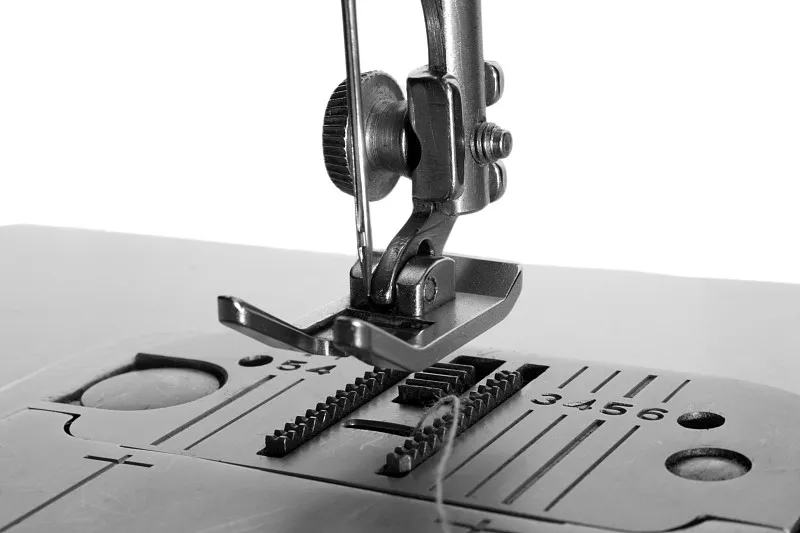
It is, and that is why this article lives here rather than on a boating site. Strip away the water and the four rules are identical:
|
Rule |
RC boat flex shaft |
Sewing machine head |
|
Speed sets the grade |
High cable speed wants a lighter grease |
High-speed lockstitch wants a lighter oil — ISO VG 7–10 rather than 15 |
|
The lubricant is also a seal |
Grease keeps water out of the tube |
The oil film keeps lint and grit out of the bearing surfaces |
|
Storage is when it degrades |
Corrosion during months of inactivity |
Dry bearings and gummed oil during idle weeks |
|
More is not better |
Excess grease is thrown into the hull and slips the collet |
Excess oil becomes oil-stain defects on finished garments |
And the grading confusion is the same one: a sewing machine oil is specified by ISO VG — kinematic viscosity in cSt at 40 °C (Juki New Defrix No. 1 is 7.3 cSt, No. 2 is 31.5 cSt, with ISO VG 7 / 10 / 15 the usual substitutes), because "sewing machine oil" is a use case, not a grade. A grease is specified by NLGI consistency plus the base oil’s ISO VG. If a supplier cannot tell you either number, they are selling you a name.
One habit transfers directly: clean before you lubricate. Grease over grit, or oil over packed lint, is how a bearing that would have lasted years dies in months.
If you want this written out as a routine for machines that run a shift rather than a few packs on a Sunday, see our sewing machine maintenance schedule: daily, weekly and monthly tasks — same four rules, expanded into a checklist with an owner for each task.
The Five-Line Version
- Regrease after any run that put water in the hull, and always before storage.
- Pack the tube, coat the cable, wipe the coupler — a slipping collet ruins the cable end.
- Water-resistant marine grease by default; lighter grease if you are chasing speed and will regrease more often.
- Rinse, dry, check the set screws, spin the shaft by hand.
- Never a penetrant, never over-filled, never stored wet.
Where This Fits
This article is part of the maintenance library on this site. We build industrial sewing machines — lockstitch, overlock and specialised units for garment production — so most of what we know about lubrication, wear and corrosion comes from machines that run eight hours a day rather than a few packs on a Sunday. The same rules apply to both.
If you maintain machines for a living — or you are setting up a production line and want the lubrication schedule, needle systems and service intervals written down before you buy — that is what we publish here, and that is the conversation we are happy to have.
📩 Email: sales6@chinadoit.cn
🌐 Website: doitsewingmachine.com
References
- r/rcboats — “Flex shaft — longest can leave to grease? oil other?” (thread source; comments quoted verbatim from a client-supplied screenshot; one top comment appears with its author line cut off and is marked as unattributed). //www.reddit.com/r/rcboats/comments/1xiicw5/flex_shaft_longest_can_leave_to_grease_oil_other/
- Lubricant grading: grease consistency by NLGI number versus base-oil viscosity by ISO VG (cSt at 40 °C); grease as base oil plus thickener.
- Series-verified sewing-machine figures used in the comparison: ISO VG as the only meaningful oil specification; Juki New Defrix No. 1 = 7.3 cSt, No. 2 = 31.5 cSt; ISO VG 7 / 10 / 15 substitutes; faster machine takes lighter oil; over-oiling causes oil-stain defects; standard lockstitch head has no replaceable oil filter; clean before lubricating.
Sewing Machine Squeaking: Where the Noise Comes From, and How to Fix It