Is Getting an Industrial Sewing Machine as a First Sewing Machine Bad?
Is Getting an Industrial Sewing Machine as a First Sewing Machine Bad?
A Reddit user recently asked a question that many aspiring sewists and small business owners grapple with: "Is getting an industrial sewing machine as a first sewing machine bad?" Their reasoning was practical—they planned to work with thicker fabrics and sew through multiple layers at once. But they kept jamming the machine and wondered if industrial machines are simply harder to use.
This question cuts to the heart of a common dilemma. Is an industrial machine too much for a beginner? Or is a beginner-friendly home machine actually the wrong choice for someone with ambitious projects?
Here's the truth: Getting an industrial sewing machine as your first machine is not "bad"—but it requires the right expectations, the right guidance, and the right machine.
1. Why Do Beginners Jam Industrial Machines?
The Reddit user's experience—jamming their industrial machine—is a common frustration. But the cause is almost never the machine itself.
-
Speed Control: Industrial machines are significantly faster than home machines. Without proper technique, the fabric can be pulled through too quickly, causing bunching and jams.
-
Threading Errors: Industrial machines have more complex threading paths. A single missed guide can cause tension problems and jams.
-
Needle Selection: Using the wrong needle type or size for the fabric is a leading cause of skipped stitches and jams.
-
Material Handling: Thick fabrics and multiple layers require different feeding techniques. Pulling or pushing the fabric instead of letting the feed dogs do the work leads to jams.
The good news: These are all solvable problems. They are not signs that the machine is "too much" for a beginner—they are signs that the beginner needs proper instruction.
2. Industrial vs. Home Machine: What's the Real Difference?
The Reddit user wondered if an industrial machine is "harder to use" than a normal sewing machine. The answer is nuanced.
| Feature | Home Machine | Industrial Machine |
|---|---|---|
| Speed | 800–1,100 SPM | 4,000–5,500 SPM |
| Duty Cycle | Intermittent use | Continuous 8-hour shifts |
| Construction | Plastic and metal components | All-metal, cast-iron frame |
| Fabric Capacity | Light to medium fabrics | Light to heavy fabrics (up to 13mm+) |
| Learning Curve | Gentler, more forgiving | Steeper, but more rewarding |
| Longevity | 5–10 years with light use | 20+ years with proper maintenance |
Key insight: An industrial machine is not "harder" in the sense of being poorly designed. It is different. It requires more deliberate technique but delivers superior results once mastered.
3. When Does an Industrial Machine Make Sense for a Beginner?
An industrial machine is the right choice for a beginner who:
-
Plans to work with heavy fabrics: Denim, canvas, leather, and upholstery materials will quickly overwhelm a home machine.
-
Sews through multiple layers: Projects like bags, backpacks, or quilted garments require the power and clearance of an industrial machine.
-
Has long-term ambitions: If you plan to start a small business or scale up production, an industrial machine is an investment that grows with you.
-
Values durability over decorative stitches: Industrial machines focus on doing one thing exceptionally well—straight stitching—rather than offering 100 stitches you'll never use.
The Reddit user's reasoning—getting an industrial machine because they planned to work with thicker fabrics and multiple layers—is exactly the right logic. The jamming they experienced is a learning curve issue, not a fundamental flaw in their decision.
4. What Are the Most Common Beginner Mistakes with Industrial Machines?
Understanding these mistakes is the first step to avoiding them:
-
Not adjusting thread tension: Industrial machines require tension adjustments for different fabrics. Beginners often leave tension at the default setting and wonder why stitches are uneven.
-
Using the wrong needle: Needle size must match fabric weight. A #14 needle on heavy denim will bend or break. A #18–20 needle is required for thick materials.
-
Skipping daily maintenance: Industrial machines need daily cleaning and oiling. Lint buildup in the bobbin area is a leading cause of jams.
-
Forcing the fabric: Industrial machines have powerful feed dogs. Pulling or pushing the fabric disrupts the feed mechanism and causes jams.
-
Ignoring the manual: Industrial machine manuals are technical but essential. They contain critical information about threading, tension, and maintenance that beginners often overlook.
5. How Can You Successfully Start with an Industrial Machine?
The key to success with an industrial machine as a first machine is preparation:
-
Take a class or watch tutorials: Many sewing schools offer industrial machine orientation. Online tutorials specific to your machine model are invaluable.
-
Start with practice fabric: Before your first real project, sew straight lines, curves, and corners on scrap fabric. Learn how the machine responds.
-
Master threading and bobbin winding: Practice until you can thread the machine without referring to the manual. This eliminates the most common source of jams.
-
Learn basic maintenance: Know how to clean the bobbin area, oil the machine, and change the needle. These simple tasks prevent 80% of common problems.
-
Start with simple projects: A tote bag or a pillowcase teaches you straight stitching and turning corners before you tackle complex garments.
6. DOIT Group: Industrial Machines Designed for Real-World Use
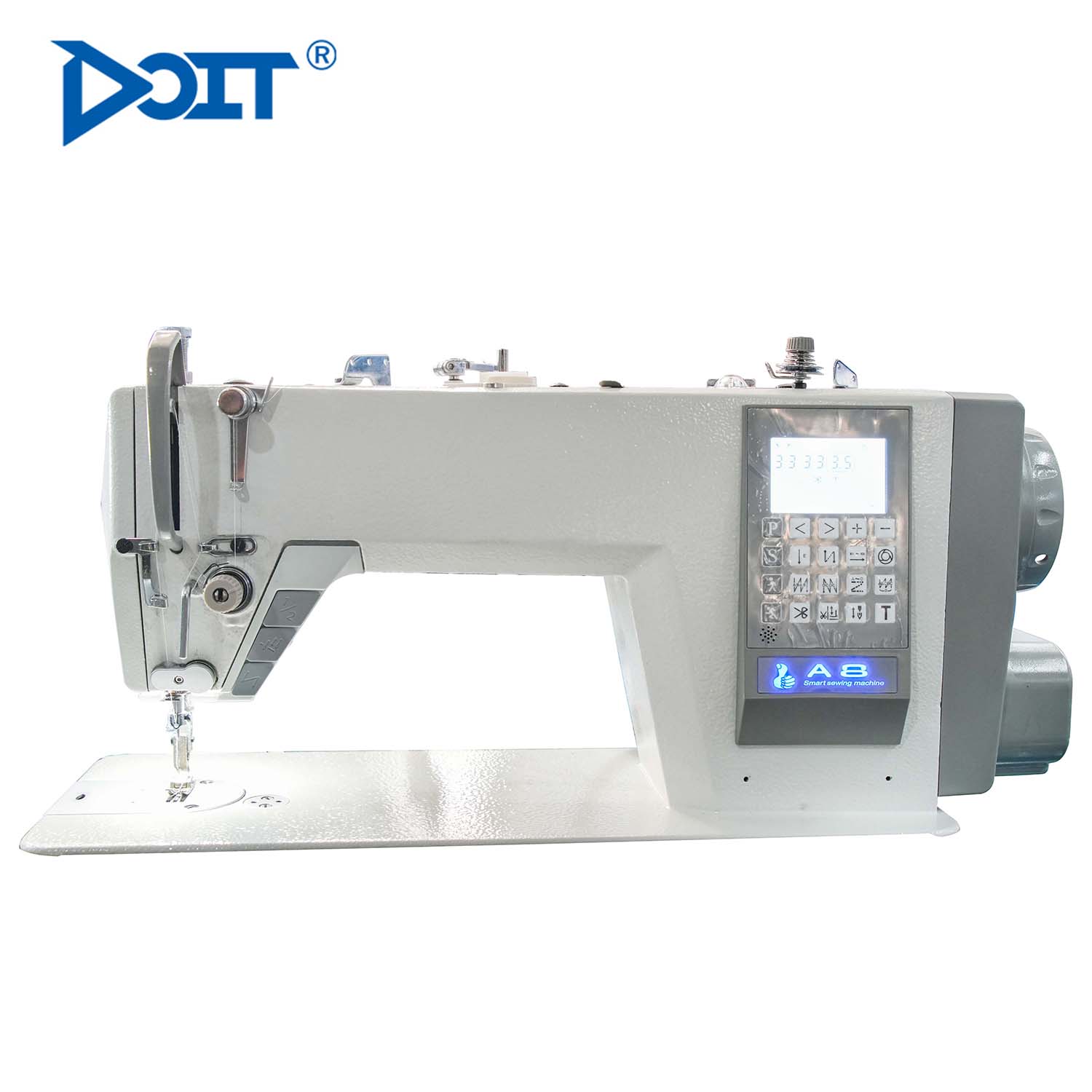
DOIT Group manufactures industrial sewing machines that are built for the demands of continuous production—but they are also accessible to serious beginners who are ready to learn.
Why DOIT machines are a smart first industrial machine:
-
All-metal construction: Cast-iron frames and metal internal components ensure durability and stability—no plastic parts to break under pressure.
-
Standardized parts: DOIT machines use the widely available 135×17 needle system, making replacement parts easy to source.
-
Direct-drive servo motors: These motors save up to 70% on electricity, run quieter than clutch motors, and provide precise speed control—essential for beginners learning to control speed.
-
Automatic lubrication: Reduces daily maintenance burden, allowing beginners to focus on sewing rather than oiling.
-
Proven reliability: DOIT machines are used in garment factories worldwide, with ISO9002 certification and CE/UL safety marks.
Key DOIT models for beginners ready to go industrial:
-
DT 5550 High-Speed Single-Needle Lockstitch: A workhorse for daily assembly, handling up to 13mm sewing thickness at 5,000 SPM. Perfect for beginners who plan to work with denim, canvas, and multiple layers.
-
DT 8800-D4 Direct Drive Full Automatic Lockstitch: Adds automatic thread trimming and a 15mm presser foot lift for bulky seams—features that make production sewing easier.
-
DT C10-D4 Computerized Lockstitch with Stepper Motor: Advanced digital control for precise stitch quality, ideal for beginners who want to grow into more complex projects.
7. What Support Should You Expect from an Industrial Machine Manufacturer?
The Reddit user's question implicitly asks: "If I buy an industrial machine, will I be left to figure it out alone?" The answer depends on the manufacturer.
DOIT Group's support commitment:
-
2-year warranty on machines—confidence in product quality
-
Lifetime after-sales support—ongoing parts availability and technical assistance
-
Expert technical team ready to offer global on-site support when needed
-
One-stop professional service—from equipment selection and installation to operator training and after-sales maintenance
This level of support transforms an industrial machine from a daunting piece of equipment into a manageable, powerful tool.
8. Is an Industrial Machine "Too Much" for a Beginner?
The short answer: No—if you are willing to learn.
The longer answer: An industrial machine is not a casual purchase. It requires commitment to learning technique, maintenance, and safety. But for a beginner with ambitious projects—especially those involving heavy fabrics and multiple layers—it is often the right choice.
The Reddit user's experience with jamming is a temporary hurdle, not a permanent barrier. With proper instruction and practice, that same machine will become a reliable partner in their creative journey.
9. What Should You Look for in a First Industrial Machine?
If you decide an industrial machine is right for you, prioritize these features:
-
All-metal construction: Ensures stability and longevity.
-
Standardized parts: Easy sourcing of needles, bobbins, and accessories.
-
Direct-drive servo motor: Energy-efficient, quiet, and precise speed control.
-
Automatic lubrication: Reduces daily maintenance.
-
Strong warranty and support: Protects your investment and provides peace of mind.
DOIT Group's industrial machines meet all these criteria, making them an excellent choice for beginners ready to take their sewing to the next level.
10. The Bottom Line: Start with the Machine You'll Grow Into
The Reddit user's question reflects a common fear: "Am I making a mistake by starting with an industrial machine?"
The evidence suggests they are not. An industrial machine is not inherently "harder"—it is different. The jamming they experienced is a fixable learning curve issue, not a sign that the machine is wrong for them.
For anyone planning to work with heavy fabrics, multiple layers, or production volumes, an industrial machine is not "too much"—it is the right tool for the job. The key is choosing a machine from a manufacturer that provides the support, documentation, and reliability to help you succeed.
DOIT Group offers that support. With durable construction, standardized parts, energy-efficient motors, and comprehensive after-sales service, DOIT machines are built to grow with you—from your first project to your thousandth.
Ready to start your industrial sewing journey with confidence? Explore DOIT Group's full range at doitsewingmachine.com.
📩 Email: sales6@chinadoit.cn
🌐 Website: doitsewingmachine.com
I’m in the Market for a New Sewing Machine: What I Wish I Knew Before Buying
Industrial Sewing Machine Spare Parts Inventory Management: ABC Classification & Safety Stock Calculation Models