Need Help Identifying a Sewing Machine? What to Do When You Inherit a Mystery Machine
Need Help Identifying a Sewing Machine? What to Do When You Inherit a Mystery Machine
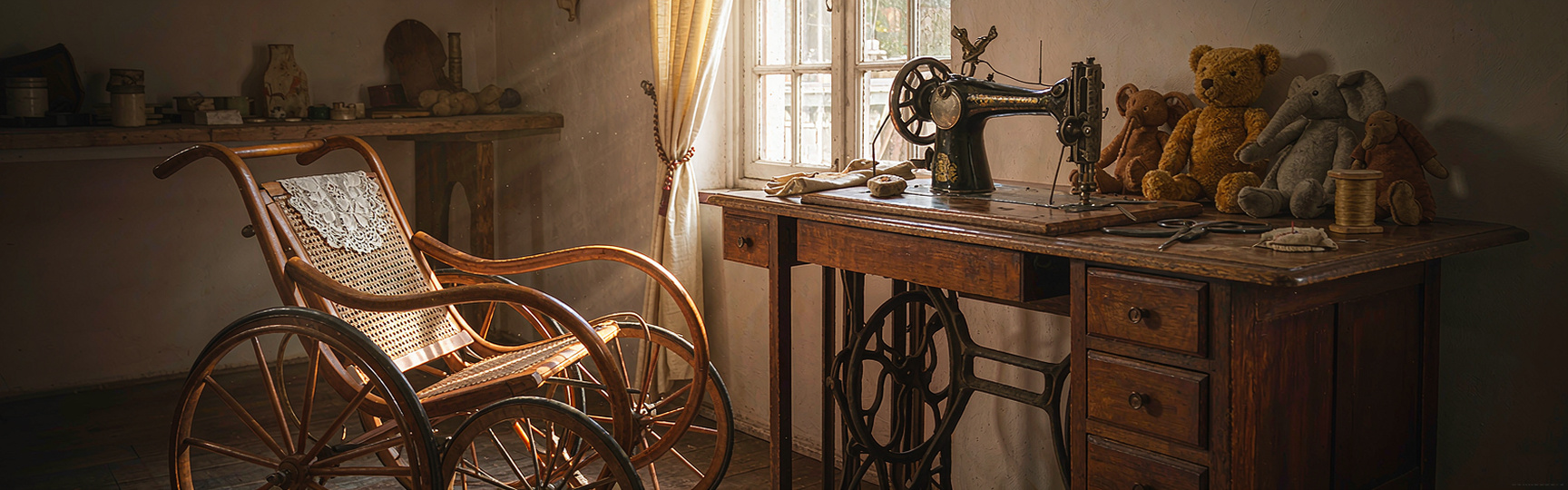
A recent Reddit post in r/sewhelp captures a familiar predicament: “I got this sewing machine from an older family member, who has no idea when or where she got it. I'm trying to find the user manual for it because it's missing a few parts, and has a few things that aren't working correctly.”
The user had already looked online and found similar machines, but no exact matches. They were stuck—unable to identify the machine, unable to find a manual, and unable to fix it.
If you've ever inherited an old sewing machine or found one at an estate sale, you know this feeling. Here's what to do when you're staring at a mystery machine—and when it might be time to stop searching for parts and start searching for a modern solution.
1. Why Is It So Hard to Identify an Old Sewing Machine?
The Reddit user's struggle is common. Vintage sewing machines often lack clear model numbers, and serial number databases are incomplete or brand-specific.
Where to look for identification:
-
Serial number location: On Singers, the serial number is often on the right-hand side (2 letters + 6 numbers for electric models). On older machines, it may be on the underside or front of the bed casting.
-
Model number: Usually a 3- or 4-digit number on a plate at the back, side, or front.
-
Brand databases: Singer has an online database for serial numbers. Other brands like Pfaff, Adler, and Seiko made similar machines, but identification is harder.
The challenge: Even with the serial number, finding an exact match can be difficult. As one user noted, “Singer serial numbers don't refer to a particularly model”.
The lesson: Identification is possible but time-consuming. For some brands, there's no working database at all.
2. What Do You Do When You Can't Find a Manual?
The Reddit user needed a manual to understand the machine and fix missing parts. When you can't find an exact match, here are your options:
Option 1: Search broader. Look for manuals for similar models, not just exact matches. Many vintage machines share the same mechanisms across models.
Option 2: Check specialty resources. ISMACS (International Sewing Machine Collectors' Society) maintains extensive archives. Vintage sewing machine forums (like Quiltingboard or Leatherworker.net) are full of experts who can help identify machines from photos.
Option 3: Find a local repair shop. An experienced technician can often identify a machine by sight and may have access to manuals or parts diagrams.
The reality: For some older or obscure machines, a manual may simply not exist online. At that point, you're relying on general sewing machine knowledge and trial and error.
3. Can You Still Get Parts for Vintage Machines?
The Reddit user's machine was missing parts. The good news: many vintage machine parts are still available.
What parts are typically available:
-
Belts (leather treadle belts are still sold)
-
Bobbins, bobbin cases, and bobbin winders
-
Needle plates and hook assemblies
-
Spool posts and other hardware
Where to find them:
-
Online specialty shops (American Sewing Machine, ISMACS)
-
Estate sales and local quilting circles
-
Adapting parts from other machines or making new ones
The catch: For major hardware or rare components, parts may be difficult or impossible to find. And replacement parts that look new can detract from a vintage machine's beauty.
The tipping point: When the cost and effort of finding parts exceeds the value of the machine, it's time to consider alternatives.
4. When Is It Worth Restoring a Vintage Machine?
The Reddit user faced a decision: invest time and money in fixing the inherited machine, or move on.
When restoration makes sense:
-
The machine has sentimental value
-
It's a rare or collectible model (e.g., Singer Featherweight, early hand-cranks)
-
The repairs are simple (belt replacement, basic cleaning, tension adjustment)
-
A well-maintained vintage machine can have 4–5 times longer remaining lifespan than a new entry-level machine
When restoration doesn't make sense:
-
Major parts are missing or broken
-
The machine needs extensive rust treatment ($50+) or painting
-
Repair costs exceed 50% of a new machine's price
-
You need the machine for production, not just occasional use
The threshold: A professional service typically costs $75–$160. Timing correction runs $75–$150. If you're facing multiple repairs, costs add up quickly.
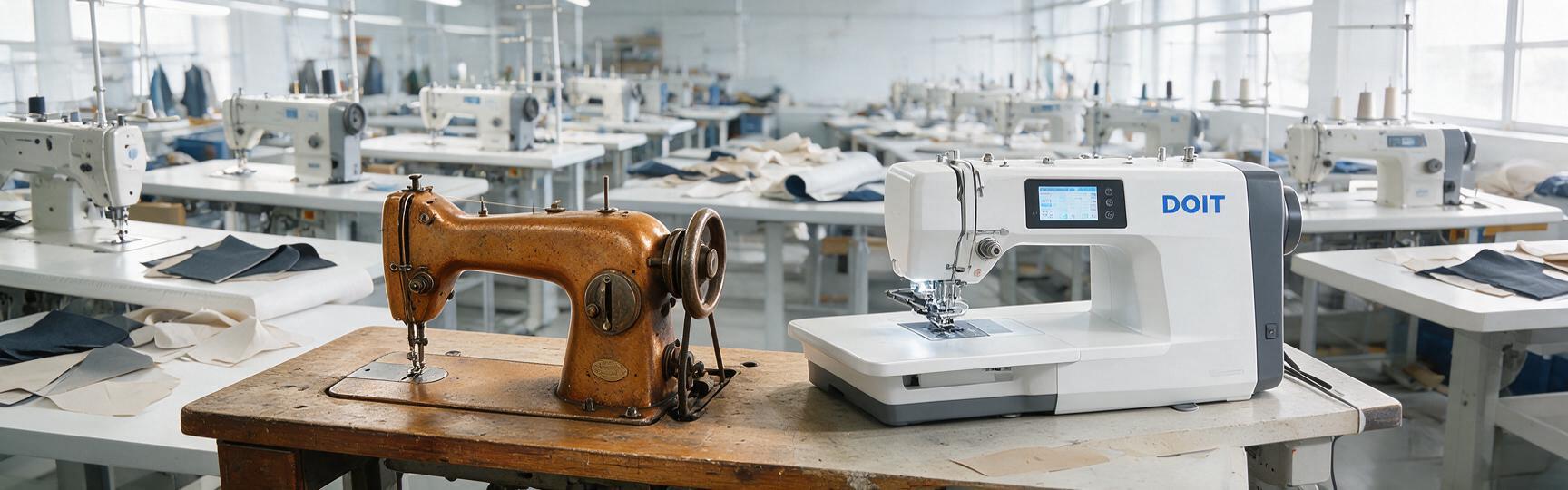
5. Vintage vs. Modern: What's the Real Difference?
Many people assume older machines are “built better” because they're all-metal. There's truth to that—but also important context.
What vintage machines do well:
-
All-metal construction (cast iron) that's rock solid
-
Simple mechanical design that's repairable with basic tools
-
Straight stitch quality that rivals modern machines
What vintage machines can't do:
-
Sew at production speeds (modern industrials run 4,000–5,500 SPM vs. 800–1,100 SPM for vintage)
-
Handle complex fabrics without constant adjustment
-
Offer automation (auto-trimmer, programmable patterns, stepper motor precision)
-
Run 8-hour shifts without overheating
The key distinction: A vintage domestic machine is “industrial strength” in build quality but not industrial in speed or duty cycle. As one expert noted, “household machines are 'all-rounders' designed to do a lot of different things reasonably well, while industrials tend to be super specialized for a particular task”.
6. When Should You Stop Fixing and Start Fresh?
The Reddit user's situation is a classic example of the “sunk cost” trap—continuing to invest in something because you've already invested in it.
Signs it's time to move on:
-
You've spent more time searching for parts than you would have spent sewing
-
The machine has multiple issues (missing parts + not working correctly)
-
You need reliability for production, not just occasional projects
-
You can't find a technician who knows how to work on that specific model
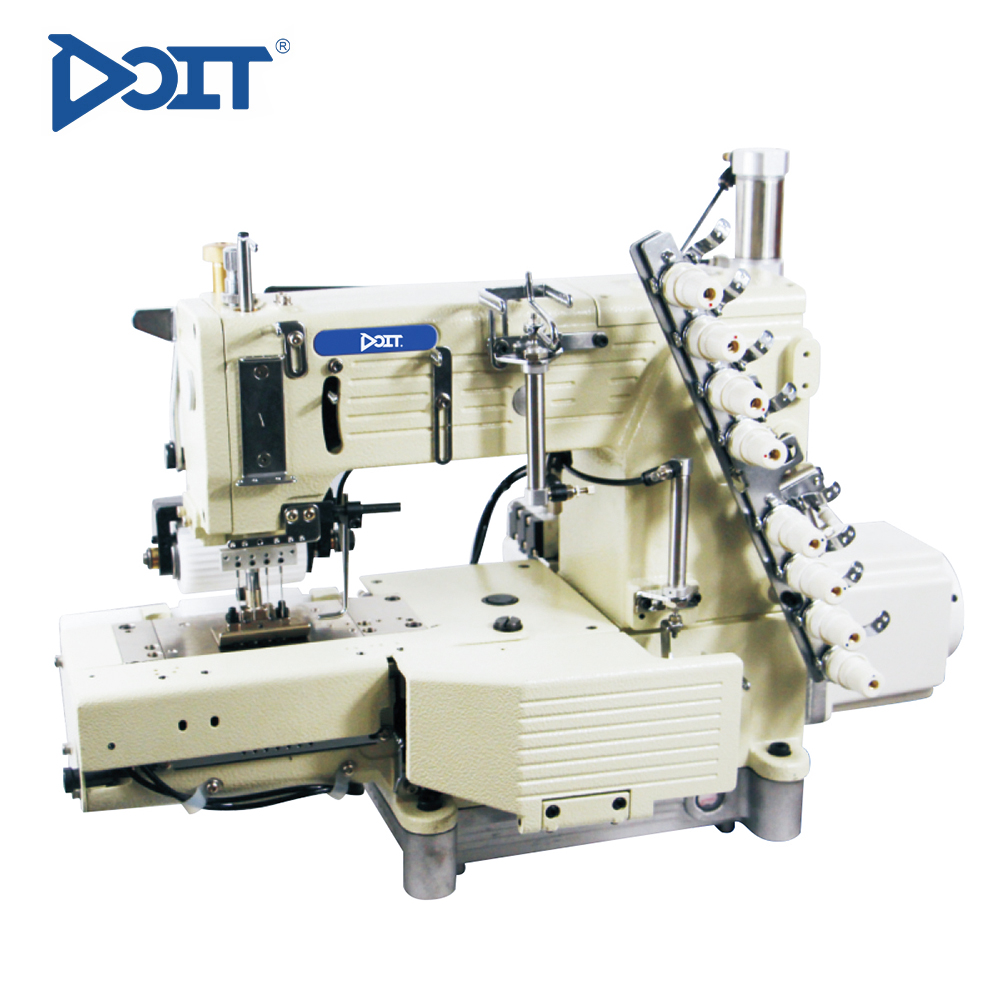
The math: A new entry-level industrial machine from DOIT Group starts at a fraction of what you might spend hunting for vintage parts and paying for specialist repairs. And it comes with a warranty, parts availability, and support.
7. What Does a Modern Industrial Machine Offer That Vintage Can't?
For anyone who sews regularly—whether for business or serious hobby—modern industrial machines deliver what vintage machines cannot.
Speed and efficiency: DOIT lockstitch machines operate at 4,000+ SPM—far faster than any vintage domestic machine.
Durability: All-metal construction designed for 8-hour shifts, not occasional use.
Standard parts: No hunting for obscure components. DOIT machines use standard 135×17 needle systems and widely available parts.
Energy savings: Direct-drive servo motors save up to 70% on electricity compared to traditional clutch motors.
Warranty and support: 2-year warranty on machines and lifetime after-sales support—something no vintage machine can offer.
8. DOIT Group: The Modern Solution for Serious Sewists
If you've inherited a mystery machine and are tired of searching for parts and manuals, DOIT Group offers a better path forward.
Why DOIT stands out:
-
Industrial-grade reliability: Built for continuous production, not occasional use
-
All-metal construction: No plastic gears to break or wear out
-
Standardized parts: Easy sourcing of needles, bobbins, and accessories
-
Energy-efficient servo motors: Save up to 70% on electricity
-
2-year warranty: Confidence in product quality
-
Lifetime after-sales support: Expert technical team ready to offer global on-site support
Key DOIT models:
-
DT-3 High-Speed Lockstitch: 4,000 SPM, handles up to 13mm thickness—perfect for general garment construction
-
DT 700-5 Overlock: Industrial walking foot for professional edge finishing on heavy fabrics
-
DT 8800-D4 Direct Drive Lockstitch: Automatic thread trimming, 15mm presser foot lift, and energy-saving servo motor
9. The Bottom Line: Know When to Let Go
The Reddit user's inherited machine represents a common dilemma: sentimental value vs. practical value. Vintage machines can be wonderful—if they work, if you can find parts, and if you enjoy the restoration process.
But if you're spending hours searching for a manual, hunting for obscure parts, and still can't get the machine to work correctly, you're not saving money—you're losing time.
The smarter choice: Invest in a machine that works from day one, with parts that are readily available and support that's just a call away. DOIT Group's industrial machines deliver the reliability, speed, and durability that vintage machines can only dream of—without the mystery, without the hunt, and without the frustration.
Ready to stop searching for parts and start sewing? Explore DOIT Group's full range of industrial sewing machines at doitsewingmachine.com.
📩 Email: sales6@chinadoit.cn
🌐 Website: doitsewingmachine.com
Sewing Tutorials for "Dumb Dumb" People? What Every Beginner Actually Needs to Know
Best Sewing Machine for Beginners? What I Wish I Knew Before Buying My First Machine