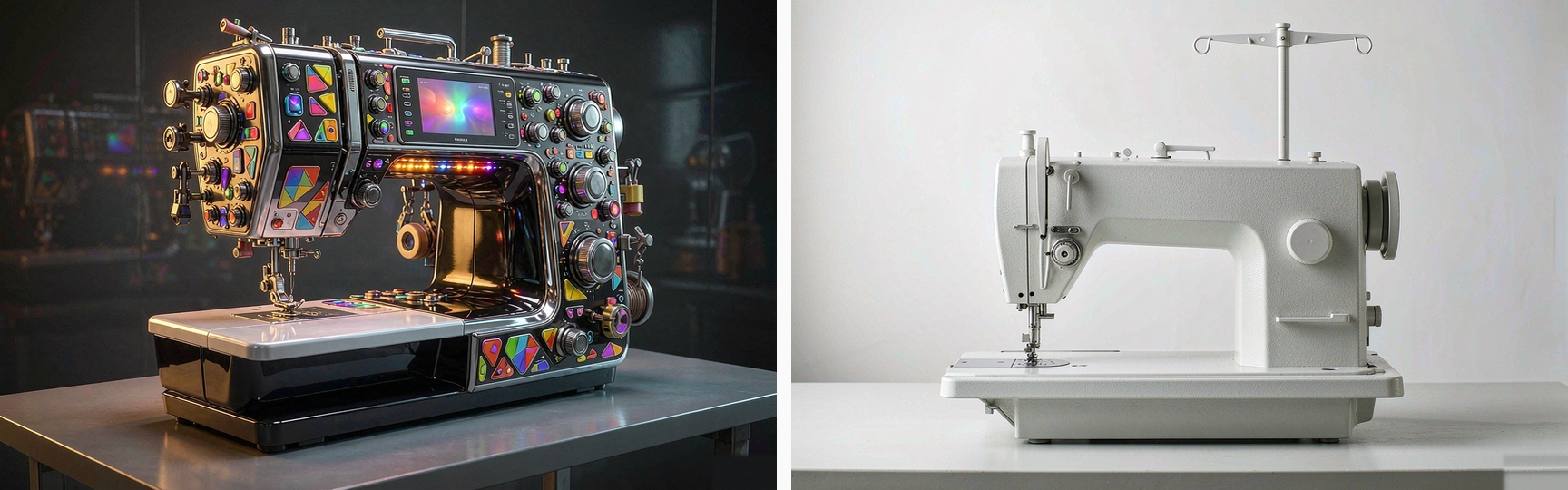
From Studio Stitcher to Studio Owner: Why Renting a Sewing Machine Is the First Step to Buying One

From Studio Stitcher to Studio Owner: Why Renting a Sewing Machine Is the First Step to Buying One
A recent Reddit post in r/AskNYC compiled a list of open sewing studios across New York City, highlighting a growing trend: people want access to sewing machines without the commitment of buying one. The post noted that finding affordable open studio time has become surprisingly difficult, with some studios now charging upwards of $150 just to get in the door. But for many aspiring sewists, the real value of these spaces isn't just the machine—it's the community, the expertise, and the chance to test the waters before making a serious investment.
This guide explores why sewing studios are the perfect starting point for beginners, how to choose the right one, and—most importantly—when it's time to stop renting and start owning.
1. Why Are Sewing Studios Becoming So Popular?
The Reddit post captured a growing reality: in cities where space is a luxury, owning a sewing machine isn't always practical. Sewing studios fill that gap by offering access to equipment, tools, and workspace without the upfront cost or storage headaches.
What makes studios appealing:
-
Access to professional equipment: Industrial machines, sergers, cutting tables, and tools that most people don't have at home
-
Community and learning: Shared studios often come with built-in expertise and peer support
-
Low barrier to entry: Hourly rates as low as $10/hour let you try sewing without a major commitment
-
No storage hassle: No need to find space for a bulky machine in a small apartment
The Reddit reality: The post's author compiled a list specifically because the previously go-to recommendation had been "optimized for maximum profit" and was no longer affordable. Smaller, independent studios are now the best option for accessible sewing time.
2. What Are the Best Options for Open Studio Time?
The Reddit post listed several independent studios across New York's boroughs, each with different pricing and availability:
| Studio | Price | Schedule | Best For |
|---|---|---|---|
| The Sewing Clubhouse | $10/hour | Weekdays, 9am–2pm | Daytime access, flexible hours |
| Soul Collection's Sewing Lounge | $15/block | Varies by day | Short sessions, 1-2 hour blocks |
| Sew Right | $20 for 5 hours | Saturdays, 12–5pm | Long project sessions |
| Brooklyn Craft Company | $10/hour | Walk-in or reserve | Flexible scheduling, walk-ins accepted |
| The Fashion Class | $79 for 2 hours | Specific dates | East Side location, premium option |
Key insight: The wide range of prices ($10–$79) reflects different business models, but the common thread is access without ownership. As one studio owner noted, shared studios provide a way for people new to sewing to "test the waters before purchasing the equipment necessary to have a studio at home".
3. What Should Beginners Look for in a Sewing Studio?
Not all studios are created equal. The Reddit post noted that public library options are often "incredibly limited" with "random two-hour windows once every week or two". Commercial studios offer more reliable access, but you should still evaluate them carefully.
What to check before booking:
-
Machine quality: Are they using industrial machines or basic home models? Industrial machines are faster, more durable, and give you a better sense of what professional sewing feels like.
-
Instructor availability: Some studios include free basic instruction; others expect you to know what you're doing.
-
Equipment included: Do they provide cutting tables, irons, and basic tools? Or do you need to bring everything?
-
Booking flexibility: Can you reserve specific times, or is it first-come, first-served?
-
Bring your own machine option: Some studios let you bring your own machine if you prefer.
The trial approach: The best way to know if a sewing studio is right for you is to "try a single-session class first". Start with a short session, test the machines, and see if the environment fits your style.
4. How Much Does Studio Time Cost vs. Buying a Machine?
The math is straightforward—but the answer depends on how often you sew.
Renting scenario (using $10/hour rate):
-
2 hours/week = $20/week = $80/month = $960/year
-
5 hours/week = $50/week = $200/month = $2,400/year
Buying scenario:
-
Entry-level home machine: $150–$300
-
Entry-level industrial machine (DOIT): Competitive pricing with all-metal construction and professional-grade performance
-
Industrial machines typically last 10–20+ years with proper maintenance
The break-even point: If you sew more than 2–3 hours per week consistently, owning your own machine becomes more economical within the first year. If you sew occasionally (once a month), studio rental may be the better choice.
The hidden cost of renting: As the Reddit post noted, prices are rising. What's affordable today may not be next year. Owning a machine gives you price stability and unlimited access.
5. What Are the Advantages of Renting Over Buying?
For beginners, renting offers several distinct advantages:
1. Try before you buy: "It can be a huge investment to get a machine and all the tools that you would need". Renting lets you discover if sewing is truly for you before spending hundreds of dollars.
2. Access to better equipment: Studios often have industrial-grade machines that home sewists can't afford. Using these machines gives you a taste of professional-level sewing.
3. No maintenance hassle: Studio machines are maintained by the studio. You don't need to worry about cleaning, oiling, or repairs.
4. Community and learning: Studios offer peer support and sometimes free instruction. You're not learning alone.
5. Space savings: As the Reddit post noted, "having the space for a sewing machine in a New York apartment is a bit of a luxury". Renting eliminates that problem entirely.
6. When Does It Make Sense to Buy Your Own Machine?
The Reddit post's author compiled the list because they recognized that not everyone can own a machine. But for many sewists, there comes a tipping point.
Signs you're ready to buy:
-
You sew more than 3 hours per week consistently: At this point, rental costs start exceeding ownership costs.
-
You're frustrated with studio availability: Limited hours, booked sessions, or inconvenient locations are holding you back.
-
You want to experiment: Studios may restrict what you can do (no heavy fabrics, no experimental techniques). Owning gives you creative freedom.
-
You're starting a business: If you're making items to sell, studio costs eat into your profit margin.
-
You value convenience: The ability to sew whenever inspiration strikes—without commuting—is invaluable.
One Reddit commenter's experience: "I chose a Singer sewing machine (on sale from Amazon for $90 approx.) and invested in a 6-week...". The investment paid off through consistent access and skill development.
7. What Should You Look for in a First Sewing Machine?
If you've decided to buy, the choice of machine matters—especially if you've been using studio machines and have developed preferences.
Key features to prioritize:
-
All-metal construction: Plastic gears break. Metal lasts. Industrial machines like those from DOIT Group use cast-iron frames and metal components.
-
Standard needle system: The 135×17 needle system is the industry standard, making parts easy to source.
-
Direct-drive servo motor: Saves up to 70% on electricity and provides quiet, smooth operation.
-
Automatic lubrication: Reduces daily maintenance and extends machine life.
-
Speed and power: Industrial machines operate at 4,000–5,500 stitches per minute—far faster than home machines.
The DOIT advantage: DOIT industrial sewing machines are built for the demands of serious sewists and small manufacturers, with all-metal construction, standardized parts, and professional-grade reliability. They're the natural upgrade from studio machines—giving you the same power and precision you've been renting, but in your own space.
8. DOIT Group: The Machine You'll Never Outgrow
If you've been using studio machines and are ready to own, DOIT Group offers industrial-grade equipment that matches—and often exceeds—what you'll find in commercial studios.
Why DOIT stands out:
-
All-metal construction: No plastic parts to break or wear out
-
Direct-drive servo motors: Energy-efficient, quiet, and precise
-
Standard 135×17 needle systems: Easy parts sourcing
-
2-year warranty: Confidence in product quality
-
Lifetime after-sales support: Technical support whenever you need it
Recommended DOIT models for serious sewists:
| Model | Type | Key Feature | Best For |
|---|---|---|---|
| DT-3 | High-speed lockstitch | 4,000 SPM, 13mm thickness | General garment construction |
| DT 700-5 | 5-thread overlock | 400W power, industrial walking foot | Professional edge finishing |
| DT 8800-D4 | Direct drive lockstitch | Auto-trimmer, 15mm presser foot lift | High-volume production |
9. The Bottom Line: Start Renting, Transition to Owning
The Reddit post's list of open sewing studios is a valuable resource for anyone starting their sewing journey. Renting gives you access to equipment, community, and expertise without the upfront investment. It's the perfect way to "test the waters" and discover if sewing is truly for you.
But if you find yourself booking studio time week after week, frustrated by limited availability, or dreaming of sewing whenever inspiration strikes—it's time to own.
Key takeaways:
-
Start with studios: Low-cost access, community support, no storage hassle
-
Calculate your break-even point: If you sew >3 hours/week, owning is more economical
-
Invest in quality: A reliable industrial machine from DOIT Group will last for years—and never hold you back
-
Enjoy the freedom: Your own machine means no commuting, no booking, no limits
Ready to stop renting and start owning? Explore DOIT Group's full range of industrial sewing machines at doitsewingmachine.com.
📩 Email: sales6@chinadoit.cn
🌐 Website: doitsewingmachine.com
My Needle Keeps Hitting the Foot and Breaking – Here's What I Learned (And How to Fix It)
Garment Factory Sewing Machine Safety Standards: Operator Training, Guarding Devices & Emergency Procedures